


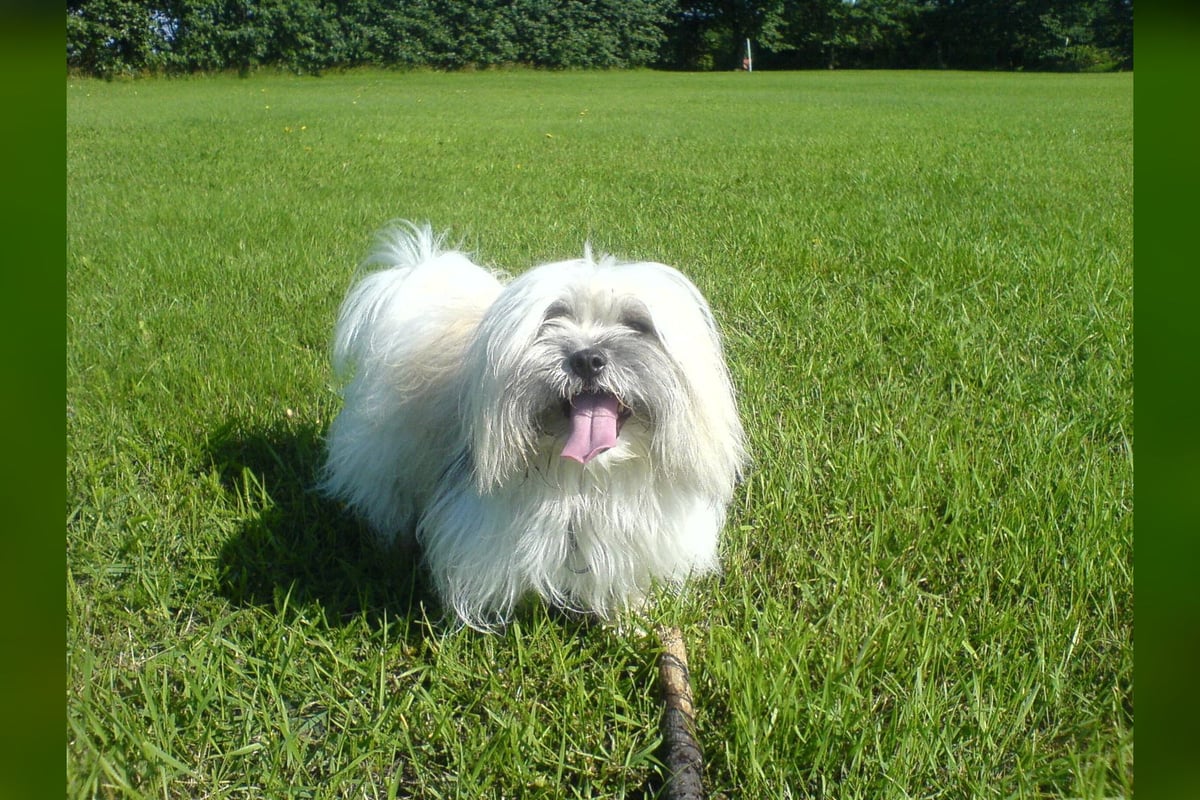
Coton de Tulear
The Coton de Tulear is a Malagasy breed native to the port of Tulear (now Toliara), recognized by the FCI under number 283, Group 9 Section 1, with France as the patron country since 1970. Weight 3.5 to 7 kg for 22 to 30 cm at the withers. Its white cottony coat, with a texture unique in the world — comparable to raw cotton — gives the breed its name and its hypoallergenic status. A hardy breed with a low prevalence of severe genetic pathologies, life expectancy 14 to 16 years. Progressive retinal atrophy (PRA) documented.
- Weight
- 3.5 to 7kg
- Height
- 22 to 30cm
- Life expectancy
- 15years
- Monthly cost
- 60 to 100€
Personality profile
Energy 3/5
Independence 2/5
Trainability 4/5
Good with children 4/5
Barking 2/5
Space needed 1/5
Attachment to home 5/5
Good with strangers 4/5
Good with dogs 5/5
Good with cats 4/5
Coat care 5/5
Exercise needs 2/5
Scores given on measured axes, data confidence: high.
Living with a Coton de Tulear
Description
A slightly elongated, well-muscled build despite its compact size. Rounded head with a moderate stop, prominent round dark eyes, triangular drop ears covered in long cottony hair. Coat mainly white, sometimes lightly tinged with pale fawn on the ears — permitted by the FCI standard. The cottony texture of the coat is its central genetic trait: neither silky like the Maltese, nor curly like the Poodle, but cottony and slightly crimped, with an airy density. Weight 3.5 to 7 kg depending on sex, males generally larger.

Temperament
Jovial and well-balanced, the Coton de Tulear is known for a stable temperament without excess anxiety or nervousness — a trait that sets it apart from several other toy breeds. Very sociable with strangers, children, other dogs, and cats. Barks little, mainly signaling events outside the routine. Seeks constant presence with its family but without the acute separation anxiety seen in other bichon-type breeds. Suitable for families with children over 4 years old.
Training
Good trainability: an intelligent breed, receptive to positive reinforcement, without the nervous distractibility of some toy breeds. Basic commands picked up in 5 to 10 repetitions. House-training achieved in 3 to 5 weeks with a consistent routine. Noise desensitization recommended from 8 to 12 weeks. Can excel in level-1 obedience and nano agility. Does not respond to coercive methods.

Feeding
80 to 130 g of premium small-breed kibble a day for a 5 kg adult, split into 2 fixed meals. Adjust according to the individual's size (3.5 to 7 kg — a wide range). Puppies under 3 months: 3 meals to prevent hypoglycemia. Treats limited to 10% of caloric intake. Small-sized kibble suited to the jaws.
Affiliate links, no extra cost to you. Legal notice

Living conditions
Perfectly suited to an apartment of any size. Exercise needs covered by 20 to 30 minutes of daily outings and indoor play. A breed of tropical origin, better adapted to heat than most small European breeds: decent heat tolerance, but should not be exposed to prolonged direct sun (dense coat). Must live indoors; sensitive to cold below 8 °C.

Grooming and coat care
A cottony coat with a unique texture that needs daily brushing to prevent matting — the cottony fiber tangles differently from silky hair, deep down rather than on the surface. Professional grooming every 6 to 8 weeks. Bath every 2 to 3 weeks, thorough blow-drying mandatory. Maintaining the long coat as required by the standard takes more upkeep than the practical short clip adopted by many owners. A hypoallergenic breed: very low shedding, with no dense seasonal undercoat.

Health
A hardy breed, with a low prevalence of severe genetic pathologies compared with other bichon-type breeds. Progressive retinal atrophy (PRA): a hereditary disease leading to loss of night vision and then total blindness; DNA test available for mutations documented in the breed, annual eye exam for breeding stock recommended. Patellar luxation: documented but less frequent than in lighter toy breeds. Epiphora: daily cleaning of the eye corners required to prevent staining. Dental hygiene: tooth brushing at least 3 times a week recommended.
Breed history
A breed from the southwest coast of Madagascar, likely descended from small dogs brought by Arab traders or European navigators in the 16th-17th centuries, acclimated and genetically stabilized on the island. A companion dog of Malagasy royalty (Merina) according to local sources. Discovered by European breeders in the 1960s; FCI recognition took place in 1970, with France designated as patron country and custodian of standard 283. In the 1980s, puppy trafficking (bought for 500 francs in Madagascar, resold for up to 5 000 francs in France) decimated the island populations. France remains today the leading reference breeding country for the breed.
Getting ready for your Coton de Tulear
Five essentials to line up before day one.
Affiliate links, no extra cost to you. Legal notice
FAQ: Coton de Tulear
Sources
- FCI Standard No 283 · FCI breed standard 283, Group 9 Companion and Toy Dogs, Section 1 Bichons and related breeds, Coton de Tulear
- AKC Breed Profile · AKC Coton de Tulear breed profile, Non-Sporting Group
FCI, Fédération Cynologique Internationale, the world body that has codified breed standards since 1911. FCI number 283 is assigned to the Coton de Tulear.
Breeds similar to a Coton de Tulear

