For an elderly person, choosing a dog answers to precise functional criteria that differ from those of an active household. Size is the first lever: a dog under 10 kg can be walked on a leash without risk of being pulled off balance, carried in case of an urgent vet need, and handled physically even as mobility gradually declines. A 30 kg dog that pulls becomes a concrete fall risk for someone over 70.
Energy level is the second criterion. The breeds presented here are content with 3 short outings a day (10 to 20 minutes each) without developing destructive or anxious behaviors. What matters isn't total duration but regularity: these dogs need rhythm more than mileage.
Longevity is a parameter seniors need to plan for explicitly. A Bichon Frise or a Cavalier King Charles Spaniel can live 12 to 14 years. Adopting a puppy at 72 therefore means planning ahead to age 86 with a dog still alive. The most pragmatic solution — and often the most satisfying one — is to adopt a 3- to 5-year-old adult through a rescue organization: training is already in place, temperament is stable and assessed, and the remaining commitment span is more predictable.
On documented benefits: research cited by the American Heart Association (Circulation, 2013) links dog ownership to reduced cardiovascular risk, an effect attributed to daily walking and the social stimulation the animal generates. The literature remains observational: it establishes an association, not proven causation. A dog also creates a built-in reason for social contact with neighbors, a documented protective factor against isolation in seniors.
The upkeep budget for a small dog is also lower: 30 to 50 € a month on kibble for a breed under 8 kg, versus 100 to 150 € for a 30 kg dog. Annual vet costs run around 200 to 400 € for a healthy small dog, excluding accidents or serious illness.
8 recommended breeds
Every portrait opens the full profile: temperament, living conditions, health, budget
and cited sources.
1
Cavalier King Charles Spaniel
The Cavalier King Charles Spaniel is a British toy spaniel reconstituted in the 1920s, weighing 5.4 to 8.2 kg at 30 to 33 cm at the withers. Recognized FCI number 136, it combines an extreme velcro attitude — it is one of the breeds most prone to separation anxiety — with a median life expectancy shortened to 10-11 years due to hereditary mitral valve disease, which affects 100% of individuals past age 10.
The Bichon Frise is a companion dog of 5 to 10 kg for 25 to 30 cm at the withers, recognized by the FCI under number 215, Group 9, Section 1. White, curly coat with a corkscrew texture and near-zero shedding — classified as hypoallergenic. A breed of Mediterranean origin popularized by European courts in the 16th-17th centuries. Life expectancy of 12 to 15 years. Predisposed to patellar luxation, atopic skin allergies, Cushing's syndrome, and hip dysplasia.
The Havanese is the only dog breed native to Cuba, recognized by the FCI under number 250, Group 9 Section 1. Weight 3 to 7 kg for 21 to 29 cm at the withers, with a long coat of 12 to 18 cm, silky, flat or wavy, non-matting — a trait that classifies it as hypoallergenic. Life expectancy of 14 to 16 years, among the longest of the toy breeds. Known predispositions: patellar luxation, hip dysplasia, deafness in dogs with an all-white coat.
The Maltese is a Mediterranean toy breed of 3 to 4 kg for 20 to 25 cm at the withers, recognized by the FCI under number 65, Group 9 Section 1. Its long, silky white coat sheds practically nothing (the undercoat is nearly absent), which classifies it as semi-hypoallergenic. Life expectancy of 12 to 15 years, a hardy breed for its size but prone to patellar luxation, portosystemic shunt, and hypoglycemia in puppies.
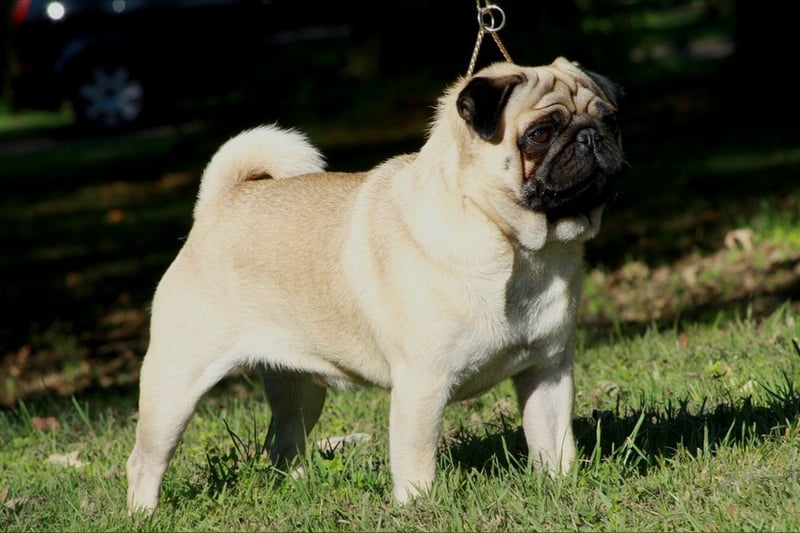
The Pug is an extreme brachycephalic molossoid of 6 to 8 kg and 25 to 36 cm, descended from the imperial Chinese courts of the Han dynasty. Recognized by the FCI under number 253, it shows severe BOAS in more than 50% of individuals, a breed-specific fatal hereditary encephalitis (PDE), and a life expectancy of 12 to 15 years compromised by its accumulated structural defects.
The Shih Tzu weighs 4 to 7.5 kg for 20-27 cm at the withers, recognized by the FCI under number 208, Group 9. A brachycephalic breed of Tibetan origin, it develops BOAS (brachycephalic obstructive airway syndrome) in 30 to 50% of individuals and shows marked heat intolerance from 24 °C. Life expectancy 12-14 years.
The Coton de Tulear is a Malagasy breed native to the port of Tulear (now Toliara), recognized by the FCI under number 283, Group 9 Section 1, with France as the patron country since 1970. Weight 3.5 to 7 kg for 22 to 30 cm at the withers. Its white cottony coat, with a texture unique in the world — comparable to raw cotton — gives the breed its name and its hypoallergenic status. A hardy breed with a low prevalence of severe genetic pathologies, life expectancy 14 to 16 years. Progressive retinal atrophy (PRA) documented.
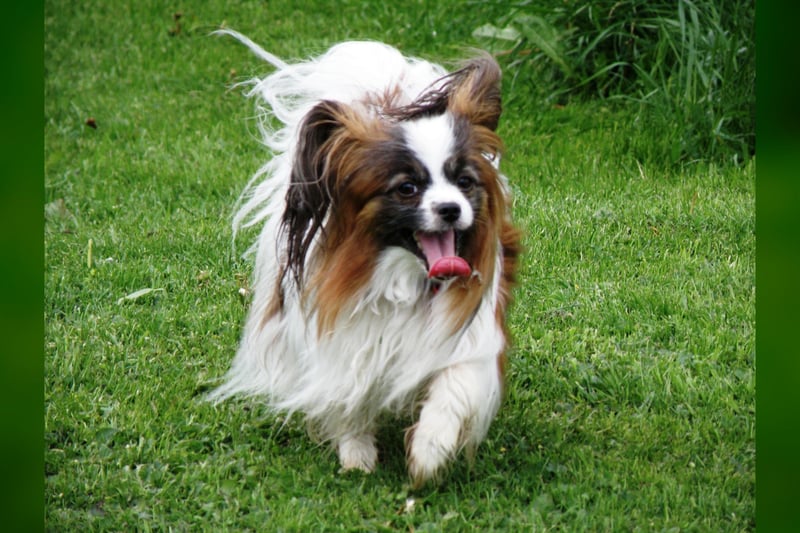
The Continental Toy Spaniel weighs 1.5 to 5 kg for 20 to 28 cm at the withers — a French and Belgian toy breed dating to the Renaissance, FCI number 77, group 9. Two varieties share the same standard: Papillon (ears standing erect like butterfly wings) and Phalene (drop ears). Ranked 8th out of 138 breeds on Stanley Coren's working intelligence test — the most trainable toy breed in dog fancy, with obedience and agility performances that rival working breeds. Life expectancy of 13 to 16 years.
Adopt a 3- to 5-year-old adult rather than a puppy: temperament is stabilized and assessed by the rescue organization, basic training is already in place, and the remaining life expectancy (roughly 7 to 11 years for the breeds listed) fits your planning horizon.
Calculate remaining longevity before adopting: a Cavalier King Charles Spaniel has a life expectancy of 12 to 14 years. Adopting a 3-year-old adult at age 70 means potential care up to age 81 — a figure to factor into your plan. A watch point specific to the Cavalier: mitral valve disease affects most individuals with age — budget for an annual cardiac check-up after age 5, or take out pet health insurance right from adoption.
Choose a breed whose barking level is rated 1 or 2 out of 5 to keep good relations with neighbors in a senior residence or apartment.
Plan for an annual vet budget of 200 to 400 € for a healthy small dog: booster vaccines, parasite prevention, and an annual blood panel once the dog is past 8 years old.
Plan ahead for your own future mobility: the breeds presented here don't require jogging or rough terrain. Three short walks a day on flat ground cover their needs — manageable with a walker or a cane.
Designate a trusted contact (family member, neighbor) who could take temporary care of the dog in case of hospitalization or a sudden loss of autonomy — putting this in writing avoids a crisis situation.
Frequently asked questions
Up to what age is it still reasonable to adopt a dog?
There's no legal or medical age limit. The relevant question is: who takes care of the dog if you no longer can? At 75, adopting a 3-year-old adult of a breed that lives 14 years means potential care up to age 86. If you have a family or rescue-organization network ready to take the animal in an emergency, adoption remains entirely realistic. Several organizations specializing in placing animals with elderly people actually make adoption conditional on naming a backup guardian — ask them about their requirements before deciding.
Is a small or a large dog better for an elderly person?
A small dog (under 10 kg) offers concrete practical advantages: less pulling force on the leash (reduced fall risk), easy to transport to the vet, food costs cut by a factor of 3 to 4, and the option to carry it when needed. Large affectionate breeds like the Labrador Retriever can work if the person is still physically active, but the risk of being pulled remains a constraint to weigh seriously past age 70.
How many outings a day do the recommended breeds need?
3 outings a day make a comfortable baseline rhythm: a morning outing (15-20 min), a midday outing (10-15 min), and a late-afternoon outing (15-20 min). Total: roughly 40 to 55 minutes of walking a day, compatible with a moderate pace of life. None of these breeds needs jogging, cycling, or dog sports to stay balanced.
Can a dog live in a nursing home with its owner?
This plays out facility by facility: the conditions for accepting a pet appear in the nursing home's internal rules (accepted size, vaccinations, the resident's ability to care for it day to day). In practice, only some facilities allow it, most often for small animals. Two things to do before admission: request the internal rules in writing, and get formal confirmation of an outside contact able to take the dog in case the resident is hospitalized. The applicable legal framework changes over time — have it confirmed by the facility's management rather than relying on general information found online.
What happens if I become dependent and can no longer care for the dog?
This is the question every elderly person should ask before adopting. Three solutions exist: (1) formally naming an animal guardian (a willing family member or friend) through a simple agreement, (2) contacting an animal welfare organization or one specializing in rehoming elderly people's pets ahead of time, to learn its intake conditions, (3) a clause in personal papers (a will or advance directives) naming the dog and its designated guardian. Failing to plan for this situation exposes the animal to an emergency placement in a shelter.
Sources
SCC — Société Centrale Canine, breed fact sheets · Société Centrale Canine. Official fact sheets for breeds recognized in France. scc.asso.fr, accessed May 2026. Data on breed life expectancy, size, and exercise needs.
Anderson W.P. et al. — Pet ownership and cardiovascular risk reduction · Anderson W.P., Reid C.M., Jennings G.L. Pet ownership and risk factors for cardiovascular disease. Medical Journal of Australia, 1992; and summary in AHA Circulation, 2013. Observed association between pet ownership and reduction of certain cardiovascular risk factors.
AKC — Best dogs for seniors · American Kennel Club. Best Dog Breeds for Seniors. akc.org, 2024. Criteria used: low energy, small size, affectionate temperament, moderate barking.