The term "hypoallergenic" is a marketing shortcut that deserves to be demystified. No dog is entirely free of allergens: dog allergy is caused mainly by the Can f 1 protein, present in saliva, urine and dander — not just in fur. A study published in 2012 in the Journal of Allergy and Clinical Immunology measured Can f 1 levels in the hair and homes of several breeds: it found no evidence to support labeling any breed hypoallergenic. The idea of an allergy-free dog is therefore a simplification.
Why do some breeds trigger fewer reactions anyway? The answer is mechanical: breeds with a curly or corded coat (Poodle, Lagotto Romagnolo, Soft Coated Wheaten Terrier), with very low or near-absent shedding, spread less dander into the environment. Less dander floating in the air means less contact with the respiratory tract, and fewer reactions. The mechanism is not immunological — it's physical.
Short-coated breeds without an undercoat, like the Basenji, and hairless breeds, like the Xoloitzcuintle, also produce less hair debris. By contrast, breeds with a dense double coat (Siberian Husky, German Shepherd Dog) or intense seasonal shedding should be avoided outright if you're sensitive.
Before any adoption, a two-week trial period of real cohabitation is essential. A weekend at the breeder's, or a few hours with an owner of the target breed, lets you gauge your actual reaction — far more reliable than a theoretical test. Seeing an allergist beforehand tells you exactly which allergen you react to — information that helps guide the breed choice.
10 recommended breeds
Every portrait opens the full profile: temperament, living conditions, health, budget
and cited sources.
1
Toy Poodle
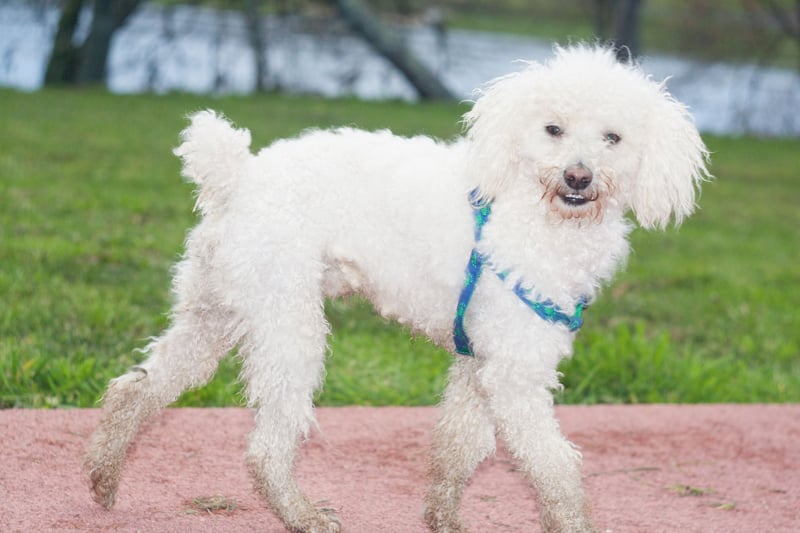
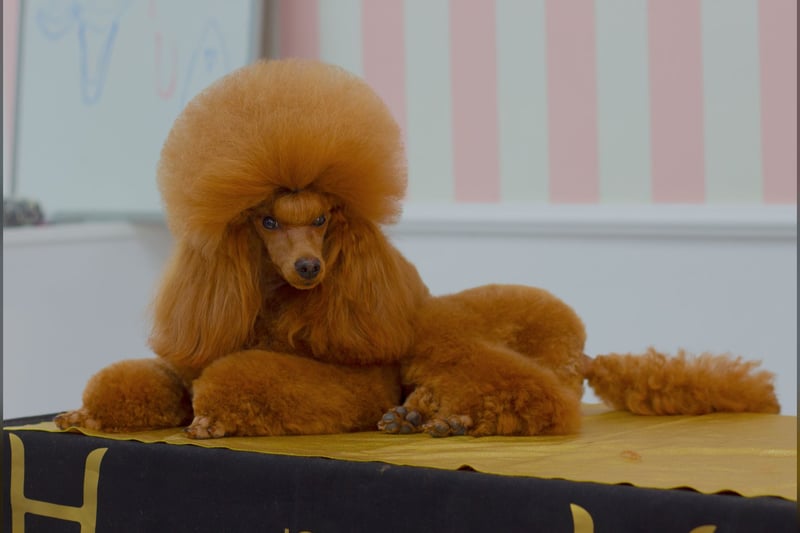
The Toy Poodle is the smallest of the four Poodle varieties (FCI 172): height at the withers above 24 cm and below 28 cm, weight 2 to 3.5 kg. A French breed with a curly coat that does not shed, classed as hypoallergenic. Life expectancy 12 to 15 years. It inherits the exceptional trainability of the Standard Poodle — ranked 2nd according to Coren — but shows toy-specific conditions: patellar luxation, Legg-Calvé-Perthes disease, tracheal collapse.
The Miniature Poodle is the second-largest of the four FCI 172 Poodle varieties by size: height at the withers 28 to 35 cm, weight 4 to 7 kg. Sturdier than the Toy (under 28 cm) and more compact than the Medium (35-45 cm), it occupies an intermediate, high-energy segment. A curly, non-shedding coat classified as hypoallergenic, requiring professional grooming every 6 to 8 weeks. Life expectancy 12 to 15 years. Predisposed to Addison's disease (adrenal insufficiency) and granulomatous sebaceous adenitis.
The Medium Poodle is the third-largest of the four FCI 172 Poodle varieties by size: height at the withers 35 to 45 cm, weight 9 to 15 kg. A traditional French variety, the least exported of the four: in the United States and the United Kingdom, the market is dominated by the Toy, the Miniature and the Standard. A curly, non-shedding, hypoallergenic coat. Life expectancy 13 to 15 years. Versatile in agility and obedience, predisposed to mild hip dysplasia and progressive retinal atrophy.
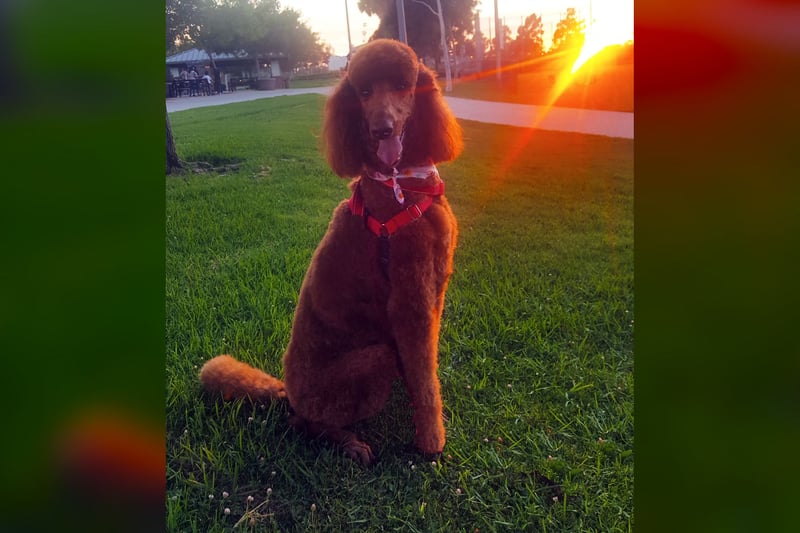
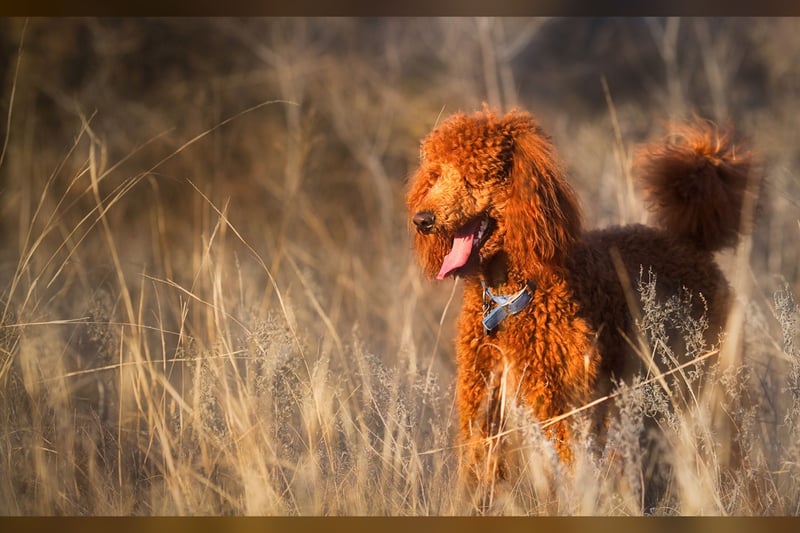
The Standard Poodle (or Grand Caniche) is the largest of the four Poodle varieties (FCI 172): height at the withers 45 to 62 cm, weight 20 to 32 kg. A curly or corded coat with continuous growth, reputed to be hypoallergenic and to shed practically nothing. Ranked the 2nd most intelligent breed according to Stanley Coren. Life expectancy 12 to 15 years. Predisposed to gastric dilatation-volvulus (GDV), Addison's disease, hip dysplasia and sebaceous adenitis.
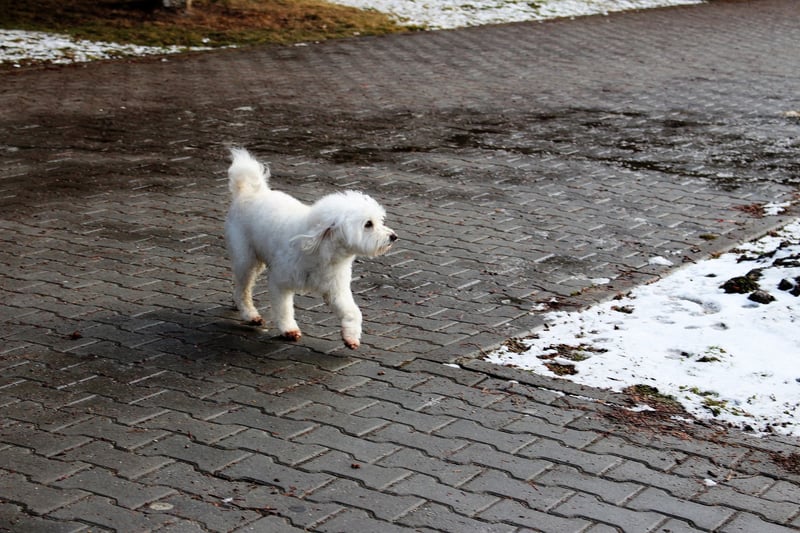
The Bichon Frise is a companion dog of 5 to 10 kg for 25 to 30 cm at the withers, recognized by the FCI under number 215, Group 9, Section 1. White, curly coat with a corkscrew texture and near-zero shedding — classified as hypoallergenic. A breed of Mediterranean origin popularized by European courts in the 16th-17th centuries. Life expectancy of 12 to 15 years. Predisposed to patellar luxation, atopic skin allergies, Cushing's syndrome, and hip dysplasia.
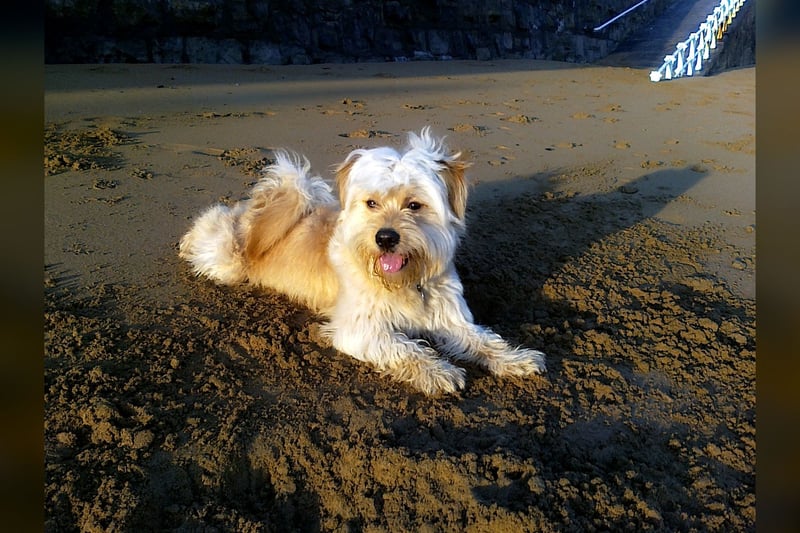
The Havanese is the only dog breed native to Cuba, recognized by the FCI under number 250, Group 9 Section 1. Weight 3 to 7 kg for 21 to 29 cm at the withers, with a long coat of 12 to 18 cm, silky, flat or wavy, non-matting — a trait that classifies it as hypoallergenic. Life expectancy of 14 to 16 years, among the longest of the toy breeds. Known predispositions: patellar luxation, hip dysplasia, deafness in dogs with an all-white coat.
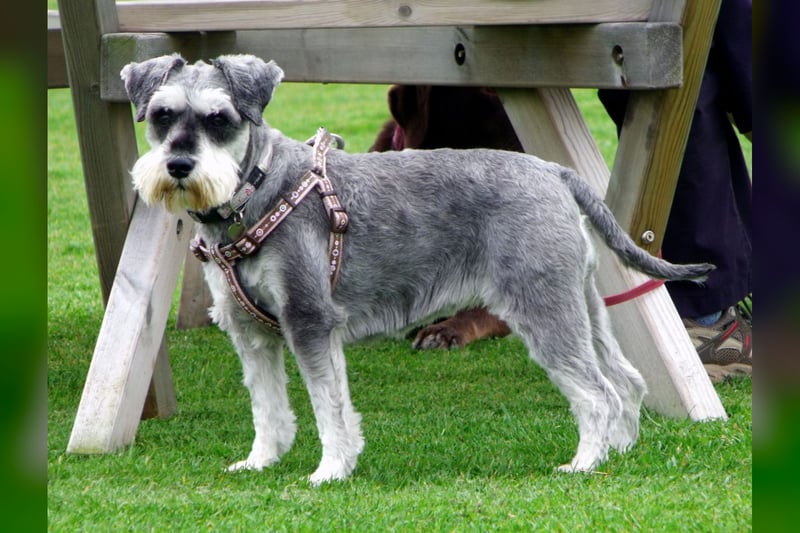
The Miniature Schnauzer weighs 4 to 8 kg for 30 to 35 cm at the withers. Recognized by the FCI under number 183, Group 2, Section 1.2, originating in Germany. Harsh, wiry coat, almost no shedding — classified hypoallergenic. Life expectancy 12 to 15 years. Four documented medical predispositions: idiopathic hyperlipidemia (recurrent pancreatitis), Schnauzer comedo syndrome (a follicular skin disease of the back), calcium oxalate urinary stones, and hereditary myoclonic epilepsy (DNA test available).
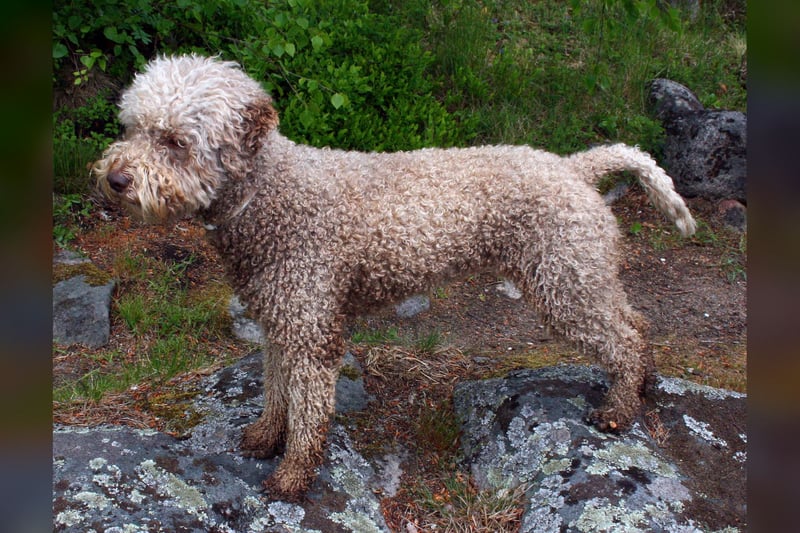
The Lagotto Romagnolo weighs 11 to 16 kg for 41 to 48 cm at the withers — the only dog breed officially recognized as specialized in truffle hunting. Native to the Comacchio marshes in Romagna (northeastern Italy), it was repurposed as a truffle dog in the 19th century after the wetlands were drained. Recognized by the FCI under number 298 (Group 8, Section 3) since 1995. Life expectancy 14 to 17 years.
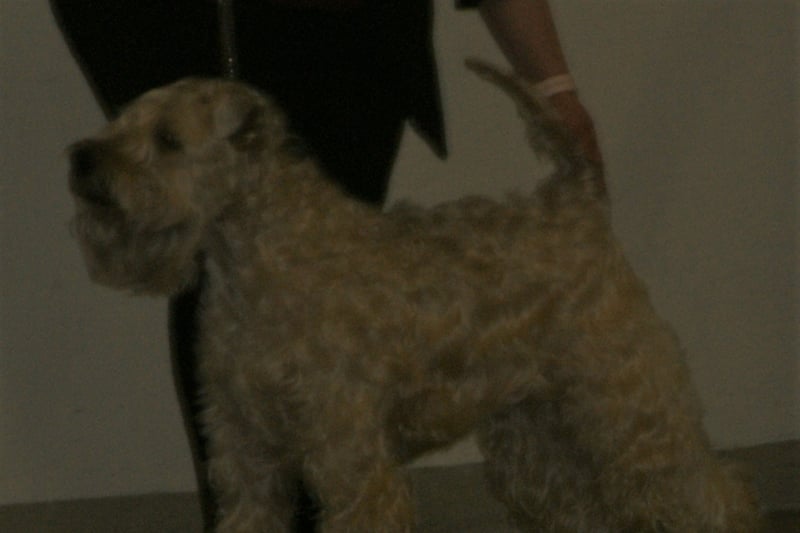
The Soft Coated Wheaten Terrier (Irish Wheaten) is an Irish terrier weighing 14 to 20 kg and standing 43 to 49 cm, recognized by the FCI under number 40. A breed of 18th-century Irish farming stock, bred outside aristocratic constraints — its versatile profile (hunting, guarding, herding) follows directly from that. Main serious genetic risk: protein-losing nephropathy and enteropathy (PLN/PLE, NPHS1 gene), with an estimated prevalence of 15-20% — annual urinary monitoring is mandatory. Life expectancy 12 to 14 years.
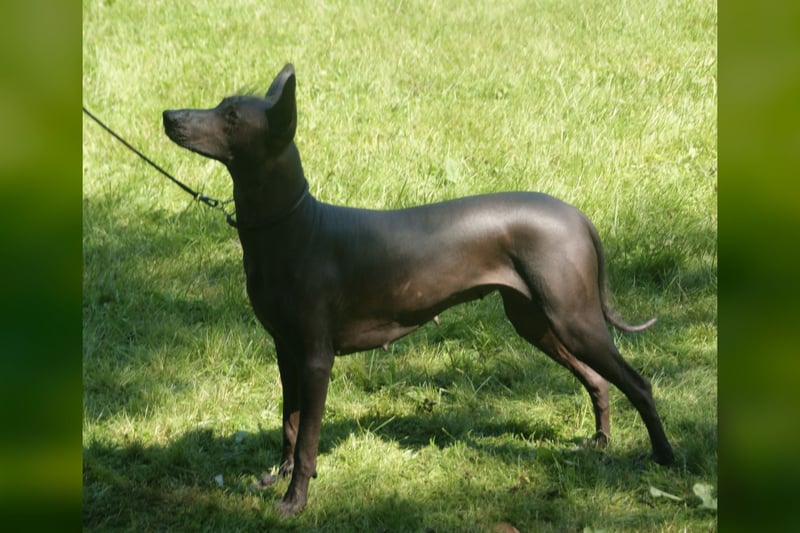
The Xoloitzcuintle (FCI 234, Group 5) is the oldest dog breed in the Americas, documented in Aztec, Mayan, Toltec, and Zapotec sculptures, with a presence attested over more than 3 000 years. Named after the psychopomp god Xolotl and the Nahuatl word "itzcuintli" (dog), it was regarded as a guide for souls into the afterlife in Aztec mythology. The breed comes in three sizes (Standard 46-60 cm, Intermediate 36-45 cm, Toy 25-35 cm) and two coat varieties — hairless and coated — which can appear in the same litter. Nearly wiped out after the Spanish conquest, it was rebuilt by the Mexican Kennel Club under the direction of Norman Pelham Wright starting in 1956.
Test 2 weeks of cohabitation before adopting: a weekend at the breeder's is a relevant, telling test
The Medium Poodle or Standard Poodle offers an excellent compromise: curly coat with near-zero shedding, easy to train, adaptable size
See an allergist to pinpoint the exact allergen (Can f 1, Can f 2, dander) — the specific allergen guides the breed choice
Favor breeds with a curly or wavy coat and no undercoat: the coat structure traps dander rather than spreading it
Avoid double-coated breeds with intense seasonal shedding even if one individual seems tolerated — spring shedding can trigger unexpected flare-ups
Keep up regular professional grooming (clipping every 6-8 weeks) to limit dander buildup in the coat
Frequently asked questions
Is it true that no dog is really 100% hypoallergenic?
That's correct. Every dog produces the Can f 1 protein, found in saliva and dander. No breed eliminates it entirely. Some breeds disperse less of it into the environment thanks to their coat, which reduces reactions in practice — but doesn't eliminate them.
Which breed should I choose for a severe allergy?
For severe allergies, the Xoloitzcuintle (Mexican hairless dog) or the Peruvian Hairless Dog are the most radical options: near-total absence of fur means very few dander carriers. For moderate allergies, the Standard Poodle or the Lagotto Romagnolo are often well tolerated. Testing before adopting is essential.
Does bathing my dog frequently reduce allergens?
Yes, temporarily. A bath reduces the amount of Can f 1 on the coat, but levels climb back within a few days. Regular baths can limit allergen spread, but the effect is temporary and doesn't replace choosing a low-shedding breed.
Are Labradoodles or Cockapoos hypoallergenic?
Not reliably. These crossbreeds are sometimes less allergenic if the individual inherits the Poodle's curly coat, but that isn't genetically guaranteed. A Labradoodle can end up with the Labrador's short coat and trigger just as many reactions as a standard dog. A purebred Poodle, whose coat is predictable, is the safer bet.
Can I get an allergy test before adopting?
Yes — and it's strongly recommended. An allergy panel with a specialist identifies your sensitivity to specific canine allergens (Can f 1 through Can f 7). Some panels even distinguish allergens shared across species. Combine this workup with a real exposure period to the target breed for an informed decision.
Is the Miniature Schnauzer really low-allergen?
The Miniature Schnauzer has a double coat (wiry topcoat plus undercoat), but its shedding is moderate compared with Nordic breeds, so it spreads less dander into the environment. It remains a reasonable option for mild to moderate allergies, provided it gets regular grooming (stripping or clipping).
Sources
Can f 1 study — Distribution of canine allergens in homes · Vredegoor DW et al. (2012). Can f 1 levels in hair and homes of different dog breeds: Lack of evidence to describe any dog breed as hypoallergenic. Journal of Allergy and Clinical Immunology, 130(4), 904-909.