


Miniature Pinscher
Pinscher and Schnauzer - Molossoid and Swiss Mountain and Cattledogs
4 to 6 kg
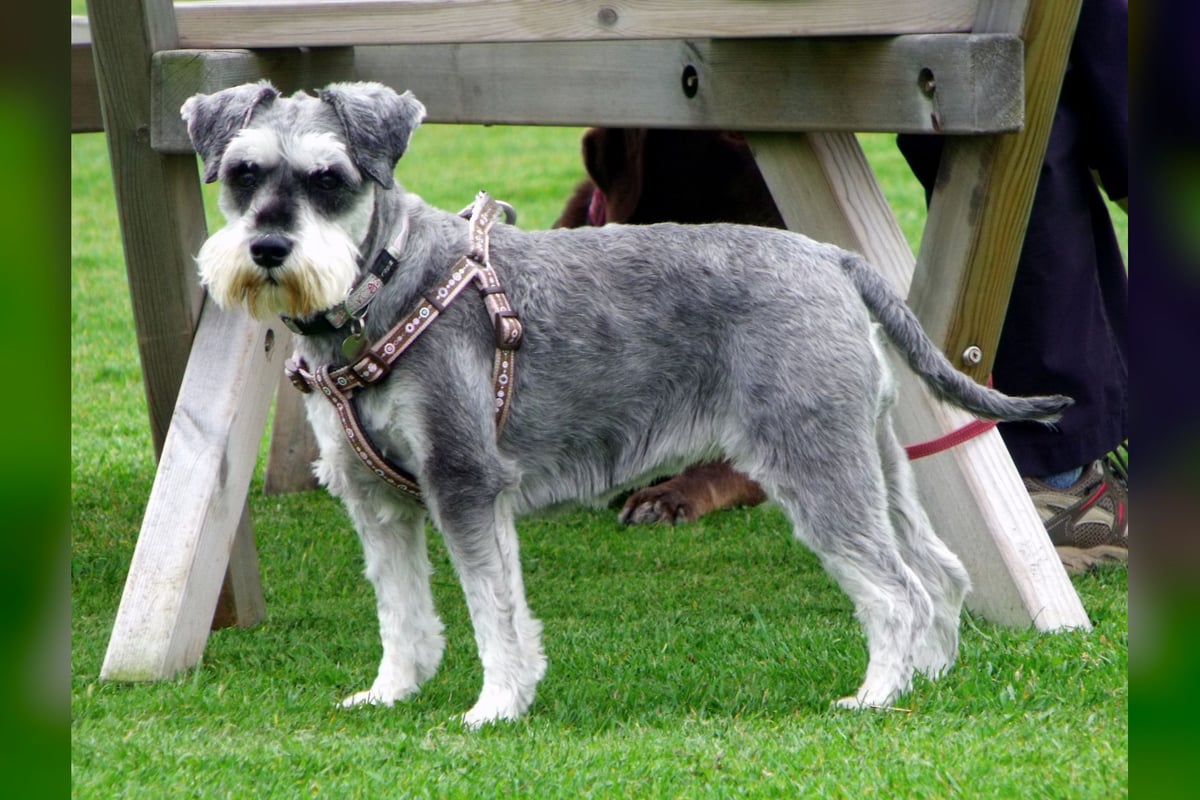
The Miniature Schnauzer weighs 4 to 8 kg for 30 to 35 cm at the withers. Recognized by the FCI under number 183, Group 2, Section 1.2, originating in Germany. Harsh, wiry coat, almost no shedding — classified hypoallergenic. Life expectancy 12 to 15 years. Four documented medical predispositions: idiopathic hyperlipidemia (recurrent pancreatitis), Schnauzer comedo syndrome (a follicular skin disease of the back), calcium oxalate urinary stones, and hereditary myoclonic epilepsy (DNA test available).
Scores given on measured axes, data confidence: high.
Living with a Miniature Schnauzer
A miniature variant of the German Schnauzer, produced in the 19th century by crossing the Standard Schnauzer with small breeds (Affenpinscher, probably the Pomeranian). It shows the group's characteristic rectangular build: body slightly longer than tall, deep chest, straight legs. Its harsh (wiry) coat forms distinct drooping eyebrows and a full mustache that make it immediately recognizable. Coat available in pepper-and-salt, pure black, black-and-silver, and pure white per FCI standard 183. The harsh coat doesn't shed and requires technical upkeep, detailed below.

Alert, vocal and territorial: it barks to signal any intrusion into its perimeter and to demand its handler's attention — barking behavior to channel from the first weeks through desensitization. A pronounced terrier temperament inherited from its ratting ancestors: strong-willed, quick to decide, hard to interrupt mid-activity. Attached to its family, sociable with known, supervised children, but wary of strangers — a withdrawal or barking reaction on first contact. Better tolerance of other dogs than the Miniature Pinscher, but the hierarchy between dogs must be established from the introduction.
Good trainability (4/5): it's one of the most cooperative varieties in the Schnauzer group. High practical intelligence, good memory, responsive to positive reinforcement. Regular 10- to 15-minute sessions, with high-value food rewards. Its terrier temperament leads it to test limits in the absence of clear rules: consistency in instructions is essential. Early socialization before 16 weeks is decisive for reducing wariness of strangers and reactive barking. Dog sport activities (agility, obedience, rally) suit its abilities and energy level well.

120 to 180 g of premium kibble a day for a 6 kg adult, in 2 meals. Breed-specific consideration: a strictly low-fat diet to prevent pancreatitis flare-ups linked to idiopathic hyperlipidemia — avoid kibble with more than 12% fat, fatty bones, and lipid-rich table scraps. Adequate water intake: favor a water fountain to prevent urinary stones. Adjust the ration after spaying/neutering to prevent weight gain.
Affiliate links, no extra cost to you. Legal notice

Suited to apartment living thanks to its size and its almost nonexistent shedding. Its activity needs are substantial: 45 to 60 minutes of sustained exercise a day, with sufficiently long walks and mentally stimulating games. Without adequate physical and mental outlets, it compensates with barking and obsessive behaviors. Tolerates cold better than the Miniature Pinscher thanks to its denser coat, but remains an indoor dog. Its rodent-hunting instinct stays active: watch its interactions with small animals.

Regular, technical grooming: the harsh coat doesn't shed but needs stripping (hand-plucking the dead hair, or using a stripping knife) two to three times a year to maintain its characteristic texture and skin protection. Clipping (trimming with clippers) is faster but progressively degrades the coat's texture over several years. Weekly brushing, to be intensified depending on the coat length maintained. Cleaning the beard and mustache after meals (they retain moisture). Professional grooming budget: 50 to 70 € a session, at least 3 to 4 sessions a year.

Four documented predispositions. Idiopathic hyperlipidemia (elevated blood triglycerides with no identifiable secondary cause) is a breed-specific trait: it predisposes to recurrent, potentially severe pancreatitis. A low-fat diet is essential, along with an annual lipid panel from age 3. Schnauzer comedo syndrome is a follicular skin disease affecting the dorsal midline: keratin plugs in the hair follicles, progressing to secondarily infected pustules — treated with keratolytic shampoo and sometimes antibiotics. Calcium oxalate urinary stones (urolithiasis) are overrepresented in the breed: sustained hydration, an adapted diet (low in oxalates), and annual urinary monitoring are recommended. Hereditary myoclonic epilepsy, an autosomal recessive condition, shows up as diffuse myoclonic jerks worsened by light or noise — a DNA test is available and should be required from both parents before adoption.
The Miniature Schnauzer appears in German registries from the late 19th century onward as a miniaturized version of the farm Standard Schnauzer. Documented crosses involve the Affenpinscher and probably the Pomeranian to reduce size. Shown at dog exhibitions as early as 1899 in Stuttgart. Recognized by the FCI under number 183, Group 2 (Pinscher and Schnauzer type dogs, Molossoid and Swiss Mountain and Cattledogs), Section 1.2 Schnauzer. Added to the AKC registry in 1926 in the Terrier Group — a classification reflecting its temperament rather than its build. A breed consistently in the top 20 of AKC registrations since the 1980s, and among the most popular small breeds in continental Europe.
Five essentials to line up before day one.
Affiliate links, no extra cost to you. Legal notice
FCI, Fédération Cynologique Internationale, the world body that has codified breed standards since 1911. FCI number 183 is assigned to the Miniature Schnauzer.
Pinscher and Schnauzer - Molossoid and Swiss Mountain and Cattledogs
4 to 6 kg

Pinscher and Schnauzer - Molossoid and Swiss Mountain and Cattledogs
35 to 47 kg
