


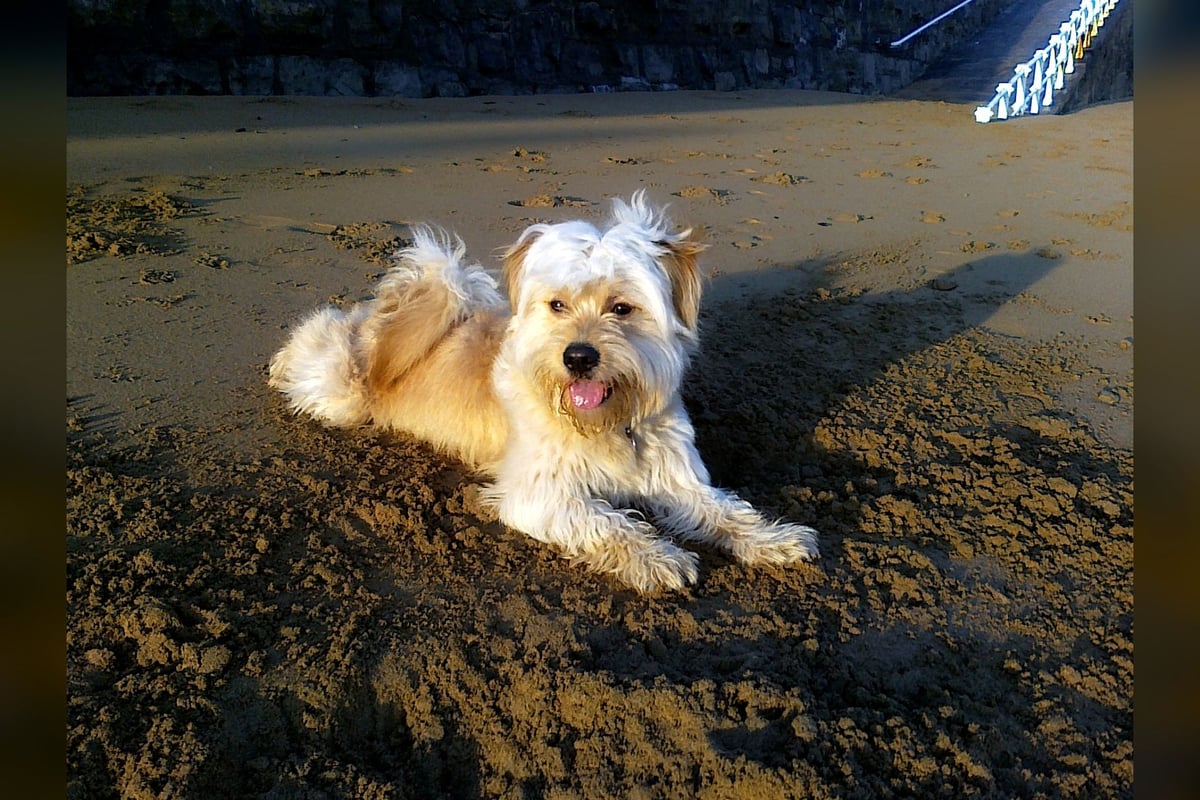
Havanese
The Havanese is the only dog breed native to Cuba, recognized by the FCI under number 250, Group 9 Section 1. Weight 3 to 7 kg for 21 to 29 cm at the withers, with a long coat of 12 to 18 cm, silky, flat or wavy, non-matting — a trait that classifies it as hypoallergenic. Life expectancy of 14 to 16 years, among the longest of the toy breeds. Known predispositions: patellar luxation, hip dysplasia, deafness in dogs with an all-white coat.
- Weight
- 3 to 7kg
- Height
- 21 to 29cm
- Life expectancy
- 15years
- Monthly cost
- 60 to 100€
Personality profile
Energy 3/5
Independence 2/5
Trainability 4/5
Good with children 4/5
Barking 2/5
Space needed 1/5
Attachment to home 5/5
Good with strangers 4/5
Good with dogs 4/5
Good with cats 4/5
Coat care 4/5
Exercise needs 2/5
Scores given on measured axes, data confidence: high.
Living with a Havanese
Description
A compact, slightly elongated build: a back slightly arched toward the croup (a distinctive trait of the FCI standard), a broad head with a marked stop, large oval eyes, drop ears covered in long hair. Coat available in white, light fawn to Havana brown, black, or bicolor with markings. The coat reaches 12 to 18 cm in length at adulthood, a silky to slightly wavy texture without a dense undercoat — the FCI standard forbids clipping or cutting the coat. Weight 3 to 7 kg, both sexes of similar build.

Temperament
Naturally cheerful and alert, the Havanese responds to sound stimuli with a few targeted barks without being pathologically vocal — a controlled alarm temperament, different from the continuous yapping of some other small breeds. Strong attachment to the whole household, including children. Good tolerance of strangers for a toy breed: sociable with visitors if socialized before 12 weeks. Copes poorly with isolation beyond 4 to 5 hours; well-balanced adults handle it better than young dogs.
Training
Good trainability: picks up basic cues in 5 to 10 repetitions with positive reinforcement. Motivated by human contact and small treats. No response to punishment — a strictly positive method is required. Housetraining achieved in 3 to 5 weeks with a consistent routine. Can excel in level-1 obedience and tricks (a breed historically used in Cuban circus acts). Sound desensitization from 8 to 12 weeks is recommended to limit alarm barking.

Feeding
80 to 130 g of premium small-breed kibble a day for a 5 kg adult, split into 2 fixed meals. Adjust to size (the Havanese can weigh 3 to 7 kg — a significant difference in ration). Puppies under 3 months: 3 meals to prevent hypoglycemia. Treats limited to 10% of caloric intake. Small-sized kibble suited to the jaws.
Affiliate links, no extra cost to you. Legal notice

Living conditions
Perfectly suited to an apartment of any size: exercise needs are met by 20 to 30 minutes of daily outings and indoor play sessions. Must live indoors — sensitive to cold below 8 °C, as the long coat without an undercoat provides no thermal insulation. No garden required. A cool or air-conditioned room is recommended above 30 °C: despite its Cuban origin, its low body mass makes it vulnerable to heatstroke.

Grooming and coat care
Brush at least 2 to 3 times a week to prevent tangles, particularly behind the ears, under the armpits and in the groin. Professional grooming every 6 to 8 weeks for upkeep and hygiene. Bathe every 2 to 3 weeks, with full drying mandatory (damp skin under a long coat means a risk of dermatitis). A hypoallergenic breed thanks to the absence of a dense undercoat and very low shedding.

Health
Patellar luxation: the most common toy-breed condition, grades 1 to 4 per OFA classification, intermittent hind-leg lameness observable from 6 months. Hip dysplasia: less common than in large breeds but documented in the Havanese line, radiographic certification of breeding stock is recommended. Congenital deafness: increased risk in dogs with an all-white coat, correlated with the MITF gene; a BAER test is available from 5-6 weeks. Hereditary cataract and progressive retinal atrophy (PRA): annual ophthalmological exam of breeding stock recommended. Chronic epiphora: daily cleaning of the eye corners required. Critical dental hygiene: brushing at least 3 times a week.
Breed history
Cuba's national breed, descended from the Blanquito de la Habana (now extinct), itself likely descended from Mediterranean bichon dogs brought by Spanish colonists in the 16th-17th centuries. A companion dog of the Havana aristocracy for two centuries, nearly wiped out after the 1959 Cuban revolution: breeders exiled to the United States rebuilt the breed in the 1970s from a handful of dogs. Recognized by the FCI under number 250, Group 9, Section 1. Ranked the 8th most popular breed in Canada between 2015 and 2020 according to the Canadian Kennel Club.
Getting ready for your Havanese
Five essentials to line up before day one.
Affiliate links, no extra cost to you. Legal notice
FAQ: Havanese
Sources
- FCI Standard No 250 · FCI breed standard 250, Group 9 Companion and Toy Dogs, Section 1 Bichons and related breeds, Havanese
- AKC Breed Profile · AKC Havanese breed profile, Toy Group
FCI, Fédération Cynologique Internationale, the world body that has codified breed standards since 1911. FCI number 250 is assigned to the Havanese.
Breeds similar to a Havanese

