


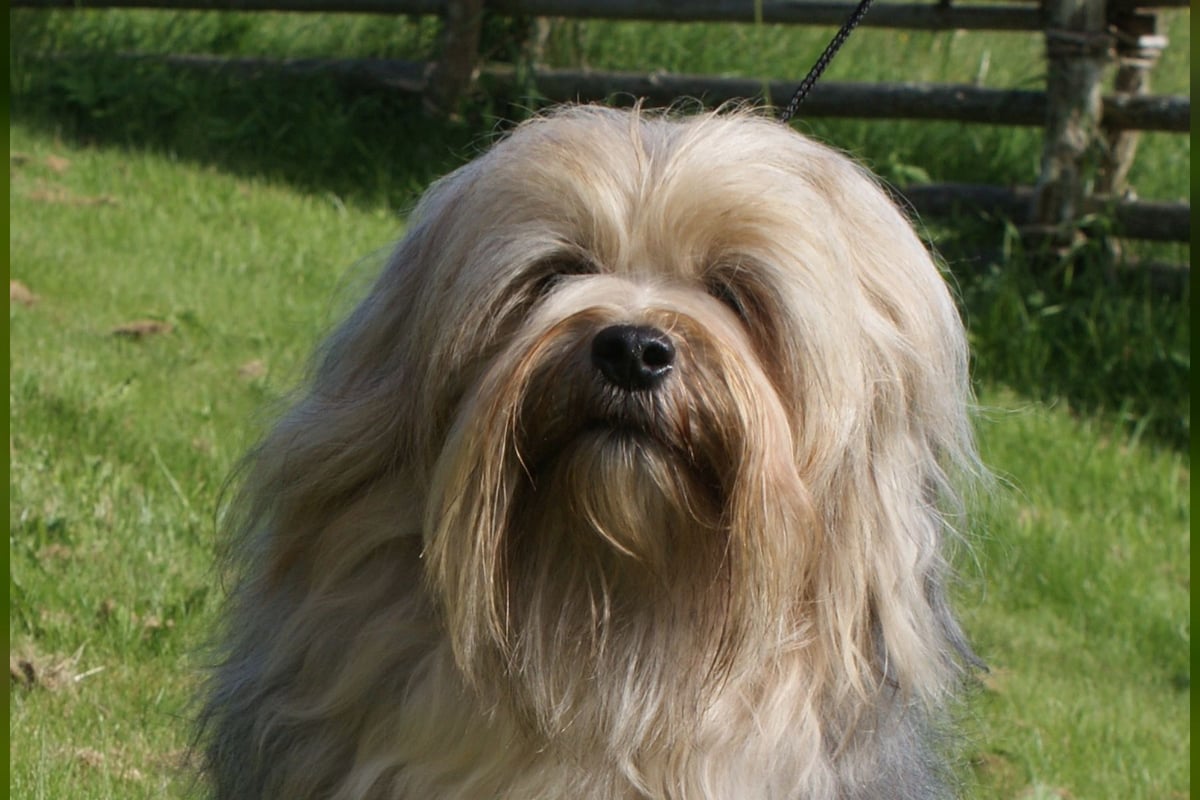
Löwchen
The Löwchen (Petit Chien Lion, FCI 233) is an old companion breed of 4 to 8 kg for 26 to 32 cm at the withers, appearing in European paintings from the 16th century in the work of Albrecht Dürer, then in Francisco de Goya's two centuries later. Its traditional lion clip, shaved hindquarters and long-coated, maned forequarters, is a practice going back to royal courts, where ladies would press the clipped part against their skin to warm their feet. The breed nearly disappeared: in the 1960s, barely 70 individuals were counted worldwide, earning it an entry in the Guinness Book in 1973. It was rebuilt thanks to Madame Bennert in Belgium, and its FCI standard was reestablished in 1961 under French patronage.
- Weight
- 4 to 8kg
- Height
- 26 to 32cm
- Life expectancy
- 14years
- Monthly cost
- 70 to 130€
Personality profile
Energy 3/5
Independence 2/5
Trainability 4/5
Good with children 5/5
Barking 3/5
Space needed 2/5
Attachment to home 5/5
Good with strangers 4/5
Good with dogs 4/5
Good with cats 4/5
Coat care 3/5
Exercise needs 3/5
Scores given on measured axes, data confidence: high.
Living with a Löwchen
Description
A well-proportioned silhouette despite its small size: solid bone, a short, well-supported back, a deep chest. The long, wavy coat forms a full mane at the front and tufts at the leg tips — the paw tufts contrasting with the shaved thighs and hindquarters. All coat colors are accepted in the standard: white, black, fawn, brown, gray, and combinations thereof. The round, dark eyes give a lively, alert expression that reflects the breed's temperament well. Males and females differ little in size — females are slightly smaller but keep the same body type.

Temperament
Lively and playful, the Löwchen is notably more athletic than a Bichon of comparable size: it throws itself into agility and obedience with genuine enthusiasm and enjoys structured activities. Devoted to its family, it forms strong bonds with every member of the household and copes well with children, playing without getting overwhelmed. Sociable with other dogs and cats, it fits easily into a multi-pet home. Its barking level stays moderate — it announces things without excess and is not a daily noise nuisance.
Training
A good level of trainability for a companion breed: it picks up exercises quickly and enjoys short, varied sessions built on positive reinforcement. It excels in obedience and agility — disciplines where its natural liveliness and its eagerness to work with its owner set it apart from other lap-dog breeds. Early socialization remains important to reinforce its already good natural tolerance of strangers. Regular sport and mental exercise sessions prevent boredom and unwanted behaviors.

Feeding
80 to 150 g of premium small-breed kibble a day for a 4 to 8 kg adult, depending on activity level, in 2 meals. Small-breed kibble up to 12 months to support growth. Weight monitoring is recommended: the breed is not especially food-driven, but Bichon-type breeds in general tend to gain weight with age if calorie intake isn't matched to actual activity. Avoid excessive treats, which easily unbalance the ration of a dog this size.
Affiliate links, no extra cost to you. Legal notice

Living conditions
Its small size and limited space needs make it suited to apartment life, provided it gets regular outings and mental stimulation. It appreciates a garden just as much, which it will explore with curiosity, but it does not need a large space to thrive. It tolerates cold and heat reasonably well without any extreme climate sensitivity — standard summer precautions are enough. Its low tendency to shed is an asset indoors, even though this doesn't exempt it from regular coat care.

Grooming and coat care
The traditional lion clip requires professional grooming every 6 to 8 weeks to keep the shaved line clean on the thighs, hindquarters and tail (with a pompom at the tip). The long areas — mane, leg tufts, ears — need brushing 2 to 3 times a week to prevent tangles and mats. Shedding is very low, which lightens day-to-day upkeep. Ear cleaning and eye checks (predisposition to tear staining) round out the grooming routine.

Health
Life expectancy of 13 to 15 years, robust for a companion breed. The most documented conditions are patellar luxation (grade I to III depending on the line), progressive retinal atrophy (PRA), for which a genetic test is available and recommended before breeding, hereditary cataract and hypothyroidism. Few serious systemic diseases are reported in the breed — Madame Bennert's reconstruction imposed rigorous health selection. An ophthalmological exam and a PRA test on breeding stock remain the priority checks for a serious breeder.
Breed history
The Löwchen is mentioned in European iconographic sources from the 16th century on, in the work of Albrecht Dürer, then in the 18th century in Francisco de Goya's: shown in its characteristic lion clip, it appears alongside noblewomen. Its exact origin remains debated — France, Belgium and the Netherlands each claim the breed's birthplace, which explains the joint patronage adopted when the FCI standard was reestablished in 1961 under French coordination. In the 1960s, the world population did not exceed 70 individuals, placing the breed among the most endangered in the world according to the 1973 Guinness Book. The systematic reconstruction led by Madame Bennert in Belgium, starting from a handful of quality specimens, saved the breed and relaunched structured breeding in Europe.
Getting ready for your Löwchen
Five essentials to line up before day one.
Affiliate links, no extra cost to you. Legal notice
FAQ: Löwchen
Sources
- FCI Standard No 233 — Little Lion Dog (Löwchen) · FCI breed standard 233, Group 9 Companion and Toy Dogs, Section 1 Bichons and related breeds
- Société Centrale Canine — Löwchen · SCC official breed profile, Löwchen, Group 9
- AKC Breed Profile — Löwchen · AKC Löwchen breed profile, Non-Sporting Group
FCI, Fédération Cynologique Internationale, the world body that has codified breed standards since 1911. FCI number 233 is assigned to the Löwchen.
Breeds similar to a Löwchen

