


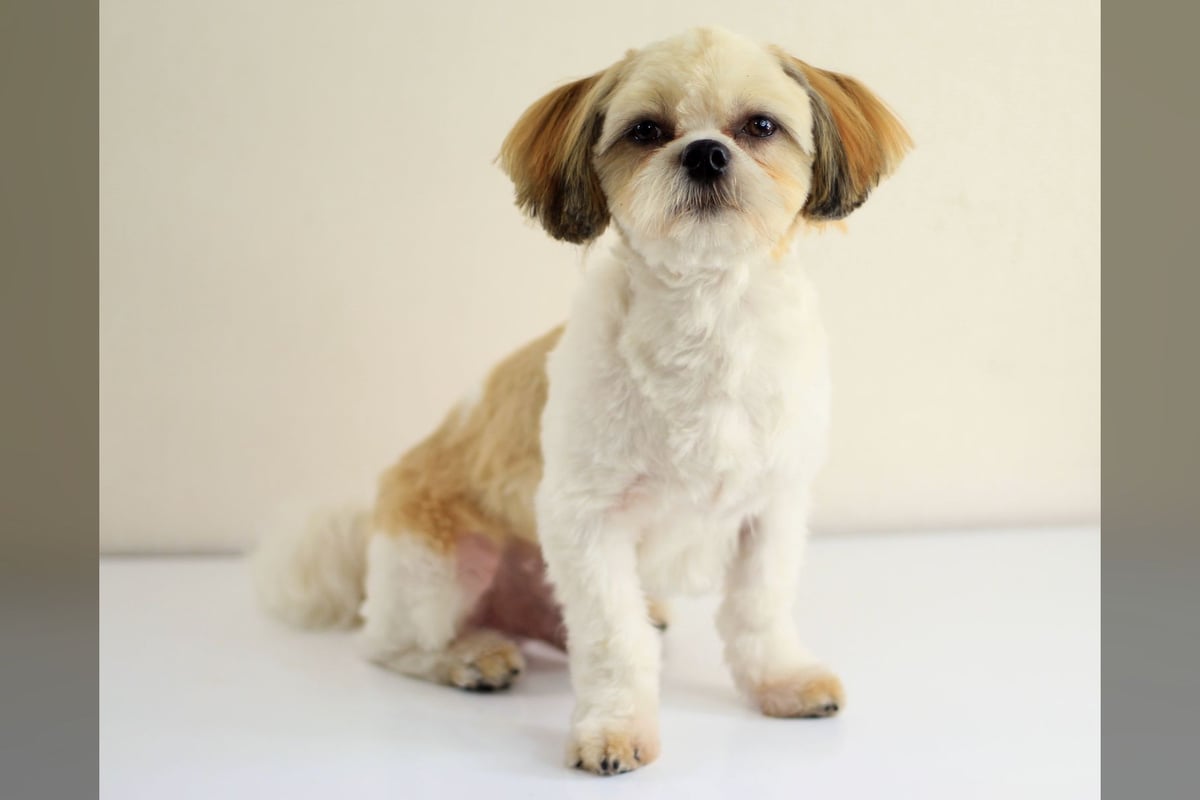
Lhasa Apso
The Lhasa Apso weighs 5 to 8 kg for 25-28 cm at the withers, recognized by the FCI under number 227, group 9. A Tibetan breed selected as a monastery sentinel, it has a short but not flattened muzzle — distinct from strict brachycephalic breeds: no systematic BOAS syndrome. Life expectancy 14 to 16 years, exceptional for a companion dog.
- Weight
- 5 to 8kg
- Height
- 25 to 28cm
- Life expectancy
- 15years
- Monthly cost
- 60 to 100€
Personality profile
Energy 2/5
Independence 4/5
Trainability 2/5
Good with children 3/5
Barking 4/5
Space needed 1/5
Attachment to home 3/5
Good with strangers 2/5
Good with dogs 3/5
Good with cats 3/5
Coat care 5/5
Exercise needs 2/5
Scores given on measured axes, data confidence: high.
Living with a Lhasa Apso
Description
A compact, sturdy dog, longer than tall, entirely covered by a long, straight, abundant coat falling to the ground. All colors accepted by the FCI standard (gold, sable, honey, gray, slate, black, white, brown, or particolor). Head carried high, moderately narrow skull, medium muzzle with a well-defined stop — a muzzle noticeably longer than that of the Shih Tzu or the Pekingese. Drop ears well covered with hair. Tail carried curved over the back. The expression is proud.

Temperament
A breed with an independent character, wary of strangers: Lhasa Apsos were selected to alert, not to welcome. Very attached to its core family but not very demonstrative by default. Prone to barking at the slightest sound or visual stimulus — an ever-active sentinel role, hard to correct entirely. Stubborn: resists repetitive commands and tires of exercises it finds uninteresting. Can cohabit with other animals given early socialization but remains touchy and has little tolerance for provocation.
Training
Low to moderate trainability — a breed selected for autonomous vigilance, not for obedience to human commands. Learns the basics (sit, down, indoor recall) but outdoor obedience remains uncertain. Positive reinforcement exclusively, sessions of 5 minutes maximum. Early socialization (0-16 weeks) is decisive for reducing wariness of strangers. It does not forgive coercive methods and can become a nipper if poorly managed.

Feeding
120 to 170 g of premium kibble a day for a 7 kg adult, in 2 meals. A breed at moderate risk of obesity. Ration to adjust according to activity and to reassess in senior age (after 8 years) by reducing phosphorus if creatinine rises.
Affiliate links, no extra cost to you. Legal notice

Living conditions
Suited to an apartment of any size — its exercise needs are low (2 outings of 20 minutes a day). Moderately tolerates cold thanks to its double Tibetan coat, but the long hair soaks up water in wet outdoor conditions. Its heat sensitivity remains lower than that of strict brachycephalic breeds: it holds up to 28-30 °C with access to shade and water, but exertion in full heat should still be avoided. A garden is not essential; on-leash outings are recommended in residential settings, given its tendency to bark.

Grooming and coat care
One of the most demanding grooming routines in group 9. Long coat down to the ground requiring full daily brushing to prevent tangles (critical areas: armpits, groin, behind the ears, ruff). Professional grooming every 6 to 8 weeks to maintain the full coat, or a short trim to reduce the workload. Eye corners to be cleaned daily (pigmented eye discharge). Drop ears: weekly inspection to prevent ear infections. Monthly nail trimming. Groomer budget: 50 to 90 € per visit.

Health
Four priority conditions. (1) Hip dysplasia: documented predisposition — parental radiographs (PennHIP or Norberg score) should be required before acquisition. (2) Progressive retinal atrophy (PRA): hereditary retinal degeneration leading to night blindness then total blindness — PRCD-PRA DNA test available, screening of breeding dogs mandatory at serious breeders. (3) Syringomyelia: malformation of the posterior cranial fossa causing neck pain and the characteristic sideways scratching — MRI recommended if symptomatic. (4) Chronic kidney disease: breed predisposition, annual urea/creatinine check from age 7. Life expectancy 14 to 16 years with regular follow-up.
Breed history
A breed developed in Tibet, used for centuries as a sentinel dog inside monasteries and the palaces of Tibetan nobles — hence its name Abso Seng Kye ("roaring lion dog"). The Dalai Lamas gave Lhasa Apsos to foreign dignitaries, making them rare diplomatic gifts. First representatives arrived in the West in the early 20th century. FCI standard established under number 227, group 9, section 5 (Tibetan breeds). Distinct from the Shih Tzu (FCI 208), developed later in China partly from the Lhasa Apso.
Getting ready for your Lhasa Apso
Five essentials to line up before day one.
Affiliate links, no extra cost to you. Legal notice
FAQ: Lhasa Apso
Sources
- FCI Standard No 227 — Lhasa Apso · FCI breed standard 227, Group 9 Companion and Toy Dogs, Section 5 Tibetan breeds
- AKC Breed Profile — Lhasa Apso · AKC Lhasa Apso breed profile, Non-Sporting Group
FCI, Fédération Cynologique Internationale, the world body that has codified breed standards since 1911. FCI number 227 is assigned to the Lhasa Apso.
Breeds similar to a Lhasa Apso

