


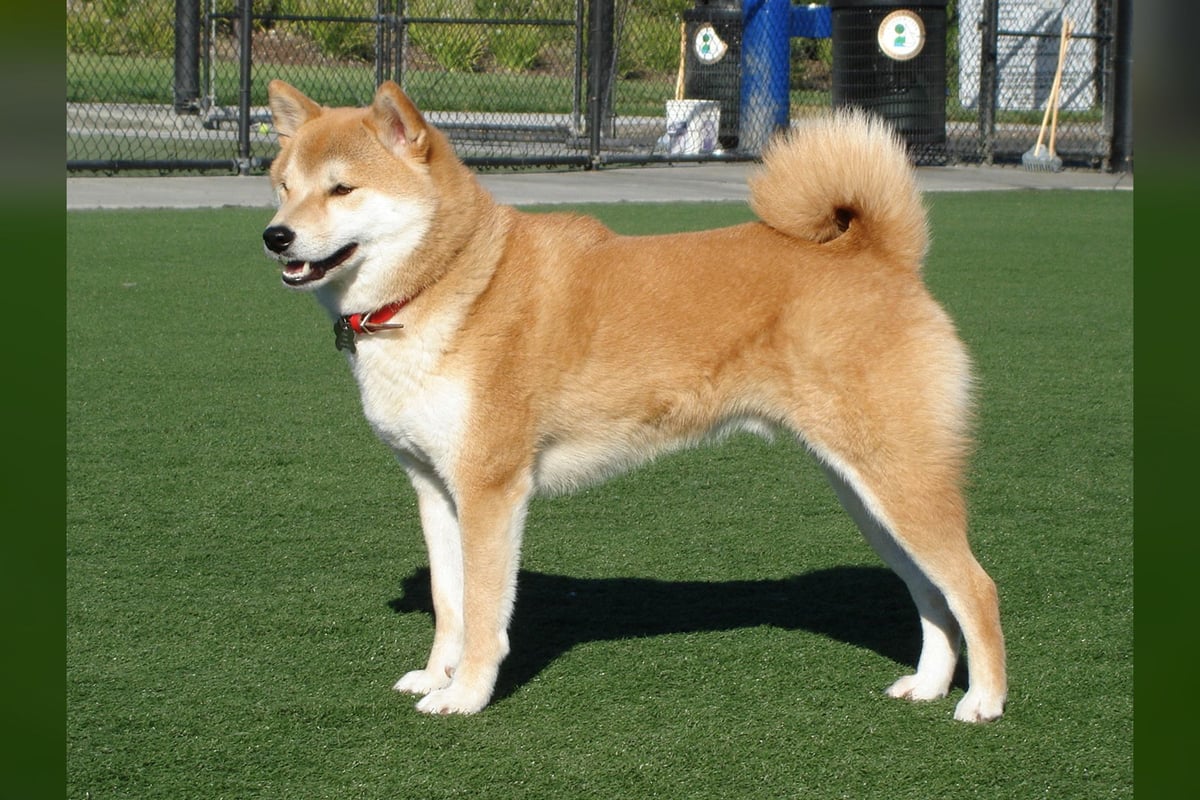
Shiba Inu
The Shiba Inu weighs 7 to 12 kg for 33 to 43 cm. The smallest of the primitive Japanese spitz breeds, recognized by the FCI under number 257 and declared a Japanese natural monument in 1936. A breed with near-feline behavior: maximum independence, instinctive cleanliness, a dislike of water. Recall is rarely reliable, and its predatory instinct is extreme — secure outings on a lead or in a fully enclosed area are mandatory.
- Weight
- 7 to 12kg
- Height
- 33 to 43cm
- Life expectancy
- 14years
- Monthly cost
- 60 to 100€
Personality profile
Energy 3/5
Independence 5/5
Trainability 1/5
Good with children 3/5
Barking 4/5
Space needed 3/5
Attachment to home 2/5
Good with strangers 2/5
Good with dogs 2/5
Good with cats 1/5
Coat care 3/5
Exercise needs 3/5
Scores given on measured axes, data confidence: high.
Living with a Shiba Inu
Description
A compact, muscular breed, well proportioned for its size. Males stand 38-43 cm for 9-12 kg, females 33-38 cm for 7-10 kg. A dense double coat with a soft, abundant undercoat, in red (the most common color), sesame, black and tan, or cream, with mandatory urajiro markings. Triangular pricked ears, tail carried in a tight curl. A lively, alert expression, sometimes compared to that of a fox.

Temperament
Independence rates 5/5: the Shiba Inu doesn't seek to please and doesn't obey out of a desire to satisfy its owner. A Japanese saying describes it as "one part dog, one part human, one part cat, and one part monkey." A vocal breed whose repertoire includes the "shiba scream" — a characteristic high-pitched cry let out under restraint (bathing, nail trimming, a vet exam), audible from a long distance. Reserved with strangers, undemonstrative even with its family. Extreme predatory instinct: any small moving animal triggers a chase. Moderate intolerance toward dogs of the same sex. Careful supervision is needed around young children because of its low frustration threshold.
Training
Trainability rates 1/5: the breed ranks among the least obedient in Stanley Coren's working/obedience intelligence ranking. The Shiba understands commands quickly but sovereignly chooses whether to carry them out. Recall is nearly nonexistent outside a secured enclosure — that's a biological reality, not a training failure. Positive reinforcement only, with very high-value treats; keep sessions short (5-10 min max) before it disengages. Moderate physical activity: 2 outings of 30-45 minutes a day are enough for a balanced adult, on a lead or in a fully enclosed space.

Feeding
150 to 250 g of premium kibble a day for a 9 kg adult, split into 2 meals. Kibble with moderate protein content (25-28%), adjusted to activity level. The breed is prone to food allergies: favor single-protein formulas in cases of recurrent dermatitis. Watch the weight after age 7.
Affiliate links, no extra cost to you. Legal notice

Living conditions
Can adapt to apartment life provided outings twice a day are secured on a lead or in a fully enclosed area. Its moderate size shouldn't be misleading: the Shiba bolts the moment it spots prey and does not respond to recall. A garden with a solid fence, at least 1.8 m high and buried deep, is recommended. It tolerates cold well thanks to its double coat, with fair heat tolerance. Not recommended in households with cats or small rodents.

Grooming and coat care
Weekly brushing under normal conditions, daily during the two major annual shedding seasons (spring/fall) when the undercoat comes out heavily. The breed is naturally clean and grooms itself like a cat. Bathing is a major stressor: the Shiba resists water violently (a shiba scream every time), so a monthly session at most. Professional grooming isn't necessary beyond bathing and nail trimming.

Health
An overall robust breed with one of the highest life expectancies in Group 5: 13 to 16 years. Documented predispositions: skin allergies and atopy (chronic pruritus, recurrent ear infections, pododermatitis — long-term treatment often needed), glaucoma (elevated intraocular pressure that can lead to blindness if undetected — annual ophthalmological checks recommended from age 4), and patellar luxation (grades 1 to 3 depending on severity, surgical correction if grade 2+). Entropion is reported in some lines. An ophthalmological and orthopedic workup is advised before purchase.
Breed history
A breed native to the mountainous regions of Chubu and Kyushu, where it hunted small game (hares, pheasants). Declared a Japanese natural monument in 1936. Nearly extinct at the end of World War II (bombing, then a distemper epidemic) — the breed was rebuilt from three regional lines (Shinshu, Mino, Sanin) under the Nihon Ken Hozonkai. The first Shiba was exported to the United States in 1954. In France, LOF registrations rose from 360 in 2011 to 2 691 in 2021, driven by the post-internet wave of popularity and meme culture (Doge).
Getting ready for your Shiba Inu
Five essentials to line up before day one.
Affiliate links, no extra cost to you. Legal notice
FAQ: Shiba Inu
Sources
- FCI Standard No 257 · FCI breed standard 257, Group 5 Spitz and Primitive Types, Section 5 Asian Spitz
- AKC Breed Profile · AKC Shiba Inu breed profile, Non-Sporting Group
FCI, Fédération Cynologique Internationale, the world body that has codified breed standards since 1911. FCI number 257 is assigned to the Shiba Inu.
Breeds similar to a Shiba Inu

