


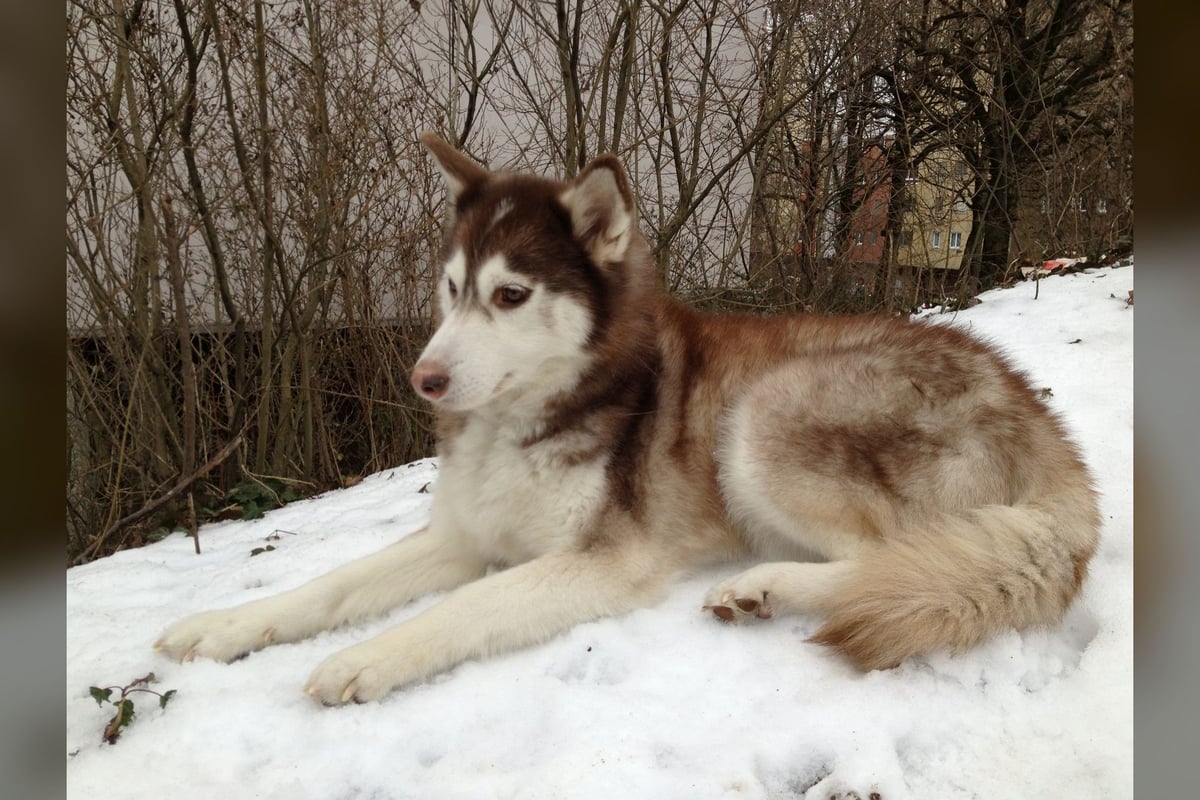
Siberian Husky
The Siberian Husky is a Nordic sled dog originally from Eastern Siberia, weighing 16 to 28 kg depending on sex. Recognized by the FCI under number 270, it combines extreme endurance (able to run 80-150 km/day in harness), maximum independence (one of the least obedient breeds in the world), and a very pronounced instinct to run off.
- Weight
- 16 to 28kg
- Height
- 50 to 60cm
- Life expectancy
- 13years
- Monthly cost
- 80 to 120€
Personality profile
Energy 5/5
Independence 5/5
Trainability 1/5
Good with children 4/5
Barking 3/5
Space needed 5/5
Attachment to home 4/5
Good with strangers 5/5
Good with dogs 4/5
Good with cats 1/5
Coat care 4/5
Exercise needs 5/5
Scores given on measured axes, data confidence: high.
Living with a Siberian Husky
Description
A medium-sized, athletic, and elegant breed. Males 53-60 cm for 20-28 kg, females 50-56 cm for 16-23 kg. Dense double coat with a huge, downy undercoat; coat colors black/white, gray/white, fawn/white, agouti, pure white. Eyes blue, brown, or heterochromatic (one of each). Plumed tail carried in a sickle curve at rest.

Temperament
Independent, sometimes stubborn, less demonstrative compared to so-called companion breeds. A vocal breed that howls more than it barks (a typical Nordic-breed "song"), a behavior to channel from puppyhood for urban living. Not wary or possessive toward strangers: a poor guard dog. Very strong instinct to run off: clears fences of 2.40 m, digs under enclosures, exploits the smallest gap in a gate.
Training
Trainability among the lowest in formal obedience: where a German Shepherd Dog locks in a command after a few repetitions, this breed needs a multiple of that — and above all a reason to cooperate. Recall is never reliable outside an enclosure. Stay firm and consistent, use very high-value treats. Signature activities: canicross, cani-VTT (mountain biking), sledding (pulk, harness), bikejoring. These sports call for endurance and long outings.

Feeding
300 to 450 g of premium kibble a day for a 22 kg adult, in 2 meals. An efficient metabolism inherited from working at -40 °C: doesn't gain weight easily, can get by on a moderate ration. High-fat kibble (16-20%) for intensive sporting activity (canicross, sledding). Hydration should be monitored in summer.
Affiliate links, no extra cost to you. Legal notice

Living conditions
Not suited to apartment life or to heat. A house with a very large yard enclosed by rigid fencing buried deep (>50 cm) is mandatory. A cool-to-cold temperate climate is ideal; not recommended in Mediterranean or tropical regions. Off-leash outings are impossible outside an enclosure or a very large fenced space (instinct to run off plus prey drive).

Grooming and coat care
Brush 2 times a week under normal conditions, daily during the two annual shedding seasons (spring/fall), when the undercoat comes out in whole clumps (the equivalent of a trash bag of fur per molt). No clipping: cutting the coat destroys its thermal insulation, and the regrowth doesn't always restore the original structure. Bathe quarterly at most.

Health
A hardy breed with few genetic conditions. Progressive retinal atrophy (DNA test), juvenile cataracts — common enough to justify an annual eye exam from a young age, since onset often occurs before age 2. Low-incidence hip dysplasia. Moist skin pyoderma in hot, humid climates. Sensitive to heat because of its Arctic double coat: avoid any intense exercise above 20 °C, provide constant shade, fresh water, swimming, or a cooling mat in summer. Life expectancy 12-14 years, among the best for a breed of this size.
Breed history
Selected by the Chukchi people of northeastern Siberia for 3000+ years for sled work and guarding reindeer herds. Imported to Alaska in 1908 by William Goosak for the All Alaska Sweepstakes race. Became world-famous in 1925 thanks to Balto and the Nome serum run. FCI standard fixed in 1966. Imported to France in the 1970s, it has seen strong popularity there since the 2010s, largely driven by its exposure in popular culture — with a high number of surrenders as the flip side.
Getting ready for your Siberian Husky
Five essentials to line up before day one.
Affiliate links, no extra cost to you. Legal notice
FAQ: Siberian Husky
Sources
- FCI Standard No 270 · FCI breed standard 270, Group 5 Spitz and Primitive Types
- AKC Breed Profile · AKC Siberian Husky breed profile, Working Group
FCI, Fédération Cynologique Internationale, the world body that has codified breed standards since 1911. FCI number 270 is assigned to the Siberian Husky.
Breeds similar to a Siberian Husky

