


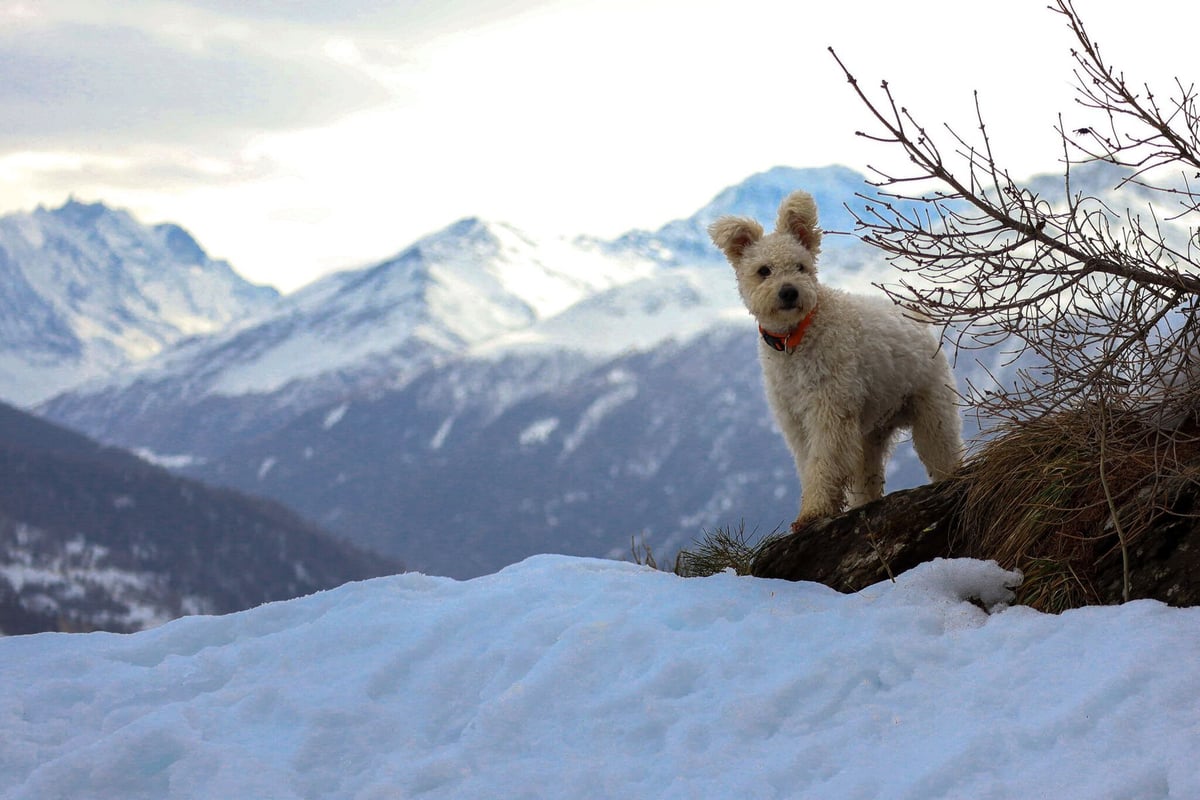
Pumi
The Pumi (FCI 56, Group 1) is a Hungarian herding dog standing 38 to 47 cm for 8 to 15 kg, developed in the 17th-18th centuries from crosses between the local Puli and dogs imported from Western Europe — terriers, with a probable contribution from the Briard and the Spitz. Recognized as a breed distinct from the Puli in 1920, it stands out for its curly, half-wool half-hair coat — never corded — and its expressive, erect V-shaped ears. The most typical gray coat results from progressive graying from a black birth coat to the adult color reached around 2 to 3 years.
- Weight
- 8 to 15kg
- Height
- 38 to 47cm
- Life expectancy
- 13years
- Monthly cost
- 80 to 130€
Personality profile
Energy 5/5
Independence 3/5
Trainability 5/5
Good with children 4/5
Barking 5/5
Space needed 3/5
Attachment to home 4/5
Good with strangers 2/5
Good with dogs 3/5
Good with cats 3/5
Coat care 3/5
Exercise needs 5/5
Scores given on measured axes, data confidence: high.
Living with a Pumi
Description
The breed is immediately recognizable by three distinctive physical traits: its erect, mobile and highly expressive V-shaped ears; its tail curled forward over the back; and its medium-long curly coat with a half-wool half-hair look, never corded unlike the Puli. Puppies are born black and progressively gray, with the adult gray settling in between 2 and 3 years — a genetic trait similar to the graying of the Schnauzer. Other admitted colors are black, white and fawn. A light, square silhouette, fine and nervy limbs: its build reflects selection for speed and agility rather than mass.

Temperament
With inexhaustible energy, alert and reactive, it throws itself fully into whatever it is offered. Sociable with its family, it shows marked reserve toward strangers — a functional wariness inherited from its role as a flock guardian. The breed barks by nature: it signals every intrusion, every unusual sound, with a vocal insistence that is part of its identity. Its sharp intelligence and reactivity let it anticipate its handler's requests, making it an attentive partner in competition.
Training
The breed ranks among the top performers in competitive agility and obedience: its sharp intelligence, reactivity and enthusiasm for work make it a formidable competitor within Group 1. Short (15-20 minute), frequent and varied sessions give better results than long, repetitive sessions that quickly bore this breed. The positive method, based on food rewards and play, is the most effective. Long daily walks and intense sport sessions (agility, herding, frisbee) are needed to channel its inexhaustible energy — without enough activity, redirected behaviors (excessive barking, destruction) set in quickly.

Feeding
180 to 280 g of premium medium-breed kibble a day for a 10-12 kg adult, in two meals. Females under 10 kg are closer to small-breed needs; adjust quantities to actual activity — a competition agility dog burns significantly more than a family dog. During growth (up to 12-14 months), medium-breed puppy formula to support bone development. An omega-3 supplement (salmon oil) helps maintain coat curl quality. Watch weight, particularly after spaying/neutering, as the breed can tend to gain weight with reduced activity.
Affiliate links, no extra cost to you. Legal notice

Living conditions
House or apartment both work, provided its intense exercise needs are met daily — a minimum of two hours of physical activity and mental stimulation. Its barking and vocal behavior is the main constraint in urban settings: without early, rigorous noise management, cohabiting with neighbors can become difficult. Its light build (8-15 kg) and lack of drooling make it manageable indoors, but its overflowing energy is incompatible with a sedentary lifestyle. Cool temperatures suit it better than intense summer heat.

Grooming and coat care
The curly coat requires regular but not laborious upkeep: brushing twice a week to detangle the curls and prevent knots. Unlike the Puli, no braiding or cord maintenance is needed. Shaping grooming (light trimming of the outline) is recommended two to three times a year to maintain the breed's typical silhouette. The coat dries quickly after a bath thanks to its half-wool texture. Shedding is moderate and not very visible thanks to the curly structure that retains dead hair — allergic owners should still test their tolerance before adopting.

Health
Life expectancy of 12 to 14 years. Hip dysplasia is monitored, though prevalence in the breed is moderate — serious breeders provide OFA or SCC x-ray results for breeding stock. Patellar luxation is reported in the breed and deserves particular attention when buying, especially in smaller-build lines. Progressive retinal atrophy (PRA) and degenerative myelopathy (DM, SOD1 mutation) have genetic tests available — require results for both parents before any purchase. The worldwide population remains limited, which calls for vigilance regarding the genetic diversity of breeding stock.
Breed history
The breed was born from the introduction into Hungary, in the 17th and 18th centuries, of dogs from Western Europe — terriers, probably German Spitz and French Briards — crossed with the local Puli. This crossbreeding produced a more nervous, more vocal herder with erect ears, different from the drop-eared, corded-coat Puli. The official distinction between the two breeds only came in 1920, driven by Hungarian kennel clubs. The FCI 56 standard was established progressively; the breed was recognized by the AKC in the Herding Group in 2016. In Hungary, the Pumi is still used on flocks, notably for driving cattle and pigs, disciplines in which it excels through its gathering ability and pressure control.
Getting ready for your Pumi
Five essentials to line up before day one.
Affiliate links, no extra cost to you. Legal notice
FAQ: Pumi
Sources
- FCI Standard No 56 — Pumi · FCI breed standard 56, Group 1 Sheepdogs and Cattledogs (except Swiss Cattledogs)
- Société Centrale Canine — Pumi · SCC official breed profile Pumi, Group 1
- AKC Breed Profile — Pumi · AKC Pumi breed profile, Herding Group, recognized 2016
FCI, Fédération Cynologique Internationale, the world body that has codified breed standards since 1911. FCI number 56 is assigned to the Pumi.
Breeds similar to a Pumi

