


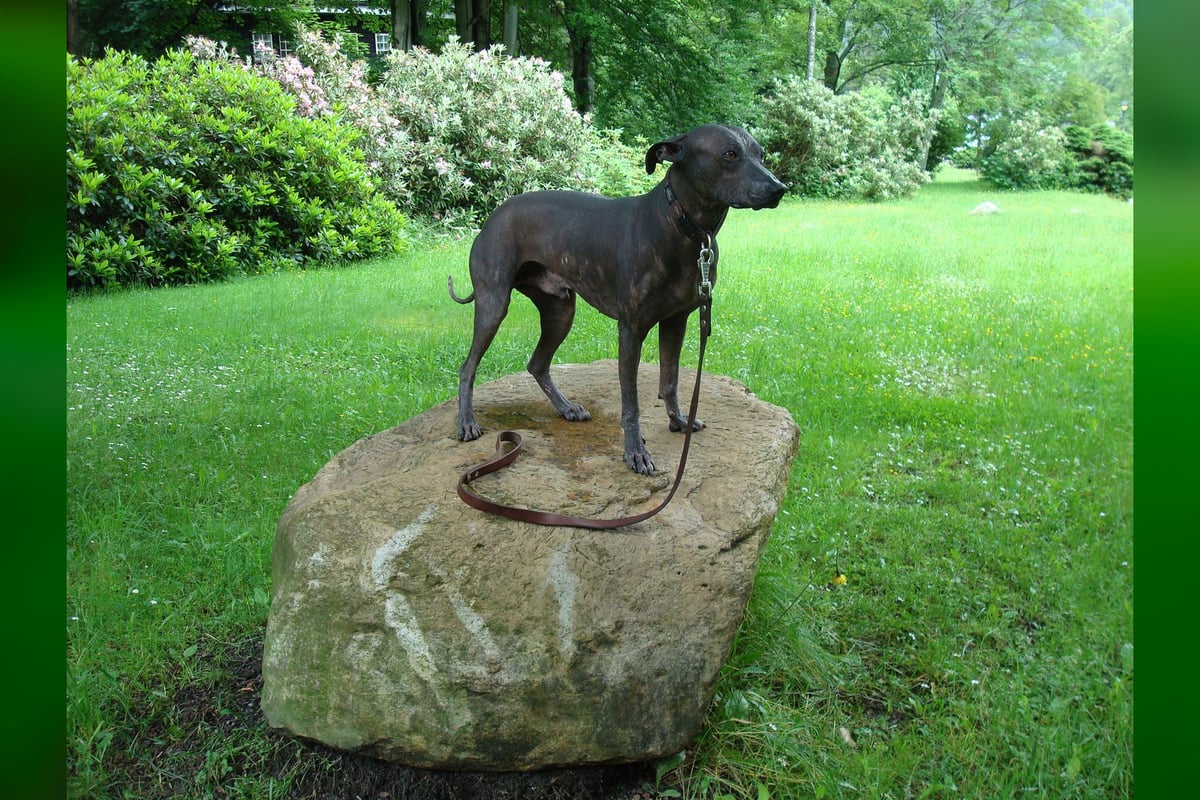
Peruvian Hairless Dog
The Peruvian Hairless Dog (Perro Sin Pelo del Perú) is recognized by the FCI under number 310 in three sizes: Small (4-8 kg / 25-40 cm), Medium (8-12 kg / 40-50 cm), and Large (12-25 kg / 50-65 cm). Declared a cultural heritage of the Peruvian nation in 2001, it is depicted on ceramic vessels from the pre-Columbian Moche and Vicus cultures. Its hairlessness stems from an allele (FOXI3) that is lethal in the homozygous state: every litter therefore includes a share of coated puppies — this is not a flaw, it is the breed's mandatory genetic mechanism.
- Weight
- 4 to 25kg
- Height
- 25 to 65cm
- Life expectancy
- 12years
- Monthly cost
- 60 to 120€
Personality profile
Energy 4/5
Independence 3/5
Trainability 3/5
Good with children 4/5
Barking 3/5
Space needed 3/5
Attachment to home 4/5
Good with strangers 2/5
Good with dogs 3/5
Good with cats 3/5
Coat care 2/5
Exercise needs 4/5
Scores given on measured axes, data confidence: medium.
Living with a Peruvian Hairless Dog
Description
A breed with a lean, muscular body and soft skin that feels warm to the touch — skin temperature is noticeably higher than in coated breeds. Three distinct sizes are recognized in the standard: Small (25-40 cm), Medium (40-50 cm), and Large (50-65 cm), each with its own weight range. Skin color varies: solid black, slate gray, brown, bronze, mottled pink — often with lighter patches in areas lacking melanin. Individuals may show a few tufts of hair on the skull, feet, or tail — permitted by the standard. Slightly arched topline, deep chest, fine but well-boned limbs.

Temperament
A lively, attentive breed with 4/5 energy — active outdoors but calm indoors once its needs are met. Attached to its household, it develops strong bonds with its owners while staying reserved with strangers (initial wariness that fades after a calm introduction). Gets along well with children who respect it. Generally compatible with other dogs, provided introductions are gradual. Moderate hunting instinct — supervise around small animals. The breed does not tolerate prolonged solitude: it needs regular human presence.
Training
Trainability at 3/5 — more cooperative than primitive Asian spitz breeds, without reaching the level of herding breeds. Responsive to positive reinforcement, does well with short 10-15 minute sessions with treats and verbal encouragement. A good candidate for agility (lightness, speed) and adapted obedience sports. Early socialization is important to temper its initial wariness of strangers. Regular physical activity is a behavioral prerequisite: an under-exercised Peruvian Hairless Dog develops anxiety and destructive behaviors.

Feeding
200 to 450 g of premium kibble a day depending on size (Small to Large), in 2 meals. Kibble with an adequate protein content (25-30%) suited to the lean build and high activity level. Avoid overfeeding: the breed is naturally slim, and visible weight gain on bare skin is immediately noticeable. Omega-3 and omega-6 fatty acid supplementation is advised to maintain skin quality and reduce dryness.
Affiliate links, no extra cost to you. Legal notice

Living conditions
Suited to apartment life provided it gets 2 active outings a day — its 4/5 exercise needs call for 45-minute to 1-hour walks or intensive play sessions. Its total lack of an insulating coat makes it extremely sensitive to cold: below 15 °C, a coat or sweater is necessary, and it should not sleep on cold surfaces. It tolerates heat well, but prolonged sun exposure without protection remains harmful to the skin. A garden is appreciated but not required if outings are regular.

Grooming and coat care
Minimal upkeep compared with coated breeds: no brushing, no visible shedding. The skin, however, needs a weekly wash in lukewarm water (without harsh fragrance) to remove sebaceous secretions that build up on the surface with no coat to absorb them. Skin moisturizing recommended with a non-greasy product after bathing. The lack of coat does not, however, make the breed hypoallergenic. Ears and skin folds should be inspected regularly to prevent buildup.

Health
A sturdy breed with few documented genetic pathologies, compared with European breeds selectively bred for two centuries. Main risk: sun dermatitis and sunburn on the bare skin — SPF 50+ sunscreen is essential for any exposure exceeding 20 minutes in direct sun (especially on pink or lightly pigmented areas). The hairless allele (FOXI3) is linked to partial absence of premolars: hairless individuals often have fewer teeth than the canine average — to check at veterinary check-ups. Cold sensitivity, which can encourage respiratory infections if thermoregulation is neglected. Life expectancy 11 to 12 years.
Breed history
The Moche and Vicus cultures, settled on the north coast of Peru before the Spanish conquest, depicted this hairless dog with precision on ceramic vessels — some pieces show animals sleeping against sick humans, which fueled the (scientifically unproven) hypothesis of a therapeutic use linked to the breed's skin warmth. Inca civilization assigned it a ritual and good-luck role. After the Spanish conquest, the breed was marginalized but survived in rural coastal villages. It was rediscovered and standardized in the 20th century, then declared intangible cultural heritage of the Peruvian nation by official decree in 2001. International export remains limited: in France, a few SCC-affiliated breeders offer puppies from Peruvian or European lines imported since the 2010s.
Getting ready for your Peruvian Hairless Dog
Five essentials to line up before day one.
Affiliate links, no extra cost to you. Legal notice
FAQ: Peruvian Hairless Dog
Sources
- FCI Standard No 310 · FCI breed standard 310, Group 5 Spitz and Primitive Types, Section 6 Primitive type, Hairless Dog
- AKC Breed Profile — Peruvian Inca Orchid · AKC Peruvian Inca Orchid breed profile, Miscellaneous Class
- Société Centrale Canine — Peruvian Hairless Dog · SCC breed profile for the Peruvian Hairless Dog, group 5, section 6, number 310
FCI, Fédération Cynologique Internationale, the world body that has codified breed standards since 1911. FCI number 310 is assigned to the Peruvian Hairless Dog.
Breeds similar to a Peruvian Hairless Dog

