


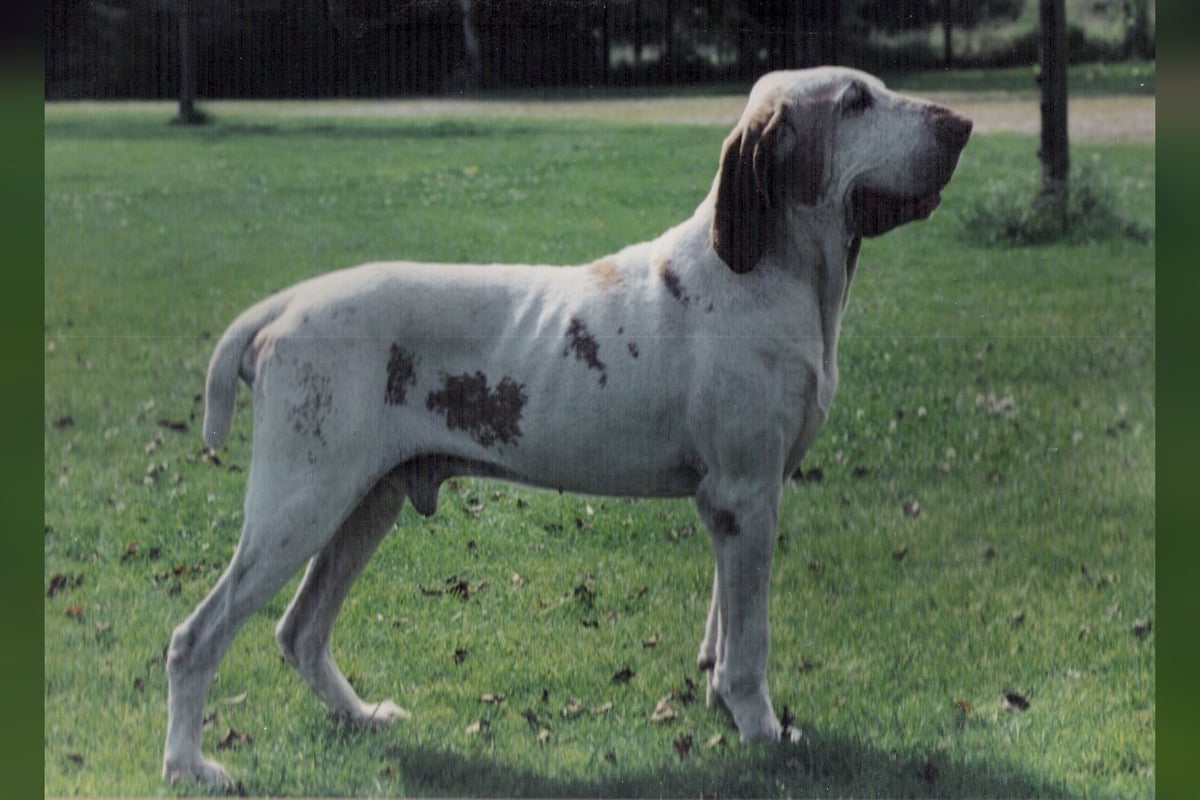
Bracco Italiano
The Bracco Italiano (FCI 202, Group 7 Pointing Dogs) is one of the oldest documented European pointing breeds: tradition traces its type back to Etruscan frescoes from central Italy in the 4th century BC. Weighing 25 to 40 kg for 55 to 67 cm at the withers, it was already prized by the Medici during the Renaissance for hawking. Recognized by the FCI as early as 1949, it stands out for its shallow stop, its long muzzle with a Roman profile, and its distinctive wide trot reaching 12 to 15 km/h while hunting. A versatile breed, it masters pointing, retrieving and water work.
- Weight
- 25 to 40kg
- Height
- 55 to 67cm
- Life expectancy
- 12years
- Monthly cost
- 100 to 170€
Personality profile
Energy 4/5
Independence 2/5
Trainability 4/5
Good with children 5/5
Barking 2/5
Space needed 4/5
Attachment to home 5/5
Good with strangers 4/5
Good with dogs 4/5
Good with cats 3/5
Coat care 2/5
Exercise needs 4/5
Scores given on measured axes, data confidence: high.
Living with a Bracco Italiano
Description
Its head is the breed's most striking signature: a shallow stop, a long, square muzzle with a Roman profile, large drooping lips and long, velvety ears. The coat is short, dense and close-lying — white-orange or white-chestnut (roan) — with well-defined patches or mottling. The body is powerful and muscular without excess, carried on solid limbs that allow a broad, sustained trot. Males 58-67 cm for 30-40 kg, females 55-62 cm for 25-35 kg. This build, halfway between a pointer and a hound, reflects centuries of selection for endurance in the field.

Temperament
Behind the grave, wistful look in its eyes lies a dog deeply attached to its family, affectionate without being overbearing. It enjoys human company to the point of tolerating prolonged solitude poorly — this is not a breed suited to being confined to a kennel. Rarely barking, it expresses itself with restraint; its gentle nature makes it pleasant with children and other animals. Sociability toward strangers is good, provided early socialization is well managed from the first weeks.
Training
Training is made easier by its natural desire to cooperate — it responds well to positive methods and tolerates coercive approaches poorly, as they undermine its confidence. The basics are learned quickly; recall is essential for a pointing dog meant to work at long range while hunting. Long daily walks and dog sport sessions (tracking, retrieving, dummy training) channel its intense exercise needs and maintain its behavioral balance. Socialization at 8-14 weeks should expose the puppy to a variety of environments, including urban ones, to offset its hunting instinct.

Feeding
250 to 400 g of premium large-breed kibble a day for a 30 kg adult, in two strict meals. Large-breed kibble up to 18 months for bone development suited to this size. Glucosamine and chondroitin recommended from age 6 for joint prevention, particularly in individuals active in hunting. Caloric intake should be adjusted to activity intensity — a working dog in hunting season may need 30% more than a sedentary family dog.
Affiliate links, no extra cost to you. Legal notice

Living conditions
It needs a house with a garden and regular access to large spaces to express its natural trot on long daily walks — an apartment is not recommended for a breed whose daily exercise should exceed one hour. Its energy stays moderate outside of hunting, but prolonged inactivity generates anxiety and destructive behavior. It adapts to temperate climates without particular difficulty, for either moderate cold or heat, provided it has access to shade and water.

Grooming and coat care
Minimal upkeep: the short, dense coat brushes out in ten minutes a week outside of shedding season. The spring seasonal shed is moderate and does not require professional grooming. The long, drooping ears trap moisture — weekly cleaning is essential to prevent ear infections, particularly after sessions in water or undergrowth. The skin folds around the muzzle deserve regular checking to avoid debris buildup.

Health
Life expectancy of 12 to 13 years. Hip and elbow dysplasia is the dominant condition to watch: an official X-ray reading of breeding stock (FCI rating A to E, or OFA score) is the minimum to require. Kalla syndrome (cartilaginous dyschondroplasia) is a condition specific to the breed — affected puppies show detectable bone growth abnormalities before 8 weeks. The large jowls and loose eyelids favor entropion and ectropion, to be monitored from the first months. At this size, gastric torsion (GDV) requires two daily meals and a strict one-hour digestive rest after each meal.
Breed history
From the Renaissance onward, the great estates of the Medici in Tuscany and the Gonzaga in Mantua selected and exported the breed to the royal courts of Europe. Two regional variants merged in the 20th century: the Piedmontese Bracco (lighter, for mountain terrain) and the Lombard Bracco (heavier, for marshy plains). International interest picked up again in the 2000s — the AKC only granted it full recognition in 2022.
Getting ready for your Bracco Italiano
Five essentials to line up before day one.
Affiliate links, no extra cost to you. Legal notice
FAQ: Bracco Italiano
Sources
- FCI Standard No 202 — Italian Pointing Dog · FCI breed standard 202, Group 7 Pointing Dogs
- Société Centrale Canine — Braque Italien · SCC official breed profile Braque Italien / Bracco Italiano, Group 7
- AKC Breed Profile — Bracco Italiano · AKC Bracco Italiano breed profile, Sporting Group, fully recognized 2022
FCI, Fédération Cynologique Internationale, the world body that has codified breed standards since 1911. FCI number 202 is assigned to the Bracco Italiano.
Breeds similar to a Bracco Italiano

