


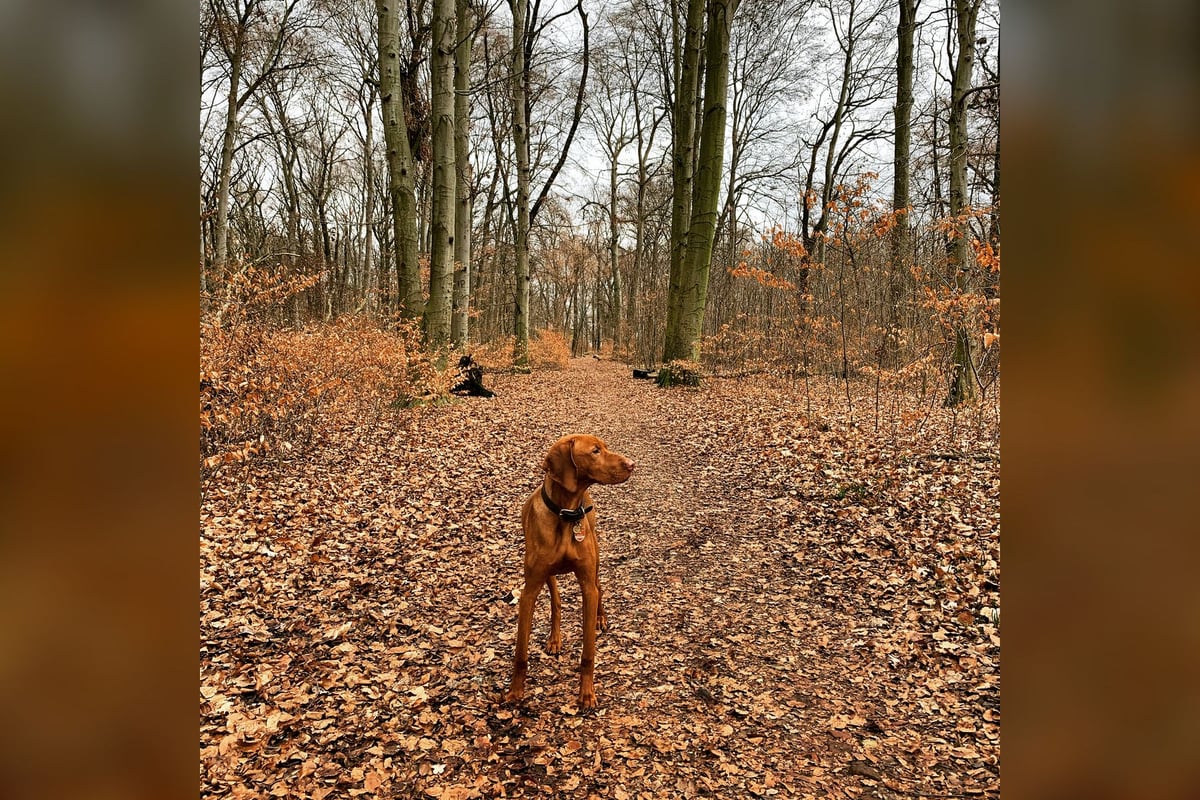
Vizsla
The Vizsla weighs 20 to 30 kg for 54 to 64 cm at the withers — a Hungarian pointing dog with a uniform copper-russet coat, FCI number 57, group 7. A Magyar breed documented as early as the 14th century, it was nearly extinct in 1945, with about 12 purebred dogs recorded after the Second World War. Versatile: it points, retrieves, and tracks blood trails. Life expectancy 12 to 14 years, few major genetic conditions aside from a predisposition to hypothyroidism.
- Weight
- 20 to 30kg
- Height
- 54 to 64cm
- Life expectancy
- 13years
- Monthly cost
- 80 to 130€
Personality profile
Energy 5/5
Independence 2/5
Trainability 4/5
Good with children 5/5
Barking 2/5
Space needed 5/5
Attachment to home 5/5
Good with strangers 4/5
Good with dogs 4/5
Good with cats 2/5
Coat care 1/5
Exercise needs 5/5
Scores given on measured axes, data confidence: high.
Living with a Vizsla
Description
A medium-sized pointing dog of lean build: no excess fat, muscle visible beneath a short, dense coat. Color is a strict FCI criterion — uniform golden-russet to copper-russet, with no white markings allowed except a narrow patch on the chest. Nose, lips, eyes, and nails blend into the coat's shade: a fully monochrome harmony. Noble head with a moderate stop, long drop ears rounded at the tip. Tail traditionally docked for working in cover, now left intact in countries where docking is banned. Males 25-30 kg (59-64 cm), females 20-25 kg (54-59 cm).

Temperament
The Vizsla is nicknamed the "Velcro dog" in English-speaking dog circles: it follows its owner from room to room and seeks constant physical contact. This intense attachment translates into a well-documented predisposition to separation anxiety — dogs left alone beyond 3 to 4 hours frequently develop destructive behavior or vocalization. Gentle temperament with children of all ages, even young ones, thanks to its natural bite inhibition. Sociable with strangers without being indiscriminate. Strong hunting instinct triggered by any moving prey — cohabitation with cats is tricky without early socialization.
Training
High trainability: it is one of the pointing breeds most responsive to positive methods, memorizing a new command in 10 to 20 repetitions with food reinforcement. Its need for human contact makes it highly responsive to verbal praise and touch — coercion causes fast, lasting shutdown. Recall must be solidly established before any off-leash outing, since hunting instinct can override a verbal command at short range from game. Natural disciplines: field trials, long-distance canicross, mantrailing, agility — all activities that channel its energy and prevent anxious behaviors. Start socialization and basic obedience from 8 weeks.

Feeding
300 to 450 g of premium kibble (26-30% animal protein) a day for a 22-28 kg adult, split into 2 meals. On hunting days or intensive sport training days, increase the ration by 20-25%. Two meals are mandatory — a single daily meal raises the risk of gastric bloat in this deep-chested build. BARF feeding is compatible but requires precise thyroid monitoring if hypothyroidism is diagnosed (soy and millet can interfere with the absorption of replacement thyroid hormones).
Affiliate links, no extra cost to you. Legal notice

Living conditions
An apartment is not suitable: its energy and exercise needs demand 1.5 to 2 hours of intense physical activity a day, including at least one off-leash running session in open terrain. A house with a fenced garden is the viable minimum; a fence at least 1.8 m high is recommended (it is a remarkable jumper). Its short coat with no undercoat offers poor thermal insulation: sensitive to cold from 5 °C, a coat is advisable in winter for long sessions. It tolerates dry heat well; watch closely during intense effort above 30 °C.

Grooming and coat care
Minimal upkeep thanks to the short, tight coat with no heavy undercoat. Weekly brushing with a rubber grooming glove or a chamois cloth is enough to remove dead hair and maintain the coat's characteristic russet shine. Monthly bath, or after muddy outings. Check the ears after every outdoor session: the long drop ears reduce ventilation and encourage moisture — clean twice a week. Trim nails every 4 to 6 weeks.

Health
An overall robust breed for its size, with a life expectancy of 12 to 14 years above the average for large pointing breeds. The main endocrine condition to watch is autoimmune hypothyroidism: annual TSH testing recommended after age 5. Hip and elbow dysplasia: OFA radiographs advised for breeding dogs (moderate prevalence, ~15% in OFA studies). Hereditary idiopathic epilepsy documented in some lines — ask the breeder about family history. No major hereditary cardiac or eye condition at the breed level, unlike other pointing breeds of similar size.
Breed history
The earliest depictions of a russet dog hunting alongside Magyar falconers date to the 14th century, documented in illuminated manuscripts of the Bohemian Carmelites. An elite breed of the Austro-Hungarian aristocracy for five centuries, strictly kept on Hungarian noble estates as a hunting and pointing dog for feathered game. The double catastrophe of the two World Wars devastated the breed, reduced by 1945 to a handful of purebred dogs. Its reconstruction rests on lines saved by Hungarian émigrés who took them to the United States and Western Europe. Recognized by the FCI under number 57, group 7 (pointing dogs, section 1.1 — Continental Pointing Dogs, Braque type).
Getting ready for your Vizsla
Five essentials to line up before day one.
Affiliate links, no extra cost to you. Legal notice
FAQ: Vizsla
Sources
- FCI Standard No 57 — Vizsla (Hungarian Short-haired Pointing Dog) · FCI breed standard 57, Group 7 Pointing Dogs, Section 1.1 Continental Pointing Dogs, type Braque, recognized 1936, last revision 2000
- AKC Breed Profile — Vizsla · AKC Vizsla breed profile, Sporting Group — weight 44-60 lbs, height 21-24 inches, lifespan 12-14 years, recognized AKC 1960
- Société Centrale Canine — Vizsla · SCC breed profile, Group 7, Section 1, Vizsla, FCI number 57
FCI, Fédération Cynologique Internationale, the world body that has codified breed standards since 1911. FCI number 57 is assigned to the Vizsla.
Breeds similar to a Vizsla

