


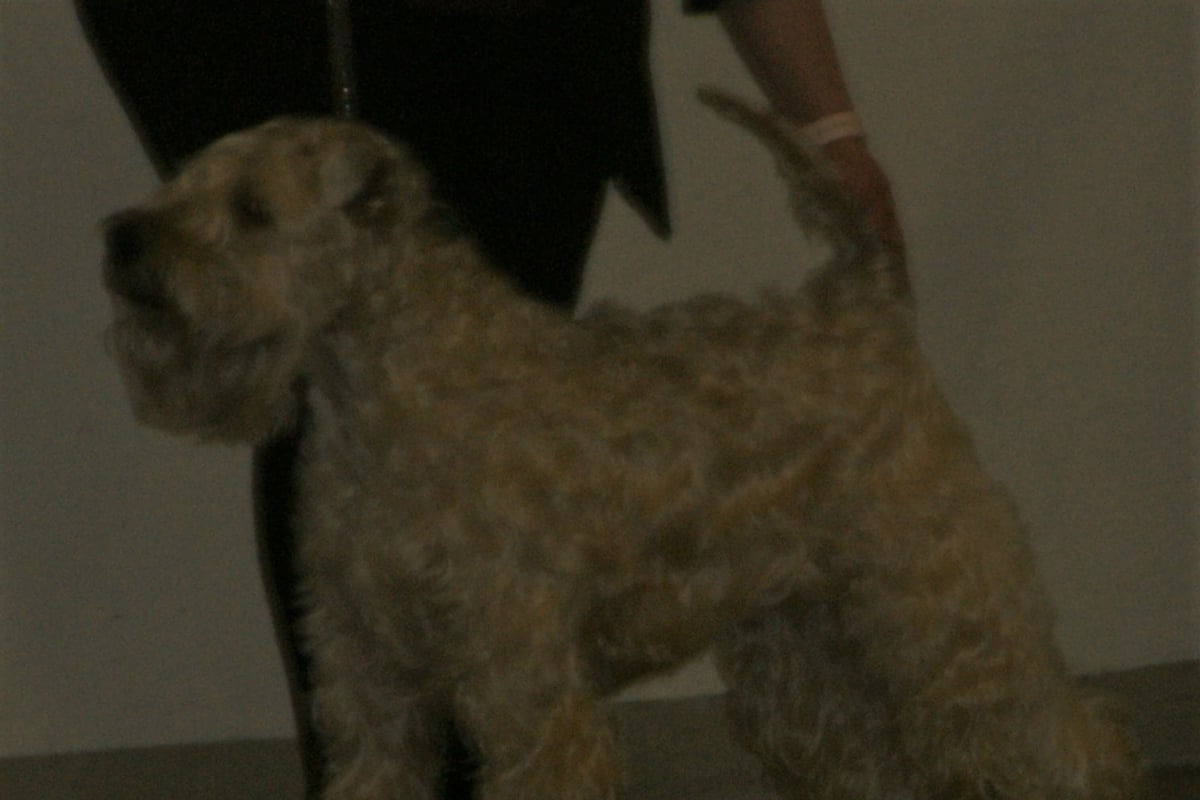
Soft Coated Wheaten Terrier
The Soft Coated Wheaten Terrier (Irish Wheaten) is an Irish terrier weighing 14 to 20 kg and standing 43 to 49 cm, recognized by the FCI under number 40. A breed of 18th-century Irish farming stock, bred outside aristocratic constraints — its versatile profile (hunting, guarding, herding) follows directly from that. Main serious genetic risk: protein-losing nephropathy and enteropathy (PLN/PLE, NPHS1 gene), with an estimated prevalence of 15-20% — annual urinary monitoring is mandatory. Life expectancy 12 to 14 years.
- Weight
- 14 to 20kg
- Height
- 43 to 49cm
- Life expectancy
- 13years
- Monthly cost
- 80 to 140€
Personality profile
Energy 4/5
Independence 3/5
Trainability 3/5
Good with children 4/5
Barking 3/5
Space needed 3/5
Attachment to home 4/5
Good with strangers 3/5
Good with dogs 3/5
Good with cats 2/5
Coat care 4/5
Exercise needs 4/5
Scores given on measured axes, data confidence: high.
Living with a Soft Coated Wheaten Terrier
Description
The Soft Coated Wheaten Terrier stands apart from other Irish terriers through its exclusively soft, wavy coat in a wheaten color — ranging from pale wheat to warm gold at maturity. The FCI 40 standard specifies that puppies are born dark (reddish-brown) and gradually lighten until 18 to 24 months of age, when the adult coat is established. The coat has no undercoat: a single layer, non-shedding, that waves naturally. The silhouette is compact and square, with a broad head, deep-set dark brown eyes, and V-shaped drop ears. Morphologically, it is heavier than the Smooth Fox Terrier but lighter than the Kerry Blue Terrier.

Temperament
Energy rates 4/5: the Wheaten is in near-constant motion throughout the day — it seeks interaction, activity, and physical contact. Its greeting of familiar people is exuberant, sometimes physical (the characteristic jump known as the "Wheaten greeting"), which needs to be channeled from early training if children or elderly people are around the dog. With the children of the household, it's one of the most engaged terriers in active play. With strangers, its response varies — generally curious rather than wary, with a lively approach phase before acceptance. Hunting instinct intact: small animals and cats are perceived as potential prey.
Training
Moderate trainability (3/5): more cooperative than the Scottie, but less focused than working service breeds. The Wheaten is motivated by play and high-value food rewards, and picks up active exercises (agility, hurdle courses, retrieving) faster than formal obedience sequences. Short, varied sessions of 10 to 15 minutes to hold its attention. Recall requires specific training — the scent or visual distraction of small prey easily takes over. Dog sports: agility, sport tracking, and flyball are particularly well suited to its high energy level and its 60 to 90 minutes of daily exercise.

Feeding
250 to 380 g of premium kibble a day for an adult of 14 to 20 kg, split into 2 meals. For individuals showing signs of PLN or PLE, a low-protein diet (0.8-1.5 g/kg of body weight a day) and low-sodium diet is prescribed alongside veterinary treatment — the standard ration is not suitable. Avoid foods high in sulfur-containing amino acids (methionine, cysteine) in individuals at kidney risk. Monitor weight in spayed/neutered adults — weight gain worsens the strain on the kidneys.
Affiliate links, no extra cost to you. Legal notice

Living conditions
Apartment living is possible if exercise needs are covered: a minimum of 60 to 90 minutes of physical activity a day, ideally including one session of intense exercise (running, ball games, hiking). A garden fenced deep underground (50 cm minimum) is recommended — a digging instinct is present, and recall is imperfect once a scent trail is available. It tolerates cold well thanks to its thick coat, but shouldn't be left outdoors in intense heat — shade and water are necessary in summer. Better suited to active or semi-athletic families than to sedentary households — an understimulated Wheaten quickly develops destructive behavior.

Grooming and coat care
The soft, wavy coat, which barely sheds, is classed as hypoallergenic, but it demands rigorous upkeep twice a week: brushing with a soft slicker followed by a fine comb to detect and undo mats as they start forming, particularly behind the ears, on the flanks, and under the armpits. Regular professional grooming every 2 to 3 weeks is needed to keep the coat in good condition — the standard cut ("Irish trim" or "English trim") defines the characteristic square silhouette. The coat on the head, legs, and belly is more prone to matting than on the body. Twice-monthly ear cleaning is recommended because the drop ears trap moisture.

Health
Protein-losing nephropathy (PLN) and protein-losing enteropathy (PLE): hereditary diseases linked to the NPHS1 gene (nephrin), causing abnormal protein loss through the kidneys and intestines. PLN leads to progressive kidney failure; PLE to severe malnutrition despite a normal diet. Prevalence is estimated at 15-20% in the breed, making it one of the most widespread genetic conditions among medium-sized terriers. An annual urine test (urine protein-to-creatinine ratio) is recommended from age 2 for all Wheatens, including asymptomatic ones — early detection allows progression to be slowed with dietary and medical treatment. Exocrine pancreatic acinar atrophy is also documented in the breed, presenting as digestive malabsorption and chronic diarrhea. Life expectancy 12 to 14 years.
Breed history
The Soft Coated Wheaten Terrier is one of the oldest Irish terrier breeds, documented in Ireland since at least the 18th century. Its historical particularity: unlike the Kerry Blue Terrier or the Irish Terrier, it was the breed of landless Irish peasants — the British colonial regime's "Penal Laws" forbade Irish Catholics from owning a dog worth more than one pound sterling, reserving prestige breeds for Protestants and the aristocracy. The Wheaten, of little financial value but versatile (hunting, guarding, herding livestock), was the only dog accessible to modest rural families. Recognized by the Irish Kennel Club in 1937 and by the FCI under number 40, Group 3 Section 1.
Getting ready for your Soft Coated Wheaten Terrier
Five essentials to line up before day one.
Affiliate links, no extra cost to you. Legal notice
FAQ: Soft Coated Wheaten Terrier
Sources
- FCI Standard No 40 · FCI breed standard 40, Group 3 Terriers, Section 1 Large and medium-sized Terriers
- AKC Breed Profile · AKC Soft Coated Wheaten Terrier breed profile, Terrier Group
- Soft Coated Wheaten Terrier Club of America — Health Survey · SCWTCA Health Committee, PLN/PLE prevalence data and NPHS1 gene documentation, breed health survey
FCI, Fédération Cynologique Internationale, the world body that has codified breed standards since 1911. FCI number 40 is assigned to the Soft Coated Wheaten Terrier.
Breeds similar to a Soft Coated Wheaten Terrier

