


Miniature Schnauzer
Pinscher and Schnauzer - Molossoid and Swiss Mountain and Cattledogs
4 to 8 kg
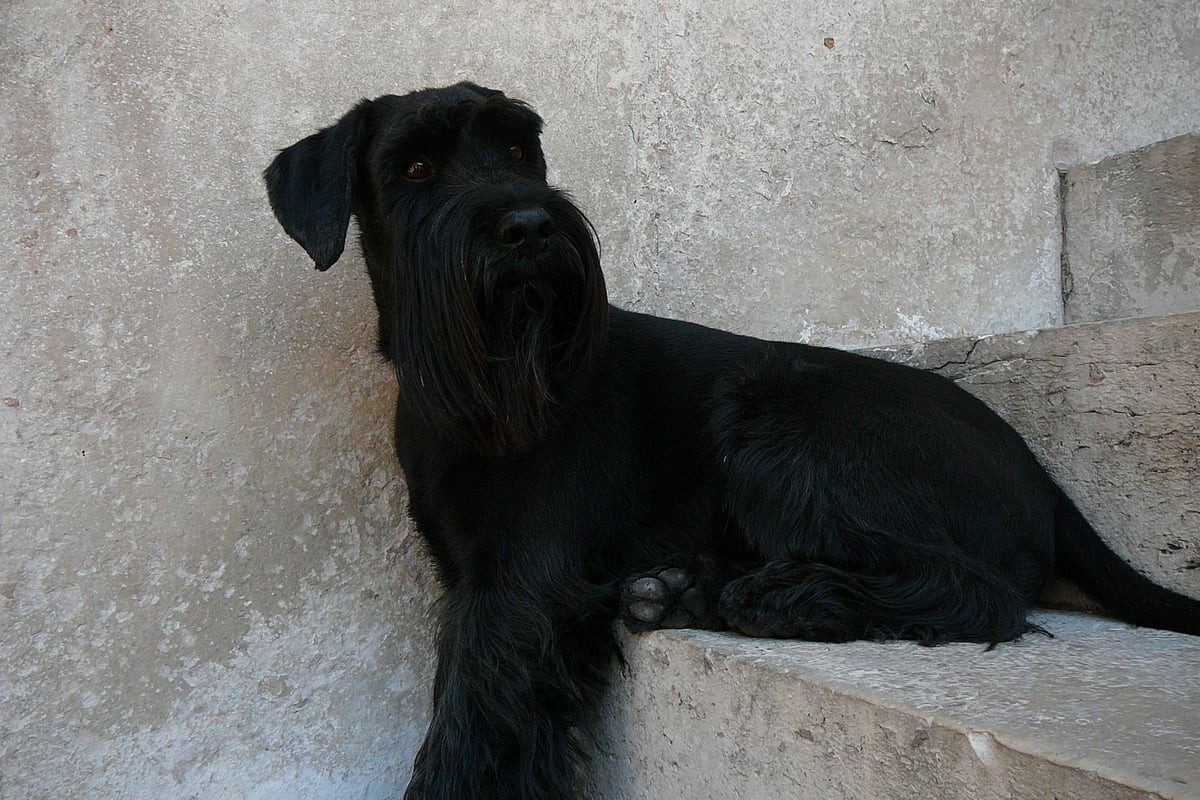
The Standard Schnauzer (Standardschnauzer in German) weighs 14 to 20 kg for 45 to 50 cm at the withers. Recognized by the FCI under number 182, Group 2, Section 1.2, originating in Germany. It is the original form of the Schnauzer family — the Miniature Schnauzer (FCI 183) and the Giant Schnauzer (FCI 181) are later developments from it. Harsh, wiry coat, almost no shedding — classified hypoallergenic. Life expectancy 13 to 16 years. Two main documented predispositions: hip dysplasia and hypothyroidism.
Scores given on measured axes, data confidence: high.
Living with a Standard Schnauzer
The breed is the ancestral form of the Schnauzer group, documented in German iconography as early as the 15th century: Albrecht Dürer depicts a shaggy-coated dog identifiable as a Schnauzer in several works dated 1492 (paintings held in Nuremberg). It has an intermediate build within the family, between the Miniature (30-35 cm) and the Giant (60-70 cm). Rectangular body (slightly longer than tall), deep chest, lean and solid musculature. A full beard, characteristic drooping eyebrows, and a distinctive mustache form the breed's recognizable face. Coat available in pepper-and-salt, pure black, and black-and-silver. Double coat: dense undercoat plus a harsh, wiry outer coat with almost no shedding.

Versatile by nature: the breed's historical role on Württemberg farms combined ratting, guarding property, and watching over children left in its care — a versatility that translates today into greater behavioral adaptability than the Miniature or Giant varieties. Alert without being hyperactive, attached to its family, tolerant of known, supervised children (4/5). Wary of strangers with a clear alert reaction, without gratuitous aggression in a socialized individual. A less terrier-typed temperament than the Miniature Schnauzer: it interrupts an activity on recall more readily.
Trainability of 4/5: it's the most well-balanced variety in the family for obedience work. High practical intelligence, good memory, responsive to positive reinforcement with a verbal marker or clicker. Sessions of 10 to 20 minutes, varied, with high-value rewards. Its attentiveness to its handler is greater than the German Pinscher's — it interrupts an external distraction on recall more readily. Early socialization before 16 weeks is essential: structural wariness of strangers must be worked on early to stay functional rather than becoming overbearing. Suitable dog sports: obedience, agility, rally, tracking.

250 to 350 g of premium kibble a day for a 17 kg adult, in 2 meals. Specific consideration: watch fat intake if the vet detects elevated triglycerides — the standard variety doesn't show the same prevalence of hyperlipidemia as the miniature, but lipid monitoring during the annual bloodwork remains prudent. Adjust the ration after spaying/neutering: a documented tendency toward weight gain. Low-calorie-density kibble recommended for less active individuals.
Affiliate links, no extra cost to you. Legal notice

Adaptable: a house with a garden or an apartment well served by green spaces both work, provided its activity needs of 60 to 90 minutes a day across 2 to 3 outings are covered. Its double coat gives it good cold tolerance (4/5) — it can work outdoors in cool weather without discomfort. Active guarding instinct: do not leave it alone in a garden without a secure fence. Handles long absences better than the German Pinscher, provided mental stimulation (occupier toys, a frozen Kong) is planned during the day.

Regular, technical grooming: the harsh double coat needs stripping (hand-plucking the dead hair, or using a stripping knife) two to three times a year to maintain its characteristic texture and skin protection. Brushing twice a week to prevent tangles in the beard, eyebrows and leg furnishings. Cleaning the beard after every meal (it retains moisture and debris). Scissor trimming of the beard and eyebrows every 4 to 6 weeks to maintain the silhouette. Professional grooming budget: 55 to 80 € a session, 3 to 4 sessions a year.

A favorable health profile for a breed of this size and longevity (13-16 years). Hip dysplasia is documented at a moderate rate — X-rays of breeding dogs (PennHIP or OFA test) are recommended; serious breeders publish results online. Hypothyroidism (a T3/T4 thyroid hormone deficiency) shows up as unexplained weight gain, lethargy, and dry skin — an annual thyroid panel is recommended from age 4, with effective daily oral treatment if diagnosed early. Unlike the Miniature Schnauzer, idiopathic hyperlipidemia and hereditary myoclonic epilepsy are not documented as specific predispositions of the standard variety.
The Standard Schnauzer (Standardschnauzer, formerly Rattenfänger — "rat catcher") is the group's original form, originating in the farming regions of Württemberg (southwest Germany). Albrecht Dürer's illustrations dated 1492 are the first documented iconographic depiction of dogs with an identifiable Schnauzer phenotype. Used on farms as an all-purpose ratter, barn guard dog, and escort for stagecoach convoys (protection against highway robbers). The Miniature Schnauzer was developed in the 19th century by crossing the Standard with the Affenpinscher; the Giant Schnauzer, by increasing size around 1850-1870. Recognized by the FCI under number 182, Group 2, Section 1.2. The AKC placed it in the Working Group in 1945 — a classification that reflects its size and functional versatility, unlike the Miniature, which is classed as a Terrier.
Five essentials to line up before day one.
Affiliate links, no extra cost to you. Legal notice
FCI, Fédération Cynologique Internationale, the world body that has codified breed standards since 1911. FCI number 182 is assigned to the Standard Schnauzer.
Pinscher and Schnauzer - Molossoid and Swiss Mountain and Cattledogs
4 to 8 kg

Pinscher and Schnauzer - Molossoid and Swiss Mountain and Cattledogs
35 to 47 kg

Pinscher and Schnauzer - Molossoid and Swiss Mountain and Cattledogs
14 to 20 kg