


Miniature Schnauzer
Pinscher and Schnauzer - Molossoid and Swiss Mountain and Cattledogs
4 to 8 kg
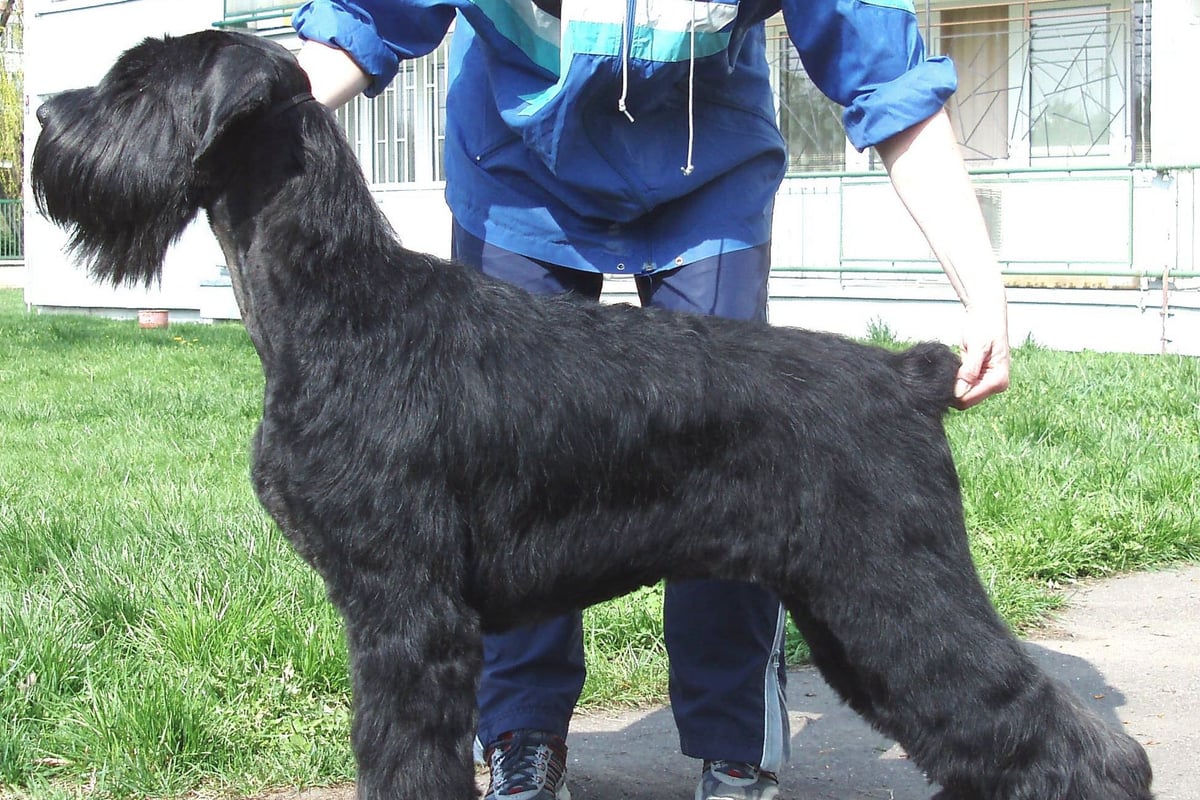
The Giant Schnauzer weighs 35 to 47 kg for 60 to 70 cm at the withers. Recognized by the FCI under number 181, Group 2 Section 1.2, originating in Germany. Harsh, wiry coat (pure black or pepper-and-salt), almost no shedding — classified hypoallergenic. Life expectancy 10 to 12 years. A working breed used in police and military service. Five documented medical predispositions: gastric dilatation-volvulus (GDV), hip dysplasia, elbow dysplasia, hypothyroidism, cutaneous melanoma.
Scores given on measured axes, data confidence: high.
Living with a Giant Schnauzer
The Giant Schnauzer (Riesenschnauzer in German) is the most imposing variety in the Schnauzer family, developed in Bavaria and Baden-Württemberg from the Standard Schnauzer and crosses with the Bouvier des Flandres, German drover dogs, and probably the Dobermann. Males stand 66-70 cm for 40-47 kg, females 60-65 cm for 35-42 kg depending on the breeding line. Powerful, rectangular body, solid bone, lean musculature. Strong, elongated head with the drooping eyebrows and mustache characteristic of the family. Coat in two colors recognized by the FCI: pure black with a black undercoat, and pepper-and-salt (banded hairs mixing black and white). Wiry outer coat, dense, slightly wavy. Shedding is almost nonexistent.

Self-assured, well-balanced, energetic and highly determined. Strong drive to work: the breed needs sustained physical and mental occupation to stay behaviorally stable. Deeply attached to its primary handler, capable of intense loyalty. Structurally wary of strangers — a watchful, alert reaction, without gratuitous aggression in a balanced, socialized individual. Pronounced guarding instinct. Possible intolerance between males, particularly toward social maturity (18-24 months). Requires an experienced owner: the breed is not suited to a first-time owner without experience of working dogs.
Good trainability for a breed of this size: picks things up quickly with positive reinforcement and a consistent handler. The breed has a long history of police work (tracking, detection, guarding) that reflects its strong learning ability. Regular 15- to 20-minute sessions, varied to keep interest up. Its determined temperament calls for a handler who sets firm, consistent boundaries — inconsistent rules generate testing behavior. Intensive socialization before 16 weeks: exposure to unfamiliar people, urban environments, and other dogs of varying size and temperament. Suitable dog sports: ring sport, mondioring, tracking, competitive-level obedience, agility.

350 to 500 g of premium large-breed kibble a day for a 42 kg adult, in 2 mandatory meals (never a single meal — GDV risk). Giant-breed kibble up to 18-24 months to support controlled bone growth. At least one hour of digestive rest before and after physical exertion. Strict weight control: obesity significantly worsens joint dysplasia. Glucosamine and chondroitin supplementation from age 3 for active sporting individuals.
Affiliate links, no extra cost to you. Legal notice

A house with an enclosed garden is essential — an apartment is not recommended for a dog of this size and with these exercise needs, except with immediate access to a large, secure outdoor space. A minimum of two hours of sustained physical activity a day: long walks, running, cycling, hiking, or working dog sports. Without adequate physical and mental outlets, destructive behavior and anxiety set in quickly. Fair cold tolerance thanks to its dense coat. Excessive heat should be avoided, particularly during summer sport outings.

Demanding grooming: the harsh coat doesn't shed but needs stripping (hand-plucking the dead hair, or using a stripping knife) two to three times a year to maintain its characteristic texture and correct color. Clipping (trimming with clippers) progressively degrades the texture over several cycles, making the coat softer and less protective. Twice-weekly brushing to prevent tangles in the beard and eyebrows. Cleaning the beard and mustache after meals. Professional grooming budget: 70 to 100 € a session, at least 3 to 4 sessions a year.

Five documented predispositions. Gastric dilatation-volvulus (GDV) is a lethal veterinary emergency without surgery within 2 hours — mechanism and warning signs detailed in the FAQ. Prevention: two mandatory meal sittings, one hour of digestive rest before and after exertion, avoiding raised bowls. Hip and elbow dysplasia: X-rays of breeding dogs are mandatory in serious breeding programs; screening puppies from 12 months is recommended. Hypothyroidism: a thyroid hormone deficiency showing up as unexplained weight gain, lethargy, dry skin, dull coat — a thyroid panel should be included in annual checkups after age 4. Cutaneous melanoma: increased incidence documented in the breed, to be monitored during regular veterinary checkups.
The breed developed in the 19th century in southern Germany (Bavaria, Baden-Württemberg) from the farm Standard Schnauzer, increased in size through crosses with the Bouvier des Flandres and probably the Dobermann. Initially used to drive cattle to slaughterhouses and guard Bavarian farms and breweries. Its adoption by the German police and army before World War I permanently steered selection toward working ability. Recognized by the FCI under number 181, Group 2, Section 1.2 Schnauzer. Standard revised in 2021. Added to the AKC registry in the Working Group in 1930.
Five essentials to line up before day one.
Affiliate links, no extra cost to you. Legal notice
FCI, Fédération Cynologique Internationale, the world body that has codified breed standards since 1911. FCI number 181 is assigned to the Giant Schnauzer.
Pinscher and Schnauzer - Molossoid and Swiss Mountain and Cattledogs
4 to 8 kg

Pinscher and Schnauzer - Molossoid and Swiss Mountain and Cattledogs
32 to 45 kg

Pinscher and Schnauzer - Molossoid and Swiss Mountain and Cattledogs
42 to 60 kg