


Dobermann
Pinscher and Schnauzer - Molossoid and Swiss Mountain and Cattledogs
32 to 45 kg
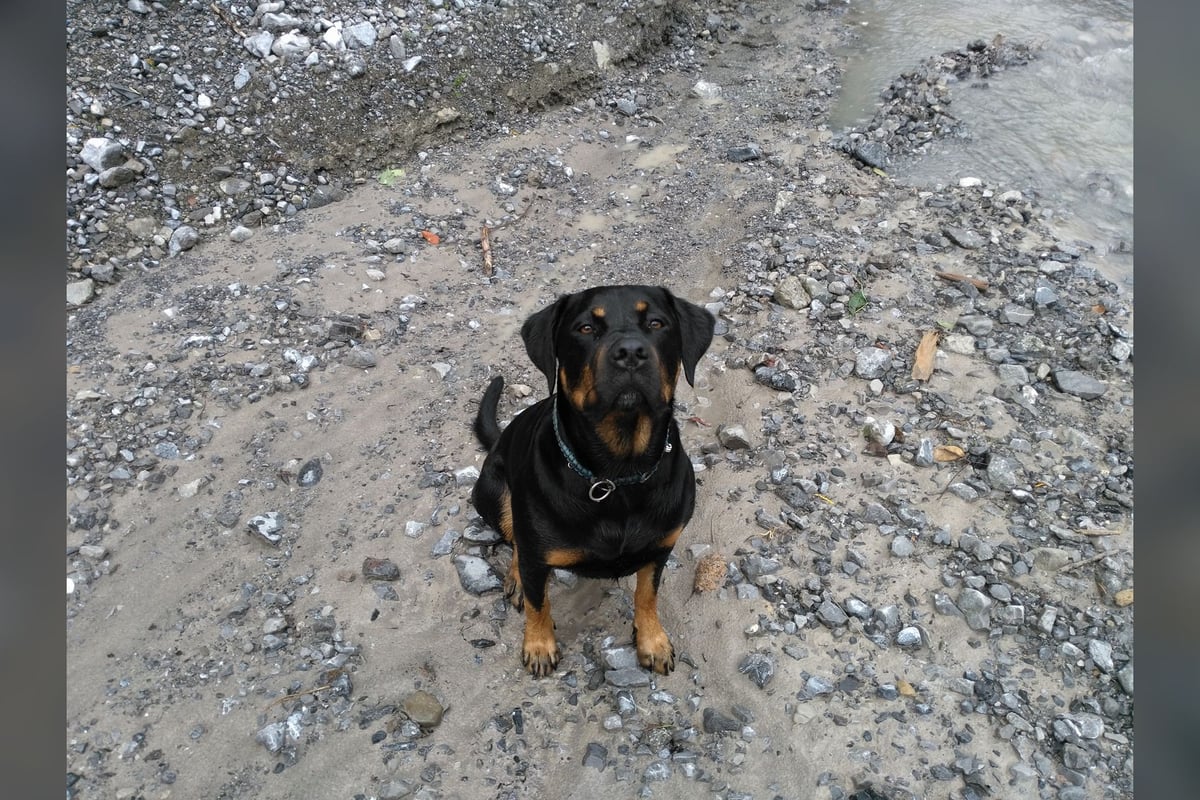
The Rottweiler is a versatile German molosser (guarding, cattle driving, draft work), recognized as FCI number 147. It weighs 42 to 60 kg for 56 to 68 cm. In France, it is classified as a category 2 dog (law of January 6, 1999): ownership subject to a permit, registration with the town hall, leash and muzzle required in public. Short life expectancy: 8 to 10 years.
Scores given on measured axes, data confidence: high.
Living with a Rottweiler
A large, compact and powerfully muscled breed. Males 61-68 cm for 50-60 kg, females 56-63 cm for 42-50 kg. Characteristic black and tan coat, short to medium-length double coat, dense. Massive, slightly rectangular body shape. Broad head with a well-defined stop. Naturally long tail (formerly docked, banned in France since 2004). Its reputation for danger is tied to incidents involving poorly socialized or poorly trained dogs owned by inexperienced handlers.

A calm, self-assured dog by nature, naturally wary of strangers — a structural wariness that does not turn into aggression in a well-balanced dog. Deeply attached to its family. With children in the household known since puppyhood, patient and protective; supervision is essential with children outside the family. Tendency toward dominance between males: cohabiting with other males requires very structured socialization.
Good trainability for a working molosser: picks things up quickly with positive reinforcement and a consistent handler. Historically a cattle-driving and guard dog, it responds well to structured exercises and regular work. An experienced handler is essential. Intensive early socialization from 3 months is absolutely mandatory. Suited to protection dog sports (ring, mondioring) and draft sports (canicross, bikejoring). Lifelong obedience upkeep required.

500 to 700 g of premium large-breed kibble a day for a 50 kg adult, in 2 mandatory meals (never just 1, risk of gastric dilatation-volvulus). Giant-breed kibble up to 24 months to support bone growth. One hour of digestive rest before and after exercise. Glucosamine/chondroitin supplement from age 3. Strict weight control: obesity significantly worsens dysplasia.
Affiliate links, no extra cost to you. Legal notice

A house with an enclosed garden is essential — an apartment is not recommended for a dog of this size (up to 60 kg). Long, structured walks (1 to 1.5 hours a day) are needed to maintain behavioral balance. In France, its status as a category 2 dog requires: an ownership permit issued by the mayor after a behavioral evaluation, specific liability insurance, and a leash and muzzle in all public places. Good cold tolerance thanks to its double coat; adequate tolerance to moderate heat.

Easy upkeep for a dog of this size: weekly brushing with a pin mitt or soft brush. Sheds moderately year-round, more heavily during the two seasonal molts (spring, fall). Quarterly bath maximum. Regular ear inspection (moderate risk of ear infections). Monthly nail trim is essential: thick nails that wear down little on soft ground.

Short life expectancy: 8 to 10 years (median 9 years). Major predispositions: hip and elbow dysplasia (mandatory LOF x-rays on breeding stock), dilated cardiomyopathy (echocardiographic screening recommended), osteosarcoma (incidence notably higher than the average for large breeds), lymphoma. Gastric dilatation-volvulus syndrome (veterinary emergency, <2h). Semi-annual vet checkups recommended from age 5 for early tumor and cardiac screening.
A descendant of the Roman cattle-driving dogs introduced to Germany during the Roman conquests. Its name comes from Rottweil (Baden-Württemberg), a medieval market town where butchers used these dogs to guard and drive cattle, and to carry money pouches tied around their necks. The breed nearly disappeared in the early 20th century with the mechanization of transport. Selective reconstruction from 1910 onward by German breed clubs, today united within the ADRK. Recognized by the FCI under number 147, group 2. Classified in France as a category 2 dog by the law of January 6, 1999 and its implementing texts.
Five essentials to line up before day one.
Affiliate links, no extra cost to you. Legal notice
FCI, Fédération Cynologique Internationale, the world body that has codified breed standards since 1911. FCI number 147 is assigned to the Rottweiler.
Pinscher and Schnauzer - Molossoid and Swiss Mountain and Cattledogs
32 to 45 kg

Pinscher and Schnauzer - Molossoid and Swiss Mountain and Cattledogs
40 to 50 kg

Pinscher and Schnauzer - Molossoid and Swiss Mountain and Cattledogs
25 to 35 kg