


German Pinscher
Pinscher and Schnauzer - Molossoid and Swiss Mountain and Cattledogs
14 to 20 kg
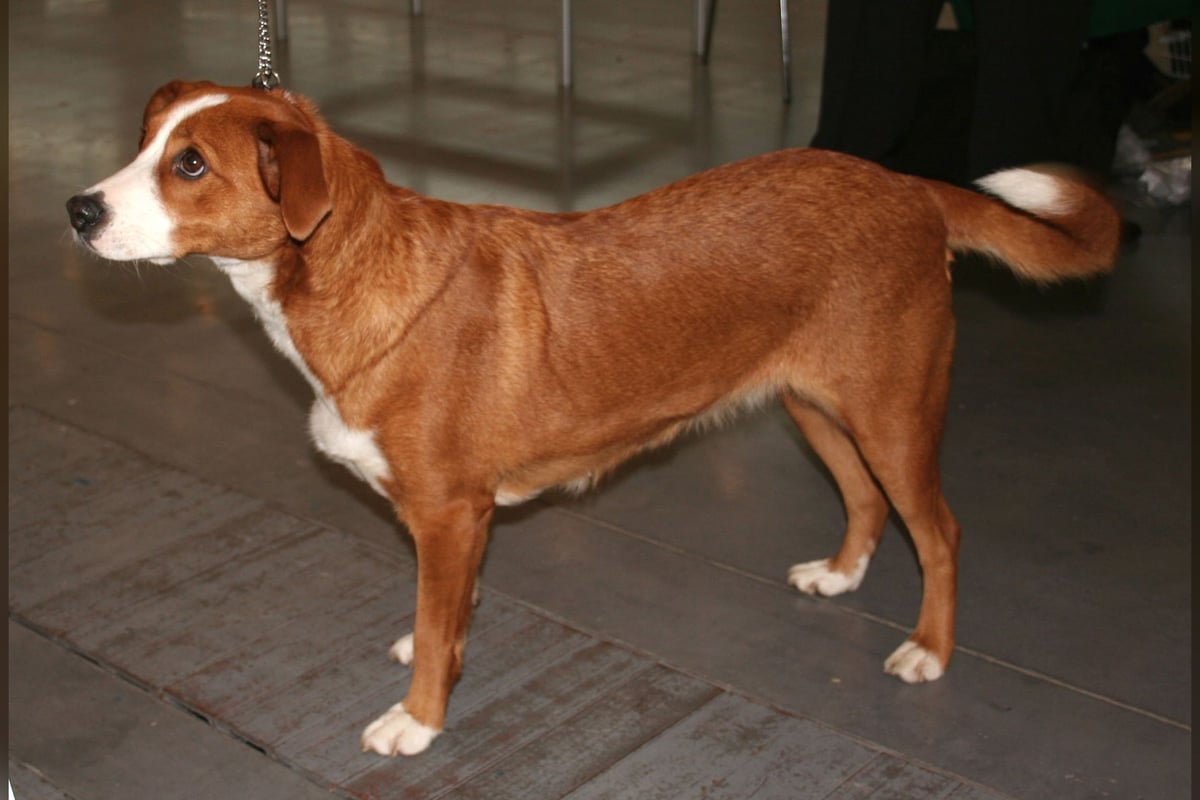
The Austrian Pinscher (Österreichischer Pinscher, FCI 64) is a rural breed reconstructed from local Austrian farm dogs, the Landpinscher. It stands 35 to 50 cm for 12 to 18 kg, with a life expectancy of 12 to 14 years. It is an extremely rare breed: around 25 annual registrations worldwide, almost exclusively in Austria and Germany, and fewer than 10 LOF registrations a year in France. Definitively recognized by the FCI under its current name in 2014, it was previously registered under the name "short-haired Austrian Pinscher."
Scores given on measured axes, data confidence: medium.
Living with an Austrian Pinscher
The type is that of a sturdy farm dog: solid, compact build, lively gait without exaggerated features. The coat is short to medium-length, in fawn, red-brown, sand or black-and-tan tones — with mandatory white markings on the chest, legs and muzzle, a distinctive signature of the breed. Its expressive head with drooping or semi-erect ears and alert gaze recall its rural origins. There is no fixed show type — phenotypic variability remains greater than in breeds with larger populations, a direct reflection of its history as a landrace.

Courageous, lively and vocal, it loudly signals any intruder on its territory, a direct legacy of its alerting role on the farm. Its instinct to hunt rodents is very pronounced and incompatible with cohabiting with cats, rabbits or other small animals: it will consistently chase them. Wary of strangers, it is not aggressive but reserves its trust for its close family. Its energy is practically inexhaustible — this is not a lapdog.
Intelligent but independent, it regularly tests limits and needs a consistent, firm handler. Positive reinforcement works well; coercive methods reinforce stubbornness. Early socialization with strangers is decisive for tempering its natural wariness. Its inexhaustible energy calls for sustained physical exercise sessions — long daily walks, treibball or scent activities will channel its excess energy. Barking control training should be built in from the start.

180 to 260 g of premium medium-breed kibble a day for a 15 kg adult, in two meals. Medium-breed kibble up to 12-14 months. Its appetite is hearty and its metabolism active — monitor weight at every vet visit, since overfeeding a small, active Pinscher can stay hidden under the short coat. Avoid excess treats: this breed tends to gain weight if its activity level drops with age.
Affiliate links, no extra cost to you. Legal notice

Apartment living remains possible provided its energy is spent daily through long, stimulating outings. A house with an enclosed garden suits it better — in rural areas, it instinctively resumes its watchdog role. Its hunting instinct requires a reliable fence and a ban on unsupervised freedom around other small animals. Its high barking level makes it a watchful guardian but can create tension in dense urban settings if vocal control is not trained from a young age.

The short to medium-length coat requires minimal upkeep: a weekly brushing is enough outside of shedding season. Seasonal shedding is moderate — a twice-weekly brushing session for 3 weeks manages hair loss without particular difficulty. No professional grooming is necessary. Nails, ears and teeth follow the standard protocol: monthly check, cleaning as needed.

Life expectancy is 12 to 14 years. Health data remain limited due to the breed's very small numbers. Hip dysplasia is reported in some lines — breeding stock x-rays should be requested from the breeder. Moderate eye problems have been reported without precisely documented prevalence. The breed's small gene pool requires particular vigilance regarding inbreeding: a genetic diversity certificate from a serious breeder is recommended.
The Austrian Pinscher descends from Austria's all-purpose farm dogs — the Landpinscher — present on rural holdings in central Austria since at least the 18th century. These farm dogs handled guarding, rodent hunting and light cattle driving. In 1928, Emil Hauck launched a reconstruction program from the last identifiable individuals on remote farms. The breed was first recognized by the FCI under the name "short-haired Austrian Pinscher" (provisionally in 2000), before being definitively recognized under its current name — Österreichischer Pinscher — in 2014. With around 25 annual registrations worldwide, it remains one of the rarest FCI breeds in Europe.
Five essentials to line up before day one.
Affiliate links, no extra cost to you. Legal notice
FCI, Fédération Cynologique Internationale, the world body that has codified breed standards since 1911. FCI number 64 is assigned to the Austrian Pinscher.
Pinscher and Schnauzer - Molossoid and Swiss Mountain and Cattledogs
14 to 20 kg

Pinscher and Schnauzer - Molossoid and Swiss Mountain and Cattledogs
4 to 6 kg
