


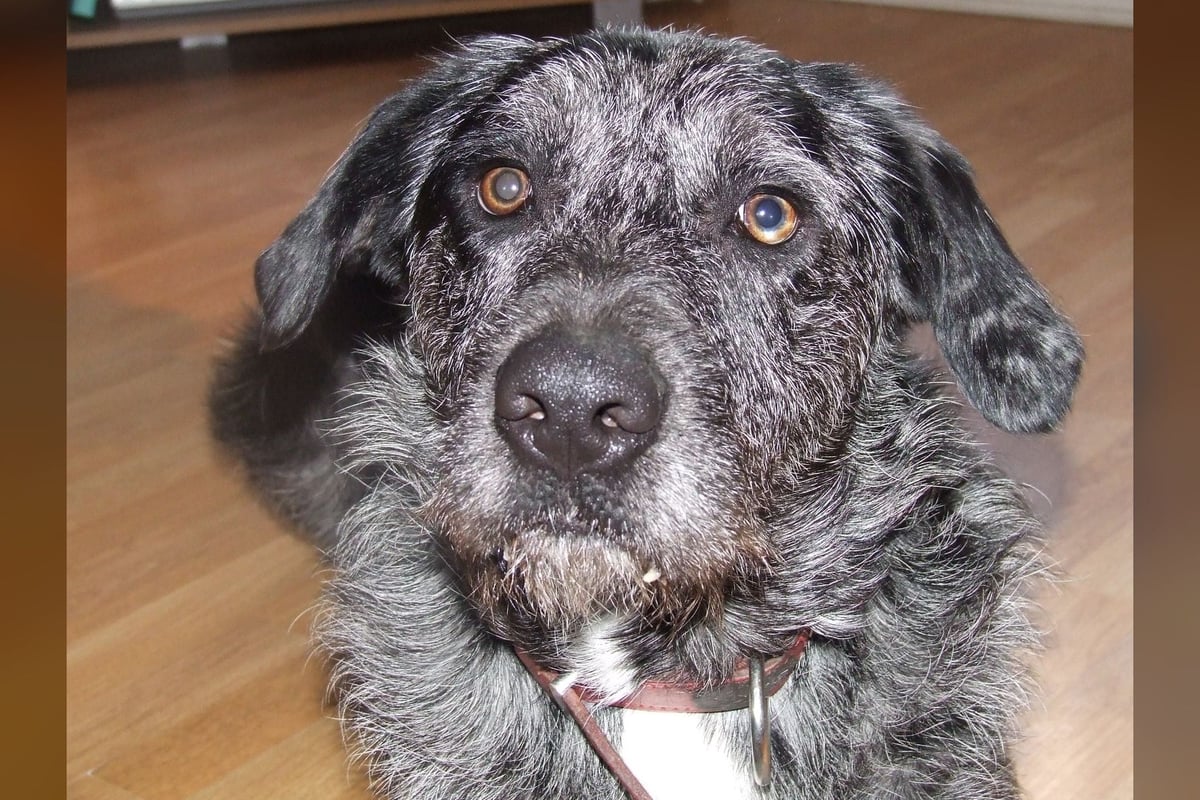
Otterhound
The Otterhound (FCI 294) is a British scent hound of 36 to 52 kg for 60 to 69 cm at the withers, bred since the 12th century in Yorkshire and Devon for hunting otters in rivers. When that hunt was banned in the United Kingdom in 1978 — the species being nearly extinct at the time — the breed lost its main purpose and nearly vanished along with it. Classified as a Vulnerable Native Breed by the British Kennel Club, fewer than 600 individuals are counted worldwide today, with barely 24 registrations at the UK Kennel Club in 2020 — making it one of the most endangered breeds in the United Kingdom.
- Weight
- 36 to 52kg
- Height
- 60 to 69cm
- Life expectancy
- 11years
- Monthly cost
- 110 to 200€
Personality profile
Energy 4/5
Independence 4/5
Trainability 2/5
Good with children 4/5
Barking 5/5
Space needed 5/5
Attachment to home 4/5
Good with strangers 4/5
Good with dogs 5/5
Good with cats 1/5
Coat care 3/5
Exercise needs 5/5
Scores given on measured axes, data confidence: medium.
Living with an Otterhound
Description
A large, robust, athletic dog with solid bone and no excess bulk. Its double coat is a direct adaptation to working in cold water: a rough, waterproof outer coat and a dense woolly undercoat forming effective thermal protection. Accepted coats include black and tan, grizzle, fawn, brown and white, and tricolor. Its webbed feet — a rare anatomical trait among hunting breeds — and its very long drop ears, which help funnel scent toward the muzzle while trailing, are its distinguishing marks. Its deep, powerful voice, valued in the pack, carries over long distances.

Temperament
Independent and stubborn, it was bred to work on its own in waterways, far from its handler — this deeply rooted independence translates into limited cooperation with formal training. It is vocal by nature: its deep, resonant bark, a valued trait in the pack for signaling a trail, also shows up in everyday life and can be intrusive in dense residential settings. Its sociability with other dogs is excellent — it has always lived in packs. Its strong hunting instinct, on the other hand, makes it unreliable around cats and small animals.
Training
Training requires patience and a good understanding of independent scent-hound breeds — coercive methods are counterproductive on a dog of this nature. The basics (recall, leash walking, sit) are achievable but require many repetitions and flawless consistency; outdoor recall remains the main challenge, since the trailing instinct overrides any verbal command. Long daily walks — at least 1.5 hours, ideally 2 — and intense physical activity are essential to channel its energy and prevent destructive behaviors.

Feeding
400 to 650 g of premium large-breed kibble a day for a 36 to 52 kg adult, in two strict meals with an hour of rest on either side to limit the risk of gastric torsion. Giant-breed kibble up to 18-24 months to support growth without forcing it. Glucosamine and chondroitin are recommended from age 5 for joint prevention. Weight monitoring is important: when understimulated, it puts on weight quickly, which worsens joint risks at this size.
Affiliate links, no extra cost to you. Legal notice

Living conditions
A large enclosed garden is a non-negotiable requirement — an apartment or a house without outdoor space is not recommended for a dog of this size and energy. Its deep, frequent voice makes it unsuited to dense urban living or close proximity to neighbors. It suffers in the heat: in hot weather it needs shade, constant access to fresh water, and exercise limited to the cooler hours. Its waterproof coat protects it well from cold and damp — it enjoys outings in cool or rainy weather.

Grooming and coat care
The rough double coat needs weekly brushing to prevent the undercoat from matting, especially in friction areas (armpits, neck). Seasonal shedding is moderate but steady — shedding level 3/5. Unlike silky long-haired breeds, its rough coat does not tangle into fine knots but can form solid mats if neglected for several weeks. The very long drop ears trap moisture and need cleaning twice a week to prevent ear infections. Its webbed feet and the spaces between the toes should be checked after every outing in muddy terrain.

Health
Life expectancy of 10 to 13 years. The genetic condition most specific to the breed is hereditary thrombasthenia (a recessive Glanzmann-type platelet disorder): a genetic test is available and mandatory for any responsible breeder, since affected individuals face serious bleeding risks. Hip and elbow dysplasia should be watched for — OFA or BVA radiographs are recommended on breeding stock. Gastric torsion (GDV) is a real risk at this size: two strict meals and post-meal rest are essential. Idiopathic epilepsy and seborrhea are also documented in the breed.
Breed history
Pack hunting for otters in British rivers is documented from at least the 12th century — the earliest recorded mentions go back to the archives of the reign of Henry II, who founded the first royal pack around 1175. Bred in Yorkshire and Devon for its ability to swim in cold water, follow a semi-aquatic trail and work in a pack, it developed its distinctive anatomical traits — webbed feet, waterproof coat, exceptional nose — over several centuries of functional selection. The British ban on otter hunting in 1978, driven by the species' near-extinction, deprived the breed of its sole purpose and triggered a rapid collapse in numbers. Its genetic influence is suspected in the creation of the Airedale Terrier. Maintained today by a handful of dedicated breeders in Britain and the United States, it remains one of the most endangered recognized breeds in the world.
Getting ready for your Otterhound
Five essentials to line up before day one.
Affiliate links, no extra cost to you. Legal notice
FAQ: Otterhound
Sources
- FCI Standard No 294 — Otterhound · FCI breed standard 294, Group 6 Scent hounds and related breeds, Section 1.1 Large-sized hounds
- Société Centrale Canine — Otterhound · SCC official breed profile, Otterhound, Group 6
- AKC Breed Profile — Otterhound · AKC Otterhound breed profile, Hound Group
FCI, Fédération Cynologique Internationale, the world body that has codified breed standards since 1911. FCI number 294 is assigned to the Otterhound.
Breeds similar to an Otterhound


Bouvier des Flandres
Sheepdogs and Cattledogs (except Swiss Cattledogs)
27 to 40 kg