


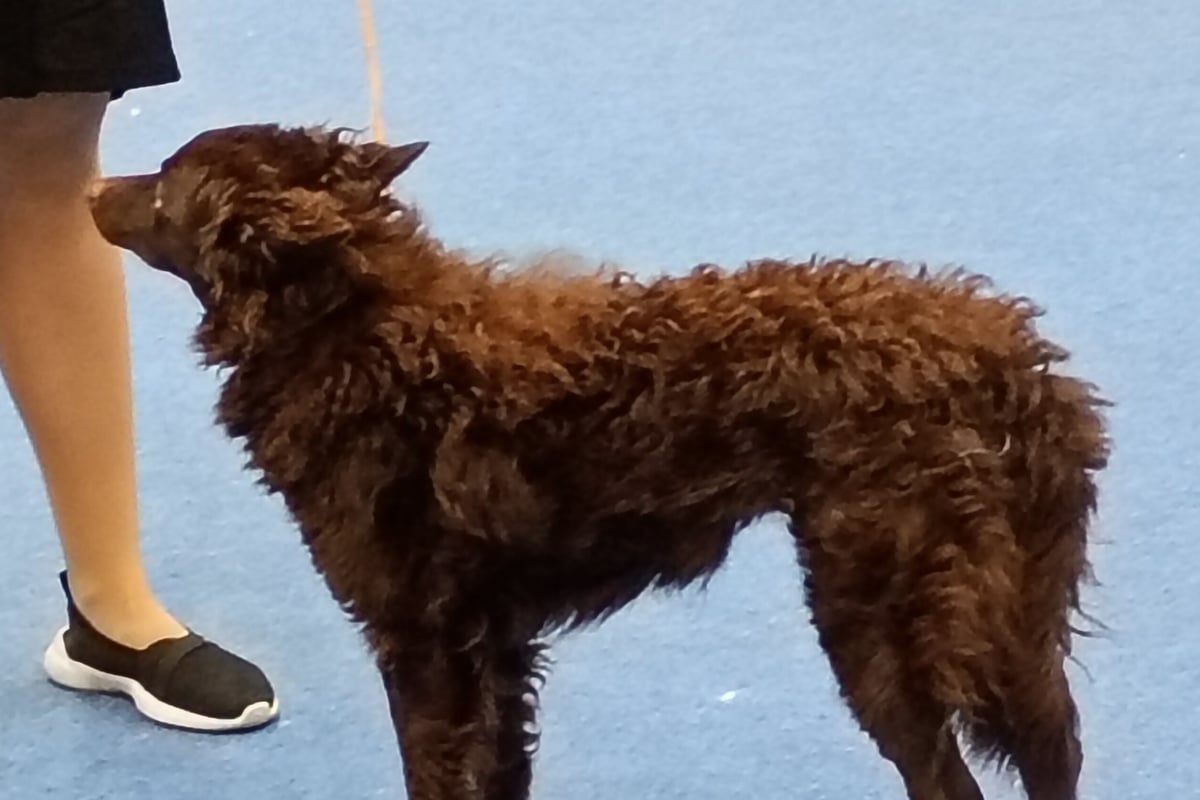
Mudi
The Mudi (FCI 238, Group 1) is a versatile, medium-sized Hungarian herding dog — 38 to 47 cm for 8 to 13 kg — distinguished from the Puli and the Pumi in 1936 by Dr. Dezső Fényesi after a systematic morphological study of Hungarian herding dogs. Its wavy coat, seen in black, white, fawn, merle (cifra), ash-gray or brown, along with its characteristic intense bark, make it an immediately recognizable breed. Nearly extinct after the Second World War, it was rebuilt from a handful of surviving individuals in the 1960s and remains today one of the rarest breeds in Central Europe, recognized by the AKC in 2022.
- Weight
- 8 to 13kg
- Height
- 38 to 47cm
- Life expectancy
- 14years
- Monthly cost
- 70 to 120€
Personality profile
Energy 5/5
Independence 3/5
Trainability 5/5
Good with children 4/5
Barking 5/5
Space needed 3/5
Attachment to home 4/5
Good with strangers 2/5
Good with dogs 3/5
Good with cats 3/5
Coat care 2/5
Exercise needs 5/5
Scores given on measured axes, data confidence: high.
Living with a Mudi
Description
Wavy coat, short on the head and longer, slightly curled, on the body and flanks — never forming the corded coat typical of the Puli. The black coat is the most common; the merle coat (cifra in Hungarian) produces a characteristic blue-gray or brown mottling. Compact, muscular build: males reach 47 cm for 12-13 kg, females 38-44 cm for 8-11 kg. The V-shaped ears, erect and highly mobile, reflect constant alertness and contribute to the breed's watchful expression.

Temperament
A sharp, alert working dog, it bonds with its family selectively — it recognizes its own people and gives them sustained attention, while remaining structurally wary of strangers. The breed is vocal and barks by nature: giving voice is part of the herding job, directing sheep by sound as much as by movement. This is not an occasional behavior but a signature trait. In the field, it can manage hundreds of sheep on its own, combining gathering instinct, distance control and initiative.
Training
High learning speed and a strong desire to work together make it a natural candidate for dog sports. Agility and herding remain its favorite disciplines, but tracking, competition obedience and disc dog also suit it well. Short sessions (15-20 minutes) held frequently (two to three times a day) work better than long, spaced-out sessions. Two hours of intense physical activity, sport included, are needed daily to prevent redirected behaviors linked to boredom. Play and food motivation are strong: positive methods give excellent results from the very first weeks.

Feeding
180 to 250 g of premium medium-breed kibble a day for a 10-11 kg adult, split into two meals. During growth (up to 12 months), a medium-breed puppy formula is preferable to support bone development without forcing it. The breed shows no documented particular digestive sensitivity, but any new food should still be introduced gradually over 7 to 10 days. Omega-3 fatty acid intake (salmon oil) is beneficial for keeping the wavy coat in good condition.
Affiliate links, no extra cost to you. Legal notice

Living conditions
A house with a garden or a spacious apartment both work, provided its activity needs are fully met — two to three hours of exercise and mental stimulation a day is a minimum. In dense urban settings or with close neighbors, its voice is the deciding constraint: specific noise-management work is essential from a very young age. Moderate temperatures suit it better than intense summer heat, while its double coat offers good protection against the cold.

Grooming and coat care
Coat care is moderate: weekly brushing is enough outside of shedding season to keep the wavy coat in good condition. Seasonal shedding, more pronounced in spring, calls for brushing twice a day over two to three weeks to limit hair loss. Unlike the Puli, no cording or cord maintenance is needed. Erect ears get dirty less quickly than drop ears, but a monthly check is still recommended. Nails grow quickly in dogs that are not very active on hard ground.

Health
Life expectancy of 13 to 14 years, solid for its size. Hip dysplasia is monitored in serious breeding programs — breeding stock must present validated OFA or SCC radiographs. Hereditary juvenile cataract has an available genetic test (CPAMD8 mutation): any purchase should be conditional on seeing both parents' test results. Cases of idiopathic epilepsy have been reported in some Hungarian bloodlines, with no quantified prevalence to date. The small global breeding population (a few thousand individuals) calls for particular vigilance on genetic diversity.
Breed history
The Mudi was only identified as a distinct breed in 1936, when Dr. Dezső Fényesi systematically described the wavy-coated Hungarian herding dogs that differed from the Puli and the Pumi. Its name is thought to come from the Hungarian word for local shepherd or herder. The breed nearly disappeared during the Second World War: the Hungarian stock was decimated, and the few survivors had to be enough to rebuild the population in the 1960s, driven by Hungarian kennel clubs. The FCI 238 standard was established progressively; AKC recognition in the Herding Group only came in 2022, confirming growing international interest in Hungarian herding dogs.
Getting ready for your Mudi
Five essentials to line up before day one.
Affiliate links, no extra cost to you. Legal notice
FAQ: Mudi
Sources
- FCI Standard No 238 — Mudi · FCI breed standard 238, Group 1 Sheepdogs and Cattledogs (except Swiss Cattledogs)
- Société Centrale Canine — Mudi · SCC official breed profile, Mudi, Group 1
- AKC Breed Profile — Mudi · AKC Mudi breed profile, Herding Group, fully recognized 2022
FCI, Fédération Cynologique Internationale, the world body that has codified breed standards since 1911. FCI number 238 is assigned to the Mudi.
Breeds similar to a Mudi

