


Dogue de Bordeaux
Pinscher and Schnauzer - Molossoid and Swiss Mountain and Cattledogs
45 to 68 kg
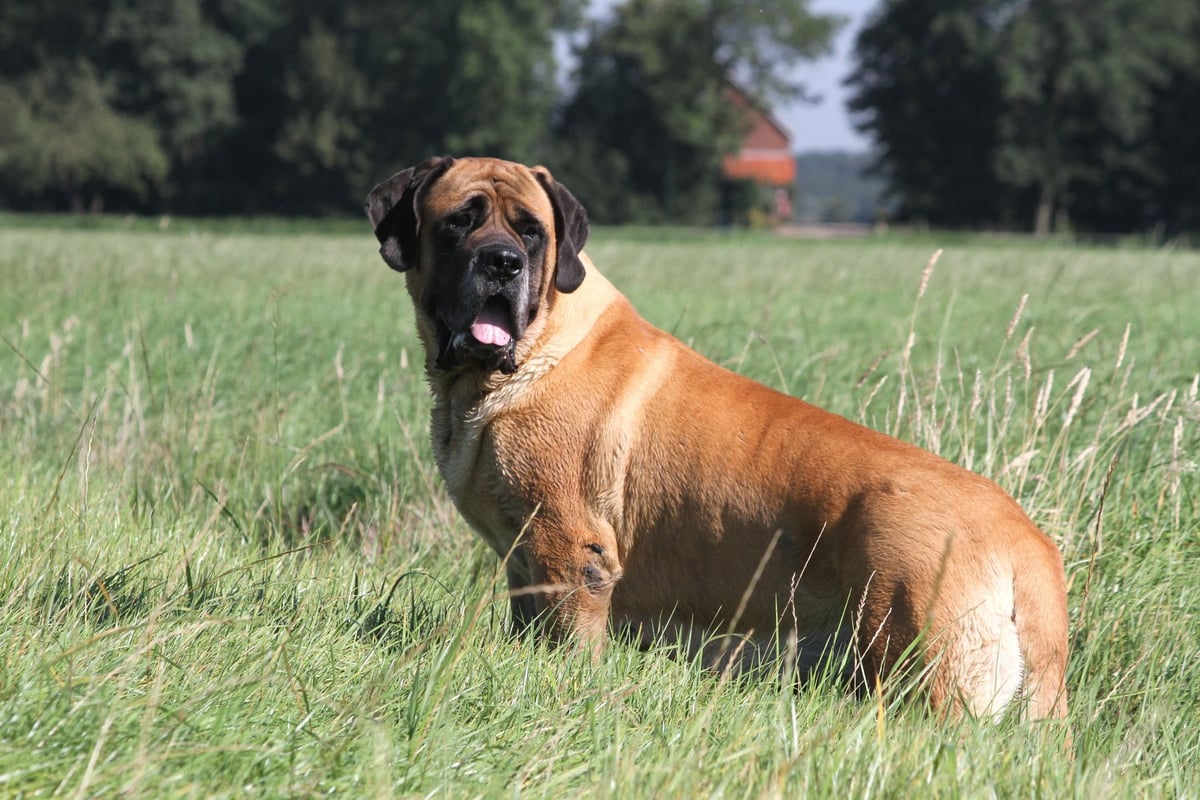
The Mastiff (English Mastiff, Old English Mastiff) is one of the heaviest dogs in the world, reaching 100 kg for imposing males. Recognized by the FCI as number 264, its lineage is traditionally linked to the large fighting dogs described by Julius Caesar in Britain in 55 BC. Its imposing stature contrasts with a gentle, low-key temperament — but its short life expectancy (6 to 10 years) and high veterinary costs call for serious preparation.
Scores given on measured axes, data confidence: high.
Living with a Mastiff
A mammoth build: massive rectangular body, broad, square head with a pronounced stop, loose skin forming folds on the skull and muzzle. Males ≥ 76 cm for 70 to 100 kg; females slightly smaller but still among the largest female dogs in the world. Short fawn, apricot, or brindle coat with a black mask on the muzzle, ears, and around the eyes. Pronounced drooling — a structural trait linked to very pendulous lips, not correctable.

Calm, level-headed, naturally protective without gratuitous aggression. Selected over centuries for intimidation through size, not attack — its presence deters without it needing to act. Gentle with the children of its family, whom it watches over with silent vigilance; supervision necessary with young children because of its build: a simple movement can knock a child over. Wary of strangers without being aggressive — early socialization essential.
Considerable physical power — left untrained, a 90 kg adult becomes unmanageable. Training must start at 8 weeks, while the puppy is still easy to handle. Positive reinforcement exclusively: its mass makes coercive methods both ineffective and dangerous. Priorities: "sit," "down," and loose-leash walking. Socialization outside the home from 12 weeks to prevent excessive guarding.

700 to 1 000 g of premium large-breed kibble a day for an 80 kg adult, in 2 mandatory meals (never just 1 — risk of gastric torsion). Specific giant-breed kibble up to 24 months for controlled growth. 60 minutes of digestive rest before and after any exercise. Raised feeding bowl at sternum height to reduce air intake. Glucosamine and chondroitin supplementation from age 3 for the weight-bearing joints.
Affiliate links, no extra cost to you. Legal notice

Requires a house with a spacious garden: a 90 kg adult needs room to stretch and move around effortlessly. Unsuited to apartment living — even a large one. Marked heat intolerance: outings should be avoided above 25 °C, with permanent shade and fresh water provided in summer. Soft sleeping surfaces (grass, thick rugs) should be favored to prevent pressure sores at contact points. A utility-sized vehicle or estate car is mandatory for travel.

Moderate upkeep for the short coat: regular weekly brushing with a glove or soft brush to control seasonal shedding. Cleaning the facial folds 2 to 3 times a week is mandatory to prevent moist dermatitis. Wiping drool from around the muzzle after every meal. Monthly bath with a mild shampoo, complex logistics for an 80+ kg animal.

Short life expectancy: 6 to 10 years, median 8 years according to UK Kennel Club data. Gastric dilatation-volvulus syndrome (GDV) affects 25 to 30% of giant breeds according to veterinary studies — a surgical emergency within ≤ 2 hours, with a mortality rate of 15 to 30% even when treated in time. Hip and elbow dysplasia very prevalent — radiographs mandatory on both parents before purchase. Heat intolerance with a risk of hyperthermia above 25 °C. Cancer (osteosarcoma, lymphoma): leading cause of premature death according to available epidemiological data.
During his expedition of 55 BC, Julius Caesar described massive fighting dogs accompanying British warriors — the ancient reference the breed traces its lineage to. In the Middle Ages, English Mastiffs were trained to fight lions, bulls, and bears in arenas, and exported as tribute to European royal courts. Nearly extinct after the Second World War in the United Kingdom — the breed's reconstruction relied on specimens imported from Canada and the United States. Recognized by the FCI under number 264, group 2.
Five essentials to line up before day one.
Affiliate links, no extra cost to you. Legal notice
FCI, Fédération Cynologique Internationale, the world body that has codified breed standards since 1911. FCI number 264 is assigned to the Mastiff.
Pinscher and Schnauzer - Molossoid and Swiss Mountain and Cattledogs
45 to 68 kg

Pinscher and Schnauzer - Molossoid and Swiss Mountain and Cattledogs
41 to 59 kg

Pinscher and Schnauzer - Molossoid and Swiss Mountain and Cattledogs
50 to 90 kg