


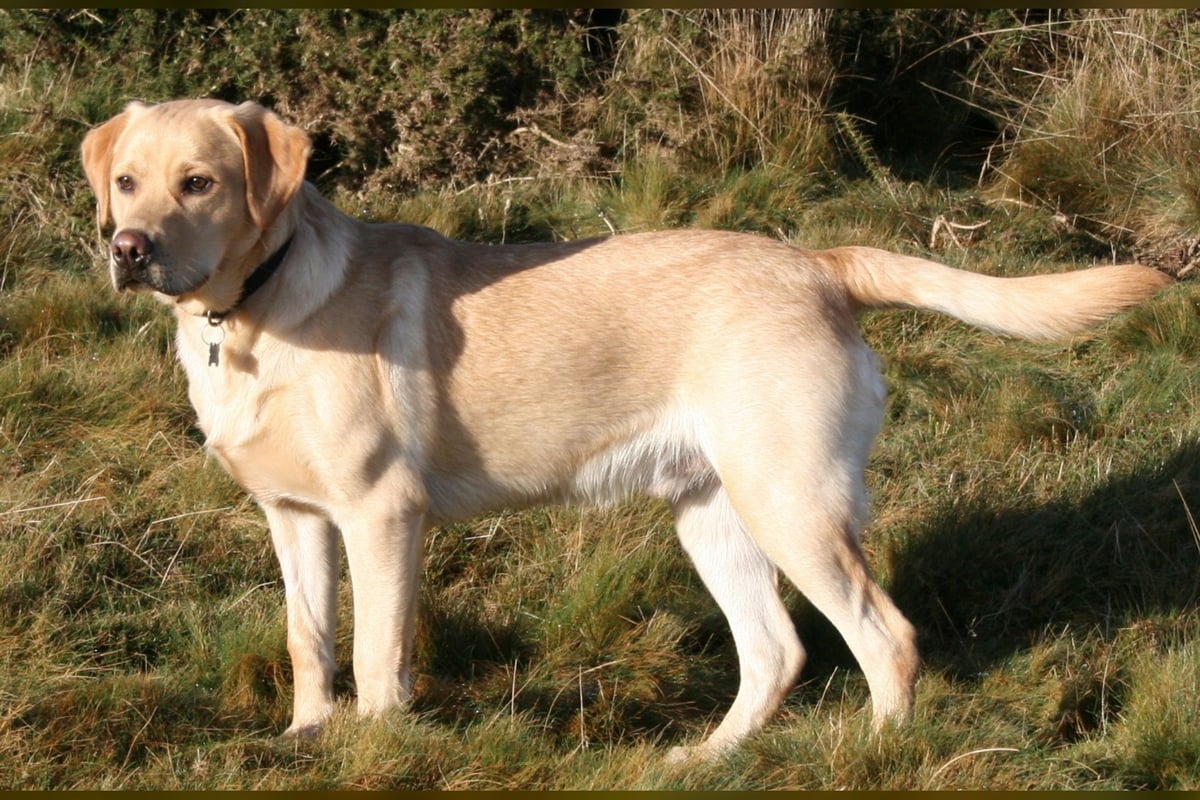
Labrador Retriever
The Labrador Retriever is a retrieving breed of Newfoundland and British origin, weighing 25 to 36 kg. Recognized by the FCI under number 122, it has been the most popular breed in the world for 30+ years (uninterrupted AKC #1 from 1991 to 2022) thanks to its balance of friendliness, high trainability, and versatility (hunting, assistance work, detection, search and rescue).
- Weight
- 25 to 36kg
- Height
- 54 to 57cm
- Life expectancy
- 11years
- Monthly cost
- 100 to 150€
Personality profile
Energy 4/5
Independence 2/5
Trainability 5/5
Good with children 5/5
Barking 2/5
Space needed 4/5
Attachment to home 5/5
Good with strangers 5/5
Good with dogs 5/5
Good with cats 4/5
Coat care 3/5
Exercise needs 4/5
Scores given on measured axes, data confidence: high.
Living with a Labrador Retriever
Description
A medium-to-large retrieving breed with a short, waterproof double coat. Males 56-57 cm for 30-36 kg, females 54-56 cm for 25-32 kg. Three official colors: black, yellow (from off-white to fawn), chocolate. Otter tail thick at the base, webbed paws (a legacy of its water-retrieving work). Life expectancy 10-12 years, shortened to 9-10 years for chocolates according to a 2018 British study.

Temperament
Friendly, loyal, intelligent, eager to please, devoid of aggression even toward strangers. Patient with children and playful with other dogs. Strong food motivation, partly of genetic origin (see FAQ), to channel from puppyhood to prevent stealing food and gulping meals. Late maturity: stays adolescent until age 3.
Training
Trainability among the best (top 7 according to Coren), picks up a new cue in 5-15 repetitions. Highly motivated by food and object retrieval. Positive reinforcement only. Suited to varied dog sports and long sessions of technical exercise: obedience, recreational agility, mantrailing, assistance work, narcotics/explosives detection, pet therapy, waterfowl hunting.

Feeding
300 to 450 g of premium kibble a day for a 30 kg adult, in 2 meals. A breed with maximum propensity for obesity: always weigh the ration, strictly account for treats (10% of calories max), no table scraps. Large-breed kibble until 18 months, light formula after age 4 in sedentary mode.
Affiliate links, no extra cost to you. Legal notice

Living conditions
Prefers a house with a yard given its size and exercise needs. Not suited to small urban apartments; workable in a large apartment (≥80 m²) if 1.5 to 2 hours of daily outings are guaranteed, including swimming or running. Loves water: plan for access to a lake, river, or sea 2-3 times a month.

Grooming and coat care
Weekly brushing with a deshedding tool to remove the undercoat. Substantial biannual molts (spring/fall) when daily brushing is recommended for 2-3 weeks. Bathe quarterly at most, with a gentle shampoo so as not to strip the waterproof sebum. Check the ears and paw pads twice a week.

Health
A breed strongly predisposed to obesity (the POMC satiety mutation, detailed in the FAQ). Hip and elbow dysplasia (LOF radiograph), progressive retinal atrophy (PRA-prcd DNA test), juvenile cataracts. EIC (Exercise-Induced Collapse): mandatory DNA test, affected (homozygous) dogs collapse after 5-15 minutes of intense exercise. Chronic ear infections (drop ears), recurring skin pyoderma.
Breed history
Originated on the island of Newfoundland (Canada) in the 18th century, descended from the St. John's Water Dog brought over by fishermen. Brought back to the United Kingdom around 1830 by the Earls of Malmesbury and Buccleuch, refined as a game retriever. Breed standard fixed in 1916 in the United Kingdom. Top LOF registrations in France between 2000 and 2010, still top 5 in 2025 despite competition from the Australian Shepherd.
Getting ready for your Labrador Retriever
Five essentials to line up before day one.
Affiliate links, no extra cost to you. Legal notice
FAQ: Labrador Retriever
Sources
- FCI Standard No 122 · FCI breed standard 122, Group 8 Retrievers
- AKC Breed Profile · AKC Labrador Retriever breed profile, Sporting Group
FCI, Fédération Cynologique Internationale, the world body that has codified breed standards since 1911. FCI number 122 is assigned to the Labrador Retriever.
Breeds similar to a Labrador Retriever

