


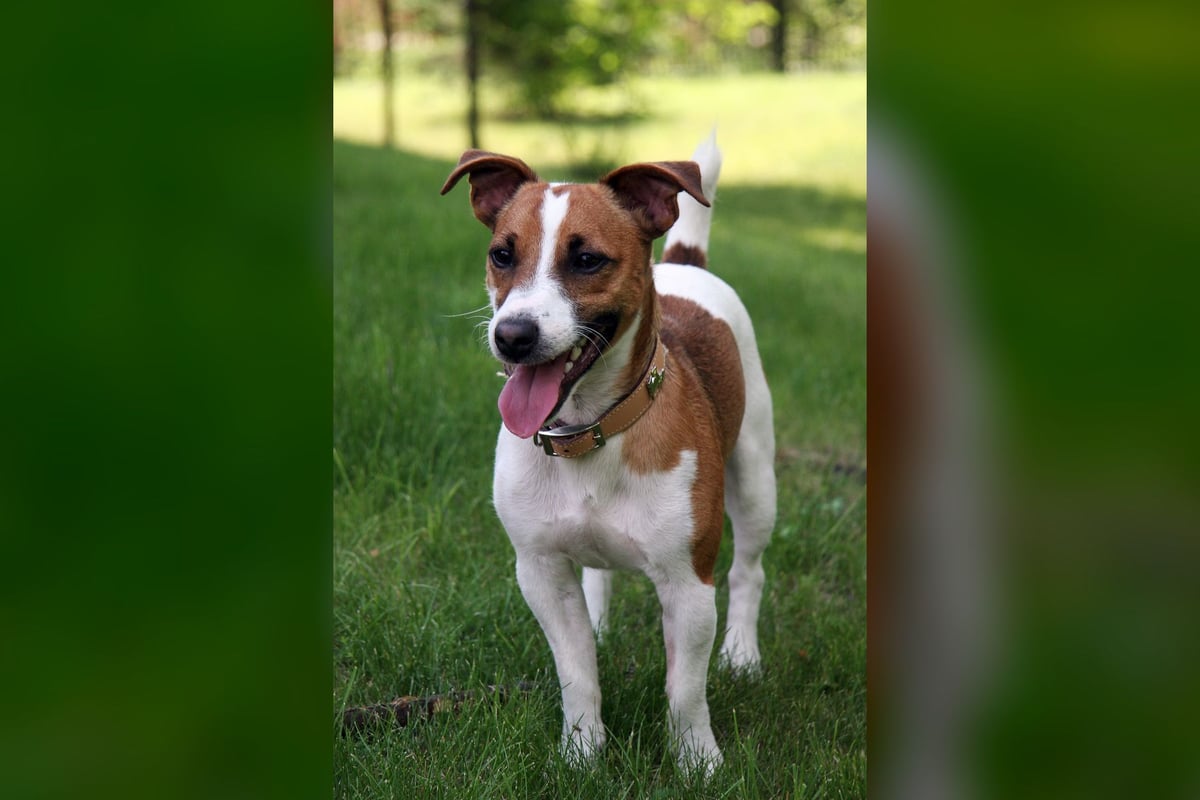
Jack Russell Terrier
The Jack Russell Terrier weighs 5 to 8 kg for 25 to 30 cm at the withers. A fox-hunting terrier breed selected by the Reverend John Russell in 19th-century England, recognized by the FCI under number 345. Maximum energy (5/5), extreme predatory instinct toward small animals, frequent barking. Life expectancy 13 to 16 years, among the best of the terriers.
- Weight
- 5 to 8kg
- Height
- 25 to 30cm
- Life expectancy
- 14years
- Monthly cost
- 50 to 80€
Personality profile
Energy 5/5
Independence 4/5
Trainability 3/5
Good with children 3/5
Barking 4/5
Space needed 3/5
Attachment to home 3/5
Good with strangers 2/5
Good with dogs 2/5
Good with cats 1/5
Coat care 2/5
Exercise needs 5/5
Scores given on measured axes, data confidence: high.
Living with a Jack Russell Terrier
Description
A compact working dog, its body fitting within a rectangle, built to enter fox earths and bolt the occupant. The FCI 345 standard distinguishes three coat types: smooth, rough (wiry), and broken (intermediate). White must be the dominant color, with tan or black markings. Its rib cage, flattened laterally and pliable enough to be spanned by two hands, lets it move underground. Not to be confused with the Parson Russell Terrier (FCI 339), which is taller and longer-legged.

Temperament
Lively, tenacious, and often unpredictable, it is selected to work independently underground without human direction — which translates into strong autonomy and a low level of obedience compared to other terriers. Vocal and expressive, it barks to signal, to hunt, or to demand attention. Extreme predatory instinct: any creature under 10 kg (cat, rabbit, guinea pig, bird) is perceived as potential prey. Reserved, even wary, with strangers, it requires supervision around young children because of its low tolerance for restraint and its defensive bite reflex.
Training
Moderate trainability (3/5): it understands quickly but chooses whether to obey based on how worthwhile the request seems. Short, frequent sessions (5 to 10 minutes), based on positive reinforcement and high-value food rewards. Punishment produces stubbornness or aggression. Substantial daily physical exercise and dog sports (agility, earthdog, rally obedience) help channel its overflowing energy and improve cooperation. Recall requires prolonged, specific training and is never fully reliable around prey.

Feeding
100 to 160 g of premium kibble a day for a 6 to 7 kg adult, split into 2 meals. High energy expenditure; high-protein kibble (28-32%) suited to active small breeds. Risk of rapid weight gain after spaying/neutering if the ration isn't adjusted — excess weight worsens patellar luxation.
Affiliate links, no extra cost to you. Legal notice

Living conditions
Tolerates apartment life only if its intense exercise needs are met — a minimum of 1 to 1.5 hours of sustained activity a day, which can be split into 2 to 3 outings with running, fetch, or dog sports. Without enough of an outlet, it channels its energy into destructiveness (furniture, baseboards, a dug-up yard). Compulsive digging instinct inherited from earth work: any yard must be fenced deep underground (50 cm minimum below grade). Recall is unreliable outside an enclosure; avoid unfenced areas.

Grooming and coat care
Minimal upkeep depending on coat type. Smooth coat: weekly brushing with a grooming glove. Rough or broken coat: stripping (hand-plucking) 2 to 3 times a year to remove dead hair and maintain the wiry texture. No regular professional grooming required. Moderate shedding, mostly in spring.

Health
Life expectancy 13 to 16 years, among the best of all breeds. Documented genetic predispositions: patellar luxation (grade 1 to 4, common), hereditary spinocerebellar ataxia (SCA), a recessively inherited neurodegenerative disease detailed in the FAQ. Congenital unilateral or bilateral deafness in lines with a predominantly white coat (correlated with the piebald gene) — BAER testing recommended before purchase. Forelimb fractures from jumping down from height (off a sofa, down stairs): the long bones stay slender at this size, despite a stocky appearance that misleads many owners. Eye conditions (dry keratoconjunctivitis, early cataracts) reported sporadically.
Breed history
The Reverend John Russell (1795-1883), a Devon vicar and passionate fox hunter, bought a female terrier named Trump in 1819 who founded his line. His goal: a dog able to keep up with the horses on a hunt and bolt the fox from its earth without killing it, to prolong the chase. Recognized by the FCI in 2001 under number 345 (based on the British Kennel Club standard), it remains one of the most widespread terrier breeds in Europe, notably in France and Italy.
Getting ready for your Jack Russell Terrier
Five essentials to line up before day one.
Affiliate links, no extra cost to you. Legal notice
FAQ: Jack Russell Terrier
Sources
- FCI Standard No 345 · FCI breed standard 345, Group 3 Terriers, Section 2 Small-sized Terriers
- AKC Breed Profile · AKC Russell Terrier breed profile, Terrier Group
FCI, Fédération Cynologique Internationale, the world body that has codified breed standards since 1911. FCI number 345 is assigned to the Jack Russell Terrier.
Breeds similar to a Jack Russell Terrier

