


Rottweiler
Pinscher and Schnauzer - Molossoid and Swiss Mountain and Cattledogs
42 to 60 kg
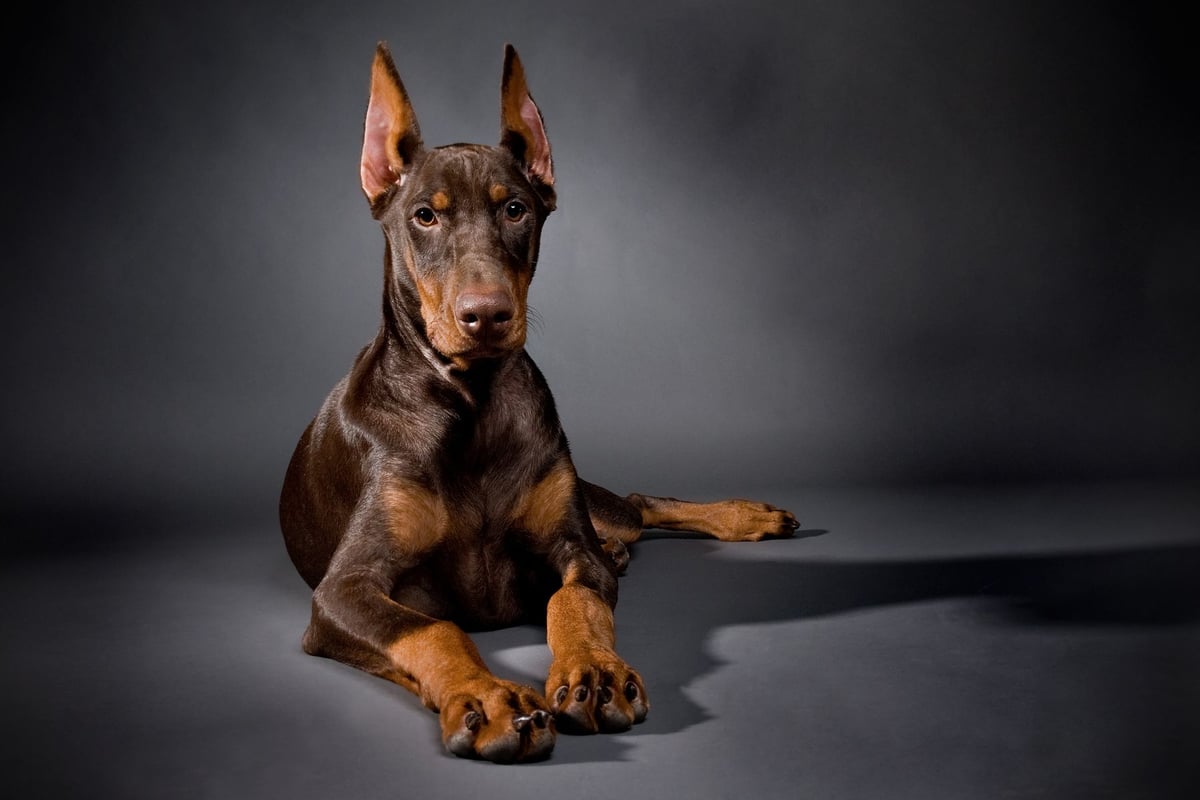
The Dobermann is a working and protection dog developed in Germany around 1870 by Karl Friedrich Louis Dobermann. Recognized by the FCI under number 143, it weighs 32 to 45 kg depending on sex and stands 63 to 72 cm. A breed with a short life expectancy (9-10 years) due to a prevalence of dilated cardiomyopathy exceeding 58% across the breed.
Scores given on measured axes, data confidence: high.
Living with a Dobermann
A large, athletic and compact breed. Males stand 68-72 cm for 40-45 kg, females 63-68 cm for 32-35 kg. Short, dense coat with no undercoat — which explains its extreme sensitivity to cold. FCI-recognized colors: black with rust markings, brown with rust markings. Muscular build and pronounced angulation give it a powerful silhouette and high movement speed. Ears once cropped; cropping has been banned in France since 2004.

Courageous, alert, loyal to its family, wary of strangers — a natural guardian that watches over its territory without excessive barking. Deeply attached to its human reference figures, it copes poorly with long periods of solitude (4 hours maximum). High working intelligence: it understands quickly but tests limits if the hierarchy is not clear. Intensive early socialization is mandatory (3-4 months) to prevent an adult dog that is unmanageable around strangers. Caution with young children and unfamiliar people: its structural wariness requires constant supervision.
Top-tier trainability: it picks up commands quickly and excels at dog sports that demand hours of intense, precise work. Suited to bite work (ring, mondioring, IGP), high-level obedience, mantrailing and tracking. Positive reinforcement is effective and recommended — coercive methods generate resistance or harmful inhibition. An experienced owner is required: physical power combined with intelligence demands consistent, daily mastery of training.

400 to 550 g of premium large-breed kibble a day for a 40 kg adult, in 2 mandatory meals (gastric torsion risk). One hour of digestive rest before and after exercise. Large-breed kibble up to 18-24 months (slow bone growth). Omega-3 fatty acids as a supplement for cardiac support from age 2. Glucosamine/chondroitin after age 5 for the joints.
Affiliate links, no extra cost to you. Legal notice

A house with a fenced garden is essential to cover its intense exercise needs and living space. Unsuited to an apartment, even a large one: the combination of size, energy and need for mental stimulation makes indoor building life problematic. Critically sensitive to cold — the short coat with no undercoat provides almost no thermal insulation: a coat is mandatory from 5 °C, and outings should be shortened below 0 °C. Indoors, it must sleep somewhere warm year-round.

Minimal upkeep thanks to the short coat with no undercoat: weekly brushing with a rubber grooming glove is enough to remove dead hair. Shedding is moderate and constant but without major seasonal peaks. Bathe quarterly. Check the ears regularly (predisposition to ear infections if the ears are not cropped). Trim the claws monthly.

A very short life expectancy (9-10 years) dominated by dilated cardiomyopathy (DCM): a prevalence of 58.2% across the breed, rising above 65% in dogs over 10 (the leading cause of death). Annual Holter cardiac screening is recommended from age 2. Von Willebrand disease (a coagulation disorder, DNA test available). Cervical Wobbler syndrome (spinal cord compression, 5-10% of dogs). Copper-associated chronic hepatitis (pathological copper buildup in the liver). Hypothyroidism. Always require a Holter monitor, Von Willebrand tests and a cardiac ultrasound for breeding stock.
Created around 1870 in Apolda (Thuringia) by Karl Friedrich Louis Dobermann, a tax collector who wanted a protection dog for his rounds. The breed likely came from crosses between Pinschers, Rottweilers and other local butcher's dogs. The first breed club was founded in 1899, and the first official standard was adopted in 1900. Used by the German police and army from the early 20th century. Contrary to a common belief, the breed does not fall under categories 1 and 2 of the French law of January 6, 1999 on dangerous dogs: owning one requires no specific permit. Present in Europe and the United States as a sport and guard dog since the 1920s.
Five essentials to line up before day one.
Affiliate links, no extra cost to you. Legal notice
FCI, Fédération Cynologique Internationale, the world body that has codified breed standards since 1911. FCI number 143 is assigned to the Dobermann.
Pinscher and Schnauzer - Molossoid and Swiss Mountain and Cattledogs
42 to 60 kg


Sheepdogs and Cattledogs (except Swiss Cattledogs)
20 to 30 kg