


Miniature Pinscher
Pinscher and Schnauzer - Molossoid and Swiss Mountain and Cattledogs
4 to 6 kg
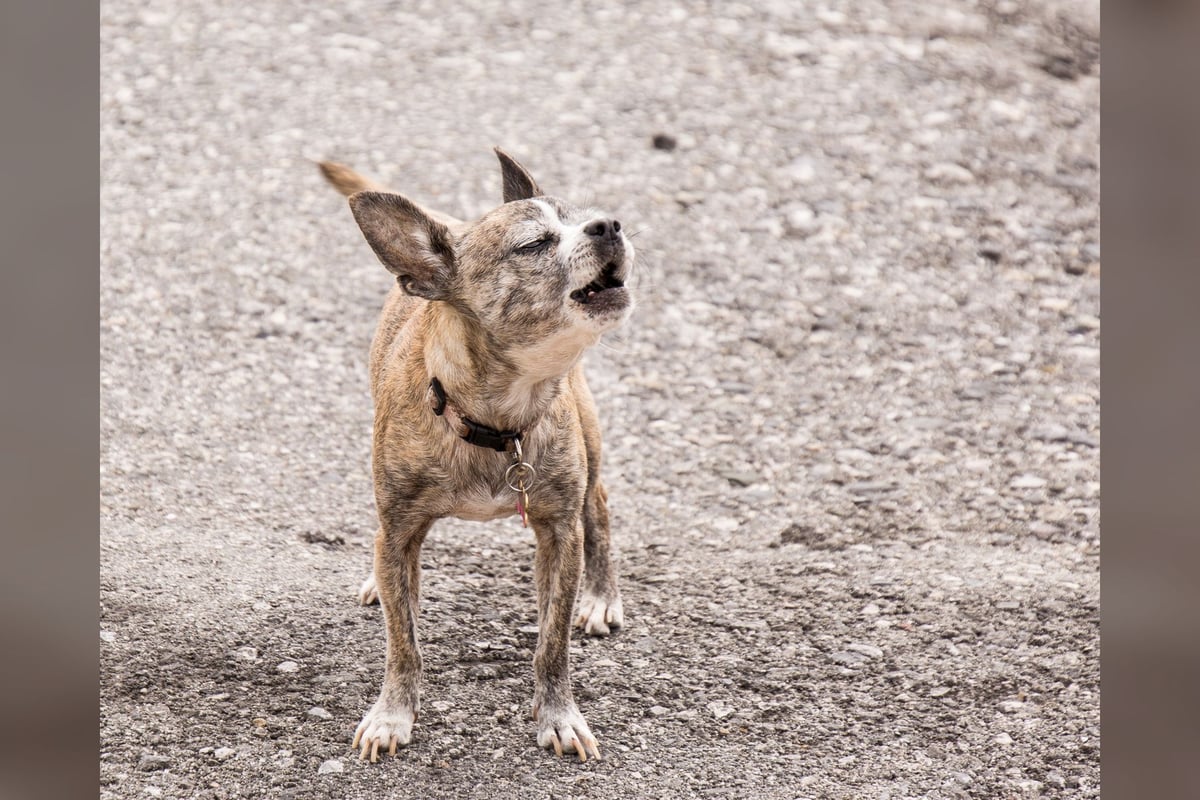
The Chihuahua weighs 1.5 to 3 kg for 15 to 23 cm at the withers. Recognized by the FCI under number 218, Group 9 Companion and Toy Dogs, native to Mexico. One of the longest life expectancies of all breeds: 12 to 20 years. Points of vigilance: an unclosed fontanelle (molera) present in 60 to 80% of individuals, and puppy hypoglycemia common before 6 months.
Scores given on measured axes, data confidence: high.
Living with a Chihuahua
A Mexican toy breed with two official varieties: smooth coat and long coat, both recognized by the FCI. Apple-shaped head with an often-persistent fontanelle, large bright round eyes, wide ears held erect and fan-shaped, marked stop. Fine bone structure but musculature relatively developed for the size. FCI standard weight: not to exceed 3 kg. So-called "tea cup" individuals (< 1 kg) are outside the standard and carry heightened health risks — no serious breeder promotes this label.

A bold temperament for a 1.5 to 3 kg size: territorial, courageous beyond reason toward much larger dogs, vocal and prone to barking at strangers. Strongly attached to one or two reference humans, and can display marked behavioral jealousy. Wary or even nippy with young children who do not read its stress signals; supervision is essential with children under 6 — a child can injure it unintentionally, and the reaction comes fast.
Intelligent and capable of learning many commands, but its independent temperament and territorial instinct require firm, consistent training from the first weeks. Exclusively positive reinforcement: very small treats or affectionate contact. Common mistake: treating the Chihuahua as a companion object rather than a dog — which produces reactive behaviors (barking, biting) difficult to correct after 18 months. Intensive socialization before 14 weeks to urban noises, children, and dogs of varying sizes.

50 to 80 g of premium kibble a day for a 2.5 kg adult, in 3 meals up to 6 months then 2 meals as an adult. Mini-sized kibble (diameter < 7 mm) suited to the small jaw. Puppies under 6 months: in-between snacks every 4 to 5 hours to prevent hypoglycemia. Watch the weight: obesity at this size worsens patellar luxation and strains the heart.
Affiliate links, no extra cost to you. Legal notice

Perfectly suited to apartment or studio living: its space needs are minimal. Extremely sensitive to cold: below 10 °C, a coat is mandatory outdoors, and it should not stay in unheated rooms. Avoid permanent drafts. A harness rather than a collar is recommended given cervical fragility and the risk of secondary tracheal collapse in adult individuals.

Modest upkeep for the smooth coat variety: weekly brushing is enough to remove dead hair. The long coat variety needs brushing 2 to 3 times a week to prevent tangles behind the ears and on the britches. Monthly bath with a mild shampoo. Special attention to teeth: narrow jaws predispose to periodontal disease — tooth brushing 2 to 3 times a week from puppyhood, professional descaling annually from age 3.

Five priority health issues. Molera (persistent fontanelle): in 60 to 80% of Chihuahuas, the skull bones do not fully close, creating a soft spot on top of the skull — not painful per se, but requiring protection against head impacts (never let the dog jump from a height > 50 cm). Hydrocephalus (excess cerebrospinal fluid) is an associated risk, particularly in individuals with very domed heads: divergent pupils, circling gait, and seizures are the symptoms — screening MRI for any symptomatic individual. Puppy hypoglycemia before 6 months is common with fasting > 4 hours, stress, or intercurrent infection: signs of weakness, trembling, disorientation require immediate intervention (honey on the gums plus emergency vet care). Patellar luxation (grade I-IV) affects 5 to 10% of adults. Mitral valve insufficiency is common after age 8-10: annual auscultation from age 8.
The Chihuahua is one of the oldest breeds in the Americas. Depictions of dogs with round heads and erect ears appear in Toltec artifacts dating to the 10th century. The Techichi, its likely ancestor, was used in Aztec funerary rituals. Rediscovered by American travelers in the Mexican state of Chihuahua in the mid-19th century, it reached the United States in the 1880s-1890s. Recognized by the AKC in 1904 and by the FCI under number 218, with definitive recognition on April 12, 1959. Two official varieties: smooth coat and long coat, both eligible for CACIB.
Five essentials to line up before day one.
Affiliate links, no extra cost to you. Legal notice
FCI, Fédération Cynologique Internationale, the world body that has codified breed standards since 1911. FCI number 218 is assigned to the Chihuahua.
Pinscher and Schnauzer - Molossoid and Swiss Mountain and Cattledogs
4 to 6 kg

