


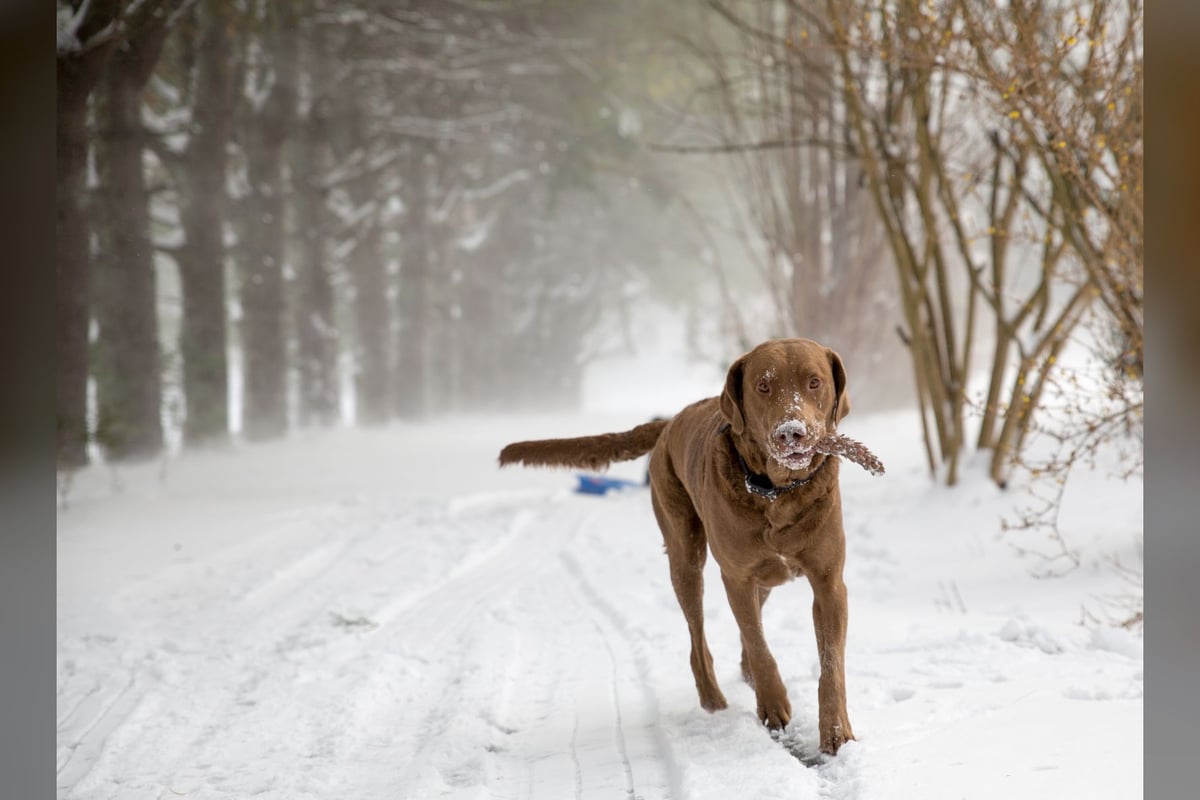
Chesapeake Bay Retriever
The Chesapeake Bay Retriever, nicknamed the "Chessie," is an American retriever of 25 to 36 kg created in 1807 in Maryland from two Newfoundland puppies (Sailor and Canton) rescued from a British shipwreck. Recognized FCI number 263, it has been the official dog of the State of Maryland since 1964, bred to retrieve in icy water and the extreme conditions of the Chesapeake Bay.
- Weight
- 25 to 36kg
- Height
- 53 to 66cm
- Life expectancy
- 11years
- Monthly cost
- 110 to 160€
Personality profile
Energy 5/5
Independence 3/5
Trainability 3/5
Good with children 4/5
Barking 3/5
Space needed 5/5
Attachment to home 4/5
Good with strangers 2/5
Good with dogs 3/5
Good with cats 3/5
Coat care 3/5
Exercise needs 5/5
Scores given on measured axes, data confidence: high.
Living with a Chesapeake Bay Retriever
Description
A large, sturdily built retriever breed with a short, wavy double coat that is oily and waterproof — the only retriever breed with this coat type. Males 58-66 cm at 30-36 kg, females 53-61 cm at 25-32 kg. Coat colors chestnut, dead grass, or dark brown. A straight, heavy-based tail, webbed feet. Life expectancy 10-13 years.

Temperament
Protective of the family, firm with strangers — unlike the Labrador and the Golden, the Chessie is not indiscriminately sociable: it sizes up strangers and can be reserved without early socialization. Loyal and courageous, with unusual mental and physical endurance shaped by Atlantic winters of duck hunting at -10 °C. Patient with the family's children, but less tolerant of outside intrusions.
Training
Fair trainability but below the Labrador and the Golden (Coren: roughly top 30): the Chessie has an independent character and a will of its own that call for an experienced, consistent, firm owner. It learns well through positive reinforcement but tests limits. Not suited to first-time owners without dog experience. Excellent motivation through water retrieving sport and long technical exercise sessions; top results in AKC hunt tests.

Feeding
350 to 500 g of premium large-breed kibble a day for a 30-36 kg adult, split into 2 meals. An athletic breed with high caloric expenditure during hunting or intense swimming sessions: adjust the ration to actual activity (reduce by 20% on sedentary days). Watch for bloat (a predisposition of deep-chested large breeds): rest for 1 hour after meals, never feed before an exertion session.
Affiliate links, no extra cost to you. Legal notice

Living conditions
A breed unsuited to a small apartment or a sedentary owner: its high energy level (5/5) demands 1.5 to 2 hours of intensive daily activity including swimming, retrieving, or jogging. Prefers a house with a fenced garden and regular access to water. It tolerates harsh winters thanks to its waterproof oily coat, but needs a structured exercise program year-round.

Grooming and coat care
Weekly brushing is enough under normal conditions thanks to the dense short coat that repels water and mud. Seasonal spring/fall shedding calls for brushing 2-3 times a week. Do not shampoo too often — frequent baths strip the coat's natural oils that provide waterproofing. Regular ear checks (standing water after swimming).

Health
Main hereditary risks: hip and elbow dysplasia (LOF X-rays mandatory before breeding), progressive retinal atrophy (PRA-prcd DNA test recommended), and exercise-induced collapse (EIC, DNA test available). Life expectancy 10-13 years, slightly lower than other large retrievers. Require the full OFA panel (hips, elbows, eyes, PRA DNA) from a serious breeder.
Breed history
Born in 1807 on the coast of Maryland when two Newfoundland puppies (Sailor and Canton), the only survivors of a British shipwreck, were crossed with local retrievers and spaniels from the Chesapeake Bay. Selected over 80 years to retrieve several hundred ducks a day in the icy, choppy waters of the bay. The first retriever recognized by the AKC in 1878. Named the official dog of Maryland by the state government in 1964.
Getting ready for your Chesapeake Bay Retriever
Five essentials to line up before day one.
Affiliate links, no extra cost to you. Legal notice
FAQ: Chesapeake Bay Retriever
Sources
- FCI Standard No 263 · FCI breed standard 263, Group 8 Section 1 Retrievers
- AKC Breed Profile — Chesapeake Bay Retriever · AKC Chesapeake Bay Retriever breed profile, Sporting Group
- American Chesapeake Club — Breed History · American Chesapeake Club, founding history 1807 Sailor & Canton
FCI, Fédération Cynologique Internationale, the world body that has codified breed standards since 1911. FCI number 263 is assigned to the Chesapeake Bay Retriever.
Breeds similar to a Chesapeake Bay Retriever

