


Boxer
Pinscher and Schnauzer - Molossoid and Swiss Mountain and Cattledogs
25 to 35 kg
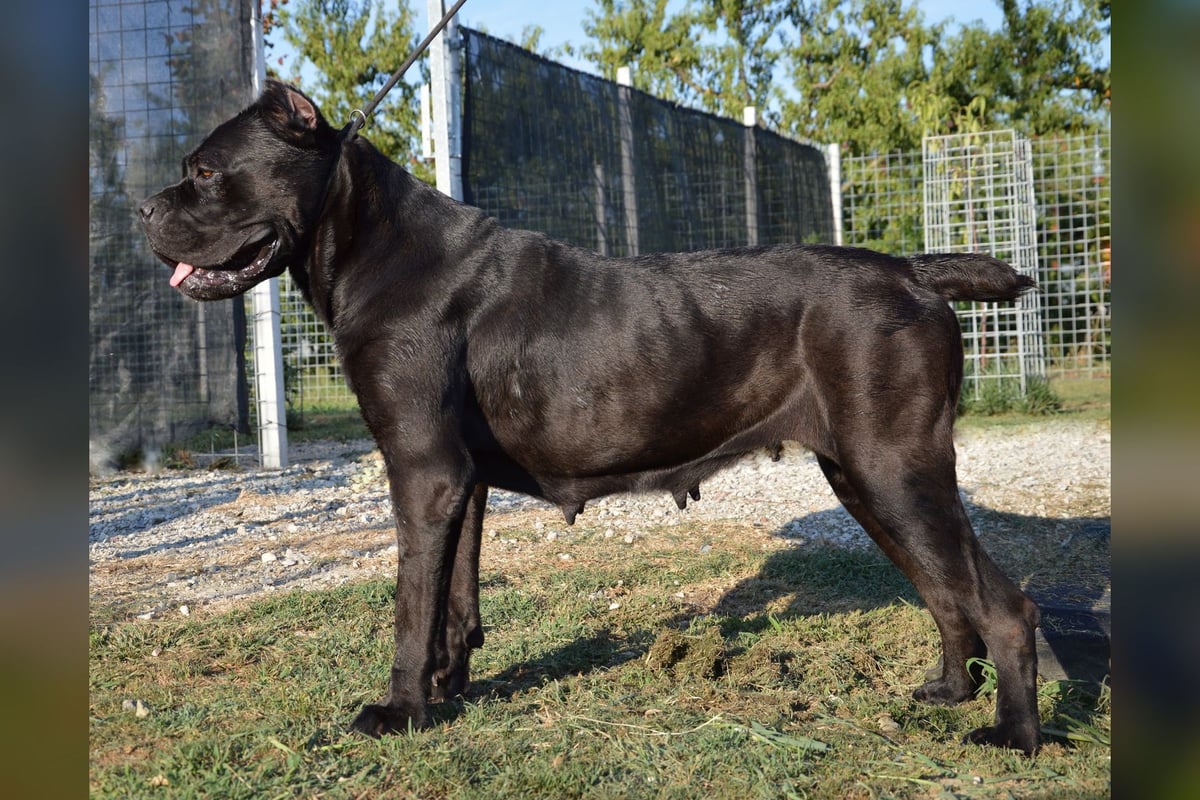
The Cane Corso is a large Italian molosser, recognized by the FCI under number 343. Descended from Roman war dogs, it weighs 40 to 50 kg for 60 to 68 cm. A protection breed with a pronounced guarding instinct, requiring mandatory early socialization, with a life expectancy of 9 to 11 years and several serious health predispositions (dysplasia, cancer, epilepsy).
Scores given on measured axes, data confidence: high.
Living with a Cane Corso
A large, rectangular, muscular breed. Males 64-68 cm for 45-50 kg, females 60-64 cm for 40-45 kg. A broad, massive head, moderately brachycephalic (a longer muzzle than short-muzzled molossers like the Bulldog). Short, dense coat in fawn, brindle, gray, black or wheaten. Ears formerly cropped (banned in France since 2004), tail formerly docked (also banned). An imposing build that generates high joint stress from adolescence onward.

A territorial guard dog, stable with its family, but naturally wary of strangers — this wariness requires constant supervision around unfamiliar people. With the household's children that it knows, it can be patient and protective; with outside children, caution and supervision are essential. A marked tendency toward dominance between males: cohabitation with other same-sex dogs is difficult without structured socialization. An experienced owner is mandatory: its physical power (50 kg pulling) makes any behavioral slip dangerous.
Good trainability for a molosser: it learns basic commands in 15-30 repetitions with structured positive reinforcement. An experienced owner is essential — its physical power turns any training lapse into an uncontrollable situation. Intensive early socialization from 3 months is mandatory (strangers, children, other dogs, urban noise). Suited to measured protection dog sports (ring sport, mondioring) and long, regular sessions of physical exercise. Not suited to a first-time owner.

500 to 700 g of premium large-breed kibble a day for a 45 kg adult, in 2 mandatory meals (never just 1, due to gastric torsion risk). Giant-breed kibble up to 24 months to support slow bone growth. 1-hour digestive rest before and after exercise. Glucosamine/chondroitin as a supplement from age 3. Never overfeed: excess weight means more joint stress on hips and elbows.
Affiliate links, no extra cost to you. Legal notice

A house with a large enclosed outdoor space is essential (garden ≥ 100 m²). An apartment is not advisable given its size and exercise needs: at least 1 to 1.5 hours of daily activity, including long, structured walks. Sensitive to heat due to moderate brachycephaly: intense exercise forbidden above 25 °C, constant shade and fresh water in summer. Adequate tolerance for moderate cold; the short coat is insufficient in prolonged severe cold (<0 °C).

Minimal coat upkeep: weekly brushing with a bristle grooming glove is enough outside of spring shedding. Sheds moderately year-round, more intensely in spring. Quarterly bath. Mandatory twice-weekly inspection of the muzzle folds and lower lip (contact dermatitis is common). Monthly nail trim is essential — the massive nails do not wear down easily on hard ground.

Short life expectancy: 9 to 11 years (median 10 years). Major predispositions: hip and elbow dysplasia (mandatory radiographic screening of breeding stock), cancer (osteosarcoma, mast cell tumor — high incidence in the breed), idiopathic epilepsy (documented genetic component), cherry eye (prolapse of the third eyelid gland, common in puppies aged 3-9 months, corrected surgically). Gastric dilatation-volvulus syndrome (veterinary emergency <2h, favored by the deep chest). High annual veterinary cost.
Descended from the Roman canis pugnaces used in the legions. The name appeared in southern Italy (Apulia, Campania) in the Middle Ages, where it was used as a farm dog, a big-game hunting dog, and a livestock guardian. The breed nearly disappeared in the 1970s; selective Italian reconstruction since the 1980s, recognized by the FCI in 1996 under number 343. Massive imports into Western Europe since 2010, with sharply rising popularity despite some breeders paying little attention to health testing.
Five essentials to line up before day one.
Affiliate links, no extra cost to you. Legal notice
FCI, Fédération Cynologique Internationale, the world body that has codified breed standards since 1911. FCI number 343 is assigned to the Cane Corso.
Pinscher and Schnauzer - Molossoid and Swiss Mountain and Cattledogs
25 to 35 kg

Pinscher and Schnauzer - Molossoid and Swiss Mountain and Cattledogs
42 to 60 kg

Pinscher and Schnauzer - Molossoid and Swiss Mountain and Cattledogs
32 to 45 kg