


Mastiff
Pinscher and Schnauzer - Molossoid and Swiss Mountain and Cattledogs
68 to 100 kg
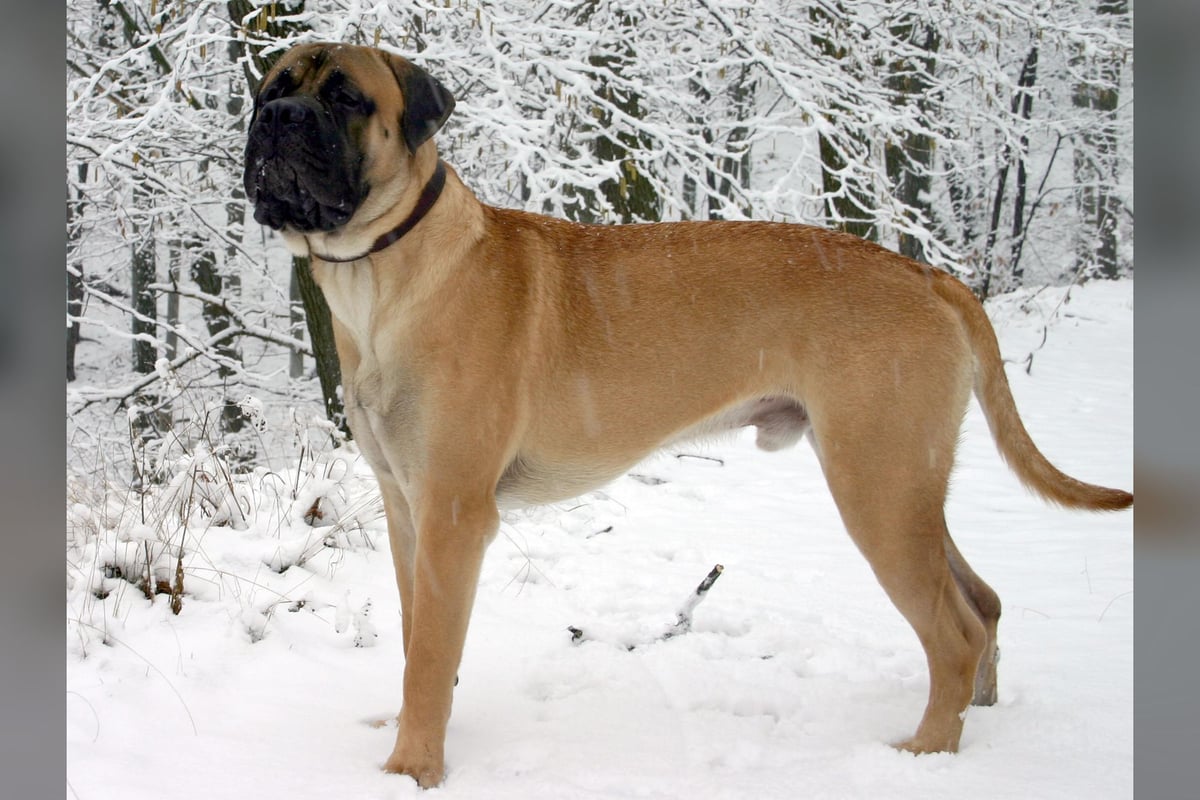
The Bullmastiff (FCI 157) is a British molosser created in the late 19th century at the historical ratio of 60% Mastiff and 40% Bulldog (Burton, 1924) to help gamekeepers bring down poachers without biting — a technique known as "knock and pin." Males 50-60 kg for 63-68 cm, females 40-50 kg. Its short life expectancy (7-10 years) and susceptibility to gastric torsion call for serious preparation before adoption.
Scores given on measured axes, data confidence: high.
Living with a Bullmastiff
A massive, rectangular build: heavy bone structure, a deep, wide chest, a broad, square head with a pronounced stop and marked forehead wrinkle. Males 63-68 cm for 50-60 kg; females 61-66 cm for 40-50 kg. Short coat in fawn, red or brindle, with a mandatory black mask on the muzzle, eyes and ears per the FCI standard. A short brachycephalic muzzle (about a third of the head's length) — less extreme than the Bulldog's but enough to cause rapid overheating. Moderate drooling due to the loose lips.

A natural guardian, reserved toward strangers, without gratuitous aggression. Its original technique was to knock down and pin the intruder without biting — this instinct to control rather than attack remains deeply ingrained. Gentle and protective with its family's children, but its size (55 kg on the move) requires constant supervision with young children. A marked tendency toward dominance between males: difficult cohabitation with another large male breed without very early socialization.
Considerable physical power: an untrained 55 kg Bullmastiff pulling on the leash is physically unmanageable for the average adult. Training from 8 weeks with exclusively positive reinforcement — it resists coercive methods through sheer mass and determination. Mastering "sit," "stay," and loose-leash walking are the absolute priorities before 6 months. Intensive socialization is mandatory: strangers, children, other dogs, noisy urban environments. An experienced owner is strongly recommended.

500 to 800 g of premium large-breed kibble a day for a 55 kg adult, split into 2 mandatory meals — a single daily meal significantly raises the risk of gastric torsion. Giant-breed-specific kibble up to 24 months for controlled bone growth. A mandatory 60-minute digestive rest before and after any exercise. Bowl placed on the floor rather than elevated: raised bowls are associated with a higher risk of gastric torsion in giant breeds. Glucosamine and chondroitin as a supplement from age 3.
Affiliate links, no extra cost to you. Legal notice

A house with a fenced garden is essential — a garden of at least 80 m² for a 55 kg adult to move around in. Not suited to an apartment, even a spacious one. Marked heat intolerance due to the short brachycephalic muzzle: avoid outings above 25 °C, constant shade and fresh water required in summer — risk of overheating within minutes of exertion in hot weather. Adequate tolerance for moderate cold (dense short coat). A station wagon or utility vehicle is required for transport.

Minimal upkeep for the short coat: weekly brushing with a rubber grooming glove is enough outside of seasonal shedding (spring, fall). Clean the forehead wrinkles and muzzle folds two to three times a week to prevent moist dermatitis. Monthly bath with a mild shampoo — non-trivial logistics for a 55 kg dog. Monthly nail trim. Twice-weekly ear cleaning, as the drop ears favor moisture buildup.

Short life expectancy: 7 to 10 years, median 8 years. Gastric dilatation-volvulus (GDV) syndrome: estimated lifetime prevalence of 25% according to veterinary studies on deep-chested breeds — a surgical emergency within ≤ 2 hours, 15-30% mortality without intervention. Hip and elbow dysplasia are highly prevalent — PennHIP or OFA X-rays of both parents mandatory before purchase. Entropion and ectropion (eyelid abnormalities) documented in the breed — annual eye exam recommended. Cancer (lymphoma, mast cell tumor) is a major cause of death after age 6.
Created in England in the last quarter of the 19th century by gamekeepers on large estates to apprehend poachers alive — poaching fines were less severe if the poacher was captured unharmed. The crossbreeding ratio is documented as 60% Mastiff (mass, calm temperament) and 40% period Bulldog (courage, speed of engagement), fixed by breeders including Burton (1924). Recognized by the British Kennel Club in 1924, and by the FCI under number 157 in Group 2.
Five essentials to line up before day one.
Affiliate links, no extra cost to you. Legal notice
FCI, Fédération Cynologique Internationale, the world body that has codified breed standards since 1911. FCI number 157 is assigned to the Bullmastiff.
Pinscher and Schnauzer - Molossoid and Swiss Mountain and Cattledogs
68 to 100 kg

Pinscher and Schnauzer - Molossoid and Swiss Mountain and Cattledogs
45 to 68 kg

Pinscher and Schnauzer - Molossoid and Swiss Mountain and Cattledogs
40 to 50 kg