


Bulldog
Pinscher and Schnauzer - Molossoid and Swiss Mountain and Cattledogs
23 to 25 kg
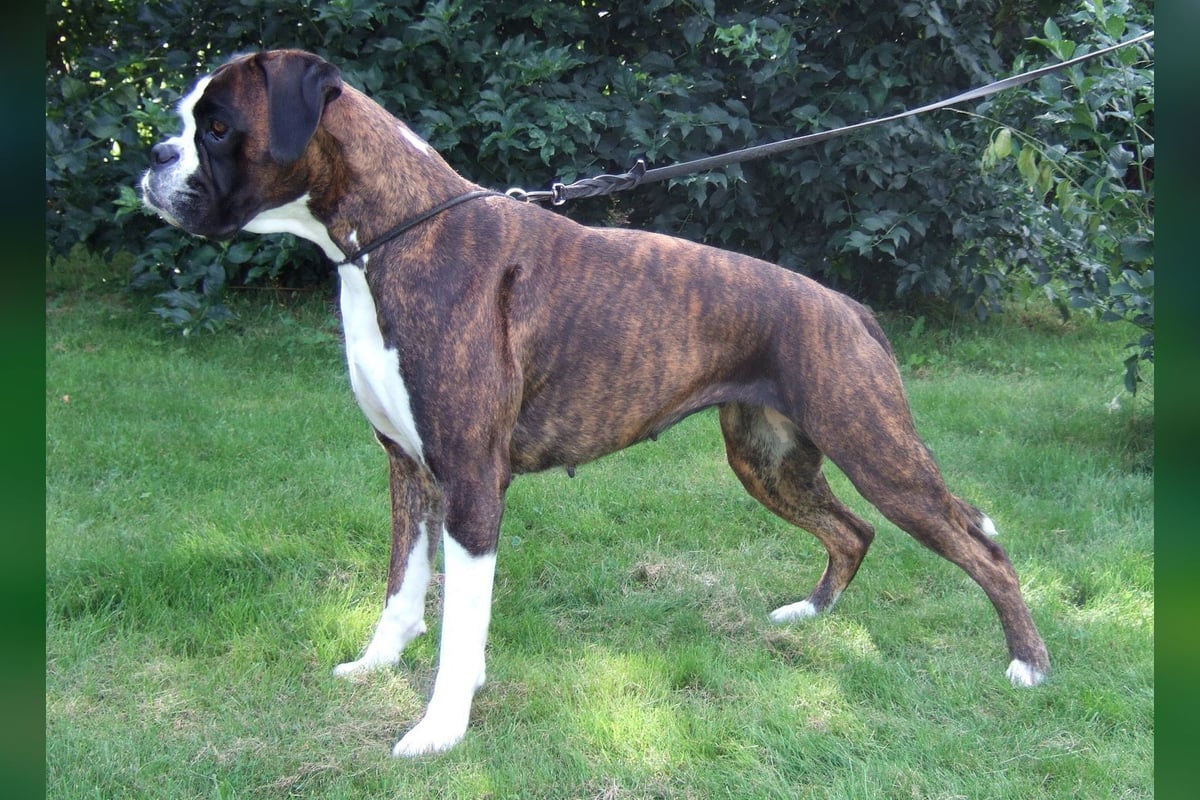
The Boxer is a German molossoid developed in Munich in the late 19th century, descended from the Bullenbeisser. Recognized by the FCI under number 144, it weighs 25 to 35 kg for 53 to 63 cm at the withers and combines three traits: high energy, a rare tolerance for boisterous children, and moderate brachycephaly that limits its heat resistance.
Scores given on measured axes, data confidence: high.
Living with a Boxer
A medium-large, athletic and muscular breed. Males 57-63 cm for 30-35 kg, females 53-59 cm for 25-30 kg. Short coat in fawn (from wheaten to red) or brindle, with or without white markings (limited to 1/3 of the coat per the standard). Square head, undershot jaw (the lower jaw extends past the upper), ears formerly cropped (banned in France since 2004).

Highly energetic, balanced, courageous, playful, intelligent, friendly. Late maturity (3-4 years), it stays clumsy and playful for a long time. Excellent with children: selected since 1900 for family gentleness. Wary of strangers as an adult, but without gratuitous aggression. Bounces literally with joy when you come home: teach a calm greeting from puppyhood to avoid injuries (given its size and momentum).
Good trainability (top 50 per Coren), masters a new command in 15-25 repetitions. Positive reinforcement mandatory — sensitive and loses motivation under punishment. Suited to a variety of dog sports with long technical exercise sessions: Ring sport, mondioring, IGP, recreational agility, canicross, mantrailing. Intensive early socialization (3-4 months) with strangers and dogs is crucial to temper its adult wariness.

350 to 450 g of premium kibble a day for a 30 kg adult, in 2 mandatory meals (never just 1, due to gastric torsion risk). Large-breed kibble up to 18 months to support bone growth. A mandatory 1-hour digestive rest before and after exercise (torsion prevention). Glucosamine/chondroitin as a supplement after age 4.
Affiliate links, no extra cost to you. Legal notice

Prefers a house with an enclosed garden for its exercise needs and its bulk. Not suited to small urban apartments; livable in a large apartment (≥80 m²) if 1.5-2 hours of daily activity are guaranteed. Sensitive to heat due to moderate brachycephaly: avoid intense exercise above 25 °C, provide shade and fresh water. Also sensitive to cold: short coat, provide a coat for winter outings over 30 min under 5 °C.

Weekly brushing with a rubber grooming glove or soft brush. The short coat needs little upkeep, shedding moderately year-round. Quarterly bath at most, with a gentle shampoo. Bi-weekly inspection of the facial and tail folds (contact dermatitis possible). Monthly nail trim if not worn down naturally.

A shorter-lived breed (median 9-11 years) due to a very high prevalence of cancer (35-40% of deaths: hemangiosarcoma, lymphoma, mast cell tumor). Arrhythmogenic right ventricular cardiomyopathy (ARVC; Holter monitoring recommended after age 3). Subvalvular aortic stenosis (puppy echocardiogram). Cryptorchidism (10% of males at birth). Gastric dilatation-volvulus syndrome (veterinary emergency, <2h). Chronic skin allergies.
Selected in Munich starting in 1894 by Friedrich Roberth, Elard König and Rudolf Höpner, from the Bullenbeisser (an extinct boar-hunting dog) crossed with the English Bulldog. The first breed club was created in 1896. Used extensively by the German army in both World Wars (as a transport dog and sentry). The FCI standard was set in 1955. Present in France since the 1920s, it remains among the top thirty breeds registered with the LOF.
Five essentials to line up before day one.
Affiliate links, no extra cost to you. Legal notice
FCI, Fédération Cynologique Internationale, the world body that has codified breed standards since 1911. FCI number 144 is assigned to the Boxer.
Pinscher and Schnauzer - Molossoid and Swiss Mountain and Cattledogs
23 to 25 kg

Pinscher and Schnauzer - Molossoid and Swiss Mountain and Cattledogs
42 to 60 kg

Pinscher and Schnauzer - Molossoid and Swiss Mountain and Cattledogs
32 to 45 kg