


Bouvier des Flandres
Sheepdogs and Cattledogs (except Swiss Cattledogs)
27 to 40 kg
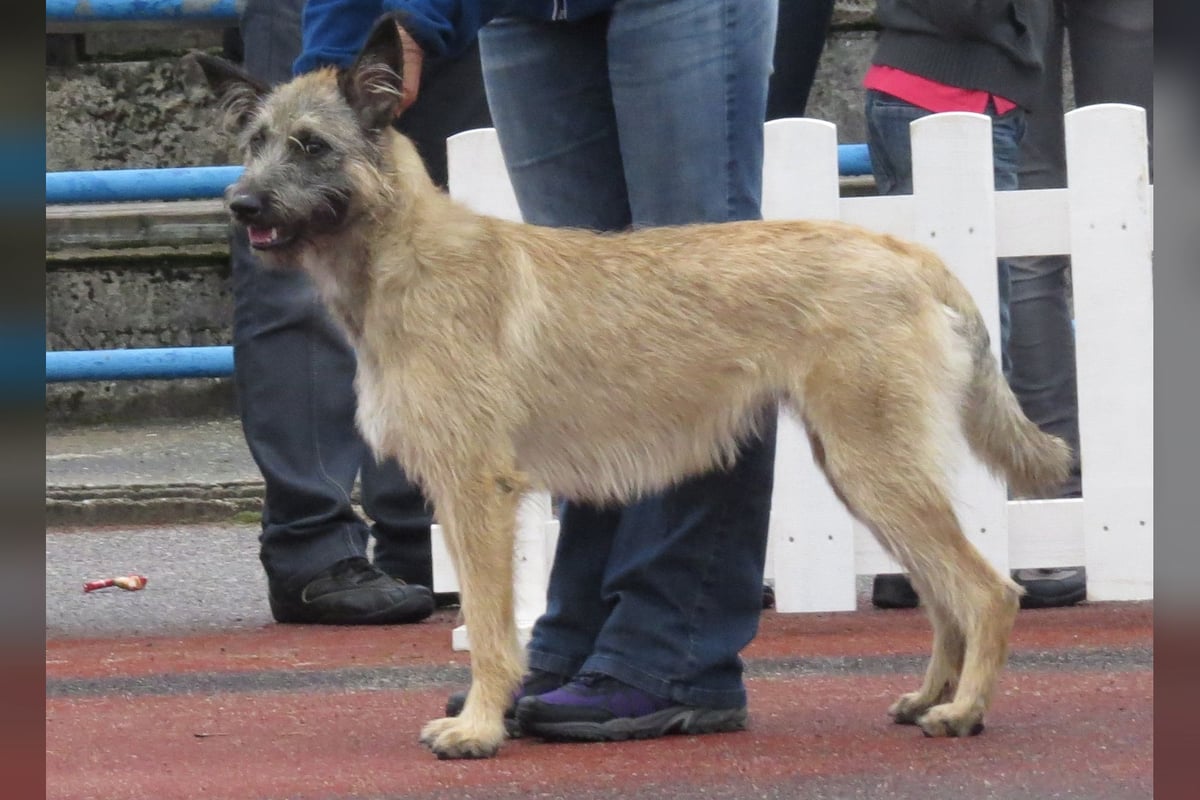
The Bouvier des Ardennes (FCI 171, Group 1) is a rustic Belgian cattle dog weighing 22 to 35 kg for 50 to 55 cm at the withers, native to the Belgian Ardennes. A versatile breed historically used for cattle droving, guarding and draft work on difficult terrain, it came close to extinction after the Second World War. Robert Pinçart and the Cercle du Bouvier des Ardennes led its reconstruction starting in the 1980s; the breeding population remains small, at around 100 births a year. Its rough gray, fawn or brindle coat and its characteristic mustache and beard set it visually apart from its Belgian cattle dog cousins.
Scores given on measured axes, data confidence: medium.
Living with a Bouvier des Ardennes
A medium-sized dog — 50 to 55 cm at the withers, 22 to 35 kg — with a compact, muscular build suited to the steep terrain of the Ardennes. The double coat is dense and shaggy: a protective woolly undercoat, a harsh, slightly rough topcoat in gray, fawn or brindle. The full mustache and beard are the breed's morphological signature. The head is broad and expressive; the V-shaped ears fall to the sides. Compared with the bulkier Bouvier des Flandres, the Ardennes dog has finer bone and is more agile on hilly ground.

A courageous, resolute temperament, with a tendency toward stubbornness inherited from its history as an independent worker on the Ardennes hillsides. Structurally wary of strangers — this reserve does not fade quickly and calls for a calm, gradual introduction. Toward its family, it is attached and demonstrative, forming strong bonds with the children of the household. Historically used by smugglers for its discretion and tenacity, it retains a natural vigilance that makes it an attentive guardian without being a compulsive barker.
Training requires consistency and patience: an independent, stubborn breed, it responds well to positive methods but resists repeated commands that seem to lack functional purpose. Short, varied sessions (10 to 15 minutes, twice a day) give better results than long sessions. Early socialization before 12 weeks is decisive for tempering its wariness of strangers. Its sustained energy and need for intense sport naturally steer it toward activities like canicross, cart-pulling, or herding — practices that channel its intelligence toward a concrete goal.

220 to 320 g of premium medium-breed kibble a day for a 28 kg adult, in 2 meals. Active medium-breed kibble suited during growth up to 18 months — avoid giant-breed formulas overdosed with calcium. For individuals used in intensive draft or herding work, adjust the ration to actual activity: +15 to 20% during high-activity periods. Monthly food budget ranges between 40 and 70 € depending on the kibble range chosen.
Affiliate links, no extra cost to you. Legal notice

Apartment life is unsuited to this worker, who requires an enclosed garden or large outdoor space to exercise its working instincts. A house with land is enough, provided it gets 1 to 2 hours of daily physical activity — long walks, draft work, or herding. Its shaggy coat and double layer give it a remarkable tolerance for the cold of the Ardennes, including in wet and windy conditions. It thrives fully in a calm rural or suburban setting; dense, noisy urban environments are a source of stress.

The shaggy coat needs weekly brushing to prevent tangles in the dense undercoat, particularly around the beard and mustache, which trap plant debris and moisture. The spring seasonal shed is moderate — 2 to 3 weeks of daily brushing is enough. The harsh topcoat does not require regular professional grooming, unlike long-coated breeds: home care with a metal-bristle brush is generally sufficient. Ears to be inspected monthly.

Life expectancy of 10 to 12 years, consistent with cattle dog breeds of this size. The small breeding population limits available epidemiological data: health statistics for the breed should be read with caution. Hip dysplasia is monitored by serious breeders — breeding stock should be X-rayed and their official rating (A to E under the FCI reading, or OFA score) disclosed to the buyer. Few serious genetic diseases documented to date, but the narrow gene pool calls for increased vigilance at each breeding generation.
Born in the dense forests and on the steep slopes of the Belgian Ardennes, it was employed for centuries by farmers and smugglers to drive cattle, carry light loads and watch over properties. The two World Wars devastated rural populations and breeding stock; by the late 1970s, the breed was considered practically extinct. Robert Pinçart, a passionate Belgian breeder, and the Cercle du Bouvier des Ardennes undertook a methodical reconstruction from the few individuals surviving on isolated Ardennes farms. The FCI assigned it standard number 171; the breed remains unrecognized by the AKC to this day, which explains its still very limited numbers worldwide.
Five essentials to line up before day one.
Affiliate links, no extra cost to you. Legal notice
FCI, Fédération Cynologique Internationale, the world body that has codified breed standards since 1911. FCI number 171 is assigned to the Bouvier des Ardennes.
Sheepdogs and Cattledogs (except Swiss Cattledogs)
27 to 40 kg

Sheepdogs and Cattledogs (except Swiss Cattledogs)
14 to 23 kg
