


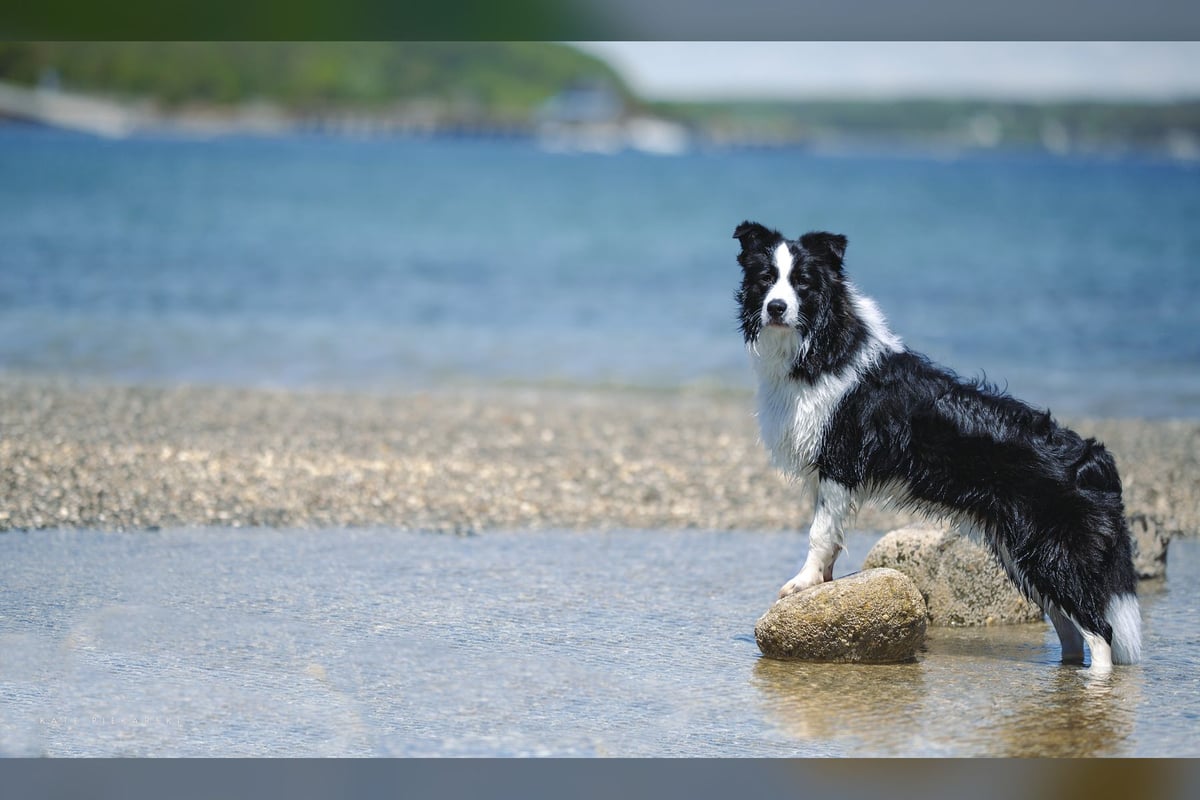
Border Collie
The Border Collie is a British herding dog of 14 to 22 kg, originating from the Scottish Borders in the 19th century. Recognized by the FCI under number 297, it ranks first on Stanley Coren's working and obedience intelligence ranking. It needs 2+ hours of daily physical and mental exercise and is NOT recommended as a simple companion dog.
- Weight
- 14 to 22kg
- Height
- 48 to 55cm
- Life expectancy
- 13years
- Monthly cost
- 70 to 110€
Personality profile
Energy 5/5
Independence 2/5
Trainability 5/5
Good with children 3/5
Barking 4/5
Space needed 5/5
Attachment to home 4/5
Good with strangers 3/5
Good with dogs 3/5
Good with cats 2/5
Coat care 3/5
Exercise needs 5/5
Scores given on measured axes, data confidence: high.
Living with a Border Collie
Description
A medium-sized, athletic and angular herding breed. Males stand 50-55 cm for 18-22 kg, females 48-52 cm for 14-18 kg. Medium-to-long or short double coat, mainly black and white, though many coat colors are recognized (tricolor, merle, chocolate, lilac). A characteristic intense stare fixed on the "prey," a legacy of flock work.

Temperament
Keen, alert, protective, hyper-reactive to stimuli. Obsessive behaviors are common: chasing cars, bicycles, shadows, laser pointers — to be forbidden from puppyhood. A vocal breed that barks to signal or gather, a behavior to manage from puppyhood to avoid nuisance. Reserved with strangers, it bonds deeply with a single person. With children: good playmates but may nip at heels out of herding instinct (to be managed).
Training
World's top intelligence ranking (1st per Coren): picks up a new cue in 1 to 5 repetitions, obeys the first command 95% of the time. Positive reinforcement is mandatory. Preferred dog sports: agility, herding, flyball, dog dancing, frisbee, utility search work.

Feeding
200 to 300 g of premium kibble a day for an 18 kg adult, in 2 meals. Fast metabolism, does not gain weight easily even with moderate exertion. Kibble high in protein (28-30%) and fat (15-18%) suited to high energy expenditure. Water available at all times, especially after exercise.
Affiliate links, no extra cost to you. Legal notice

Living conditions
Not suited to apartment life or any sedentary lifestyle. A house with a large, closed garden is the minimum, ideally a rural or semi-rural setting with daily access to open space. Without 2 hours of physical exercise plus 1 hour of mental activity a day, it develops behavioral problems within 2-3 weeks.

Grooming and coat care
Brush twice a week under normal conditions, daily during the two shedding seasons. No professional grooming needed — the coat is naturally protective. Bathe rarely (3-4 times a year at most), as it strips the waterproof, oily layer. Weekly inspection of ears and paw pads after herding or agility sessions.

Health
Collie eye anomaly (CEA, 25% prevalence, DNA test to require for both parents), progressive retinal atrophy, MDR1 mutation (ivermectin sensitivity). Hip and elbow dysplasia. Neuronal ceroid lipofuscinosis (NCL, DNA test). Idiopathic epilepsy in some lines. Life expectancy of 12-14 years, among the best for a breed of this size.
Breed history
Selected from the 19th century in the Scottish Borders for working sheep on rough terrain. Origins traced back to Old Hemp, the foundation sire born in 1893 at Adam Telfer's kennel, from whom almost all modern Border Collies descend. Official standard set in 1976. Imported into France in large numbers from 1985, reaching the top 15 LOF registrations by 2020.
Getting ready for your Border Collie
Five essentials to line up before day one.
Affiliate links, no extra cost to you. Legal notice
FAQ: Border Collie
Sources
- FCI Standard No 297 · FCI breed standard 297, Group 1 Sheepdogs
- AKC Breed Profile · AKC Border Collie breed profile, Herding Group
FCI, Fédération Cynologique Internationale, the world body that has codified breed standards since 1911. FCI number 297 is assigned to the Border Collie.
Breeds similar to a Border Collie

Belgian Shepherd Dog (Malinois)
Sheepdogs and Cattledogs (except Swiss Cattledogs)
20 to 30 kg

Belgian Shepherd Dog (Tervuren)
Sheepdogs and Cattledogs (except Swiss Cattledogs)
20 to 30 kg