


Belgian Shepherd Dog (Malinois)
Sheepdogs and Cattledogs (except Swiss Cattledogs)
20 to 30 kg
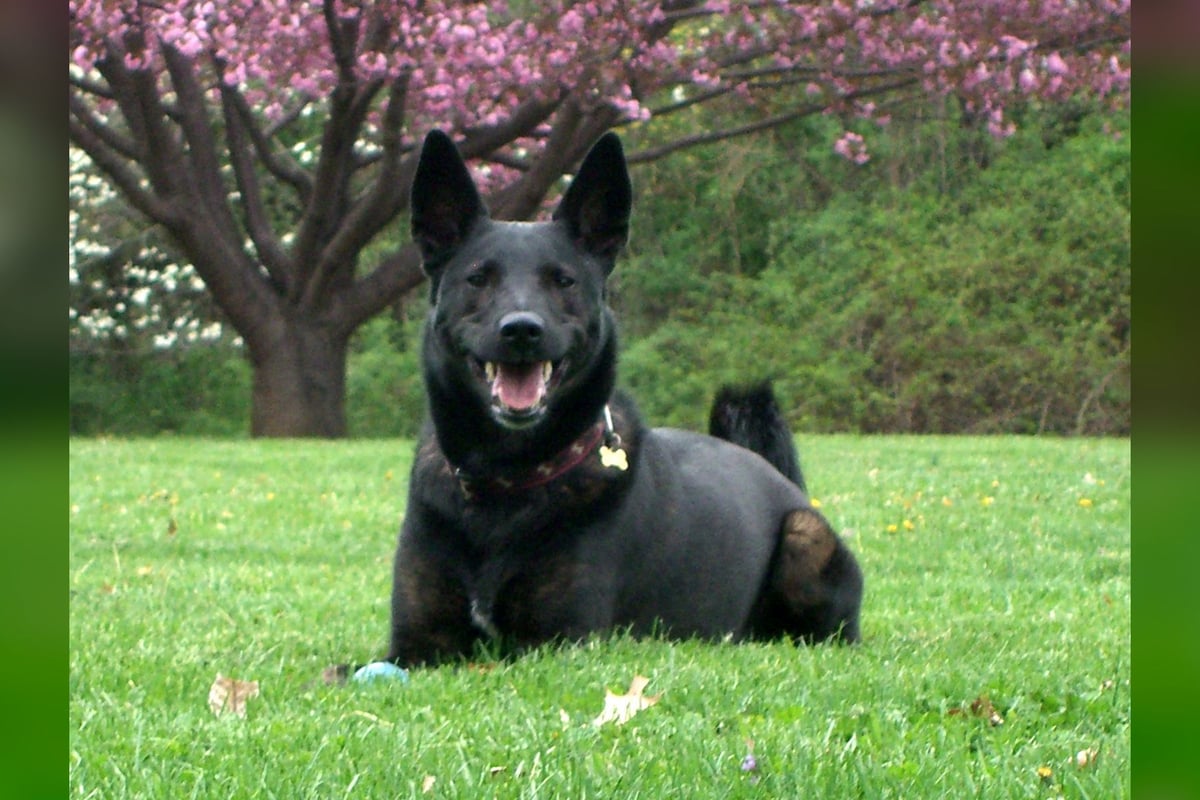
The Dutch Shepherd Dog weighs 23 to 32 kg for 55 to 65 cm at the withers. A versatile Dutch herding breed recognized by the FCI under number 223 in three coat varieties (short, long, rough) that share a single standard. Nearly extinct in 1945 — fewer than 25 dogs were estimated registered in the Netherlands after the Second World War — it was rebuilt by Dutch breeders and remains sought after by European K9 units thanks to its KNPV certification (Koninklijke Nederlandse Politiehond Vereniging).
Scores given on measured axes, data confidence: high.
Living with a Dutch Shepherd Dog
The Dutch Shepherd Dog comes in three varieties coexisting under the same FCI 223 standard: shorthaired (close, brindled coat), longhaired (flat, feathered coat) and roughhaired (harsh, tousled coat cropped at the muzzle). The brindle coat — brownish-fawn streaked with gray — is the breed's signature visual trait, rare among other European shepherds. Males stand 57 to 62 cm for 25 to 32 kg, females 55 to 60 cm for 23 to 28 kg. Square, muscular build, close to the Malinois in size but distinct through its brindle mask and coat varieties.

A breed with a strong work drive: sharp reactivity, sustained alertness, great mental endurance. More balanced as a family dog than the Malinois thanks to a slightly less intense prey drive — but both breeds remain unsuited to inexperienced owners. Wary of strangers, it requires intensive early socialization before 4 months. With its reference handler, the bond is solid and cooperation comes naturally; it copes badly with long absences without structured activity.
Maximum trainability (5/5): picks up a new cue in 3 to 5 repetitions, on par with the Malinois. KNPV-certified breed — the Dutch police-dog test, the functional equivalent of French working titles — and deployed in Dutch, Belgian and Scandinavian K9 units. Excels in IGP/IPO, French Ring, Mondioring, agility, mantrailing, and tracking. Requires 2 hours of daily technical exercise with structured dog sport; long walks alone are not enough. Positive reinforcement recommended; an experienced handler is essential.

280 to 400 g of premium kibble a day for a 25-30 kg adult, split into 2 meals. Very high energy expenditure in active sport (KNPV, ring sport, agility): increase to 420-480 g on intensive training days. Kibble rich in animal protein (28-32%) and low in refined grains. Glucosamine/chondroitin after age 4 to prevent joint wear on a dog under such physical demand.
Affiliate links, no extra cost to you. Legal notice

Not suited to apartment life: its 5/5 energy level and its need for daily technical sport work call for a closed garden and access to training grounds. A house with a garden is the absolute minimum; space alone is not enough without a structured program of physical and mental activity (at least 2 hours of exercise a day). It tolerates cold well thanks to its dense undercoat, but stays sensitive to prolonged summer heat exposure. Not advisable for owners absent more than 4 hours a day without an active care solution.

The shorthaired variety needs weekly brushing, twice weekly during seasonal shedding. The longhaired variety needs brushing twice a week to prevent tangles in the feathering. The roughhaired variety needs manual stripping once or twice a year by a specialized groomer — the rough coat should not be clipped, as that alters the texture. Not a hypoallergenic breed: moderate shedding is present year-round, more pronounced in spring and fall.

Life expectancy of 11 to 14 years, above average for large active breeds. The post-war population's small numbers paradoxically favored rigorous selection: serious genetic disorders remain rare compared with the German Shepherd Dog or the Malinois. Moderate predispositions: hip dysplasia to monitor (radiographs of both parents recommended), elbow dysplasia reported in some lines. No idiopathic epilepsy documented at significant prevalence in the breed.
Developed in the Netherlands in the 19th century as a versatile herder for tending flocks and guarding farms. Standardized by the Raad van Beheer in 1898 in three varieties. The breed came close to extinction during the Second World War: fewer than 25 dogs were registered in the Netherlands in 1945 after food shortages and the abandonment of kennels. A rigorous rebuilding program led by Dutch breeders in the 1950s-1970s allowed the breed to survive. Recognized by the FCI, Group 1, number 223.
Five essentials to line up before day one.
Affiliate links, no extra cost to you. Legal notice
FCI, Fédération Cynologique Internationale, the world body that has codified breed standards since 1911. FCI number 223 is assigned to the Dutch Shepherd Dog.
Sheepdogs and Cattledogs (except Swiss Cattledogs)
20 to 30 kg


Sheepdogs and Cattledogs (except Swiss Cattledogs)
20 to 30 kg