


Belgian Shepherd Dog (Malinois)
Sheepdogs and Cattledogs (except Swiss Cattledogs)
20 to 30 kg
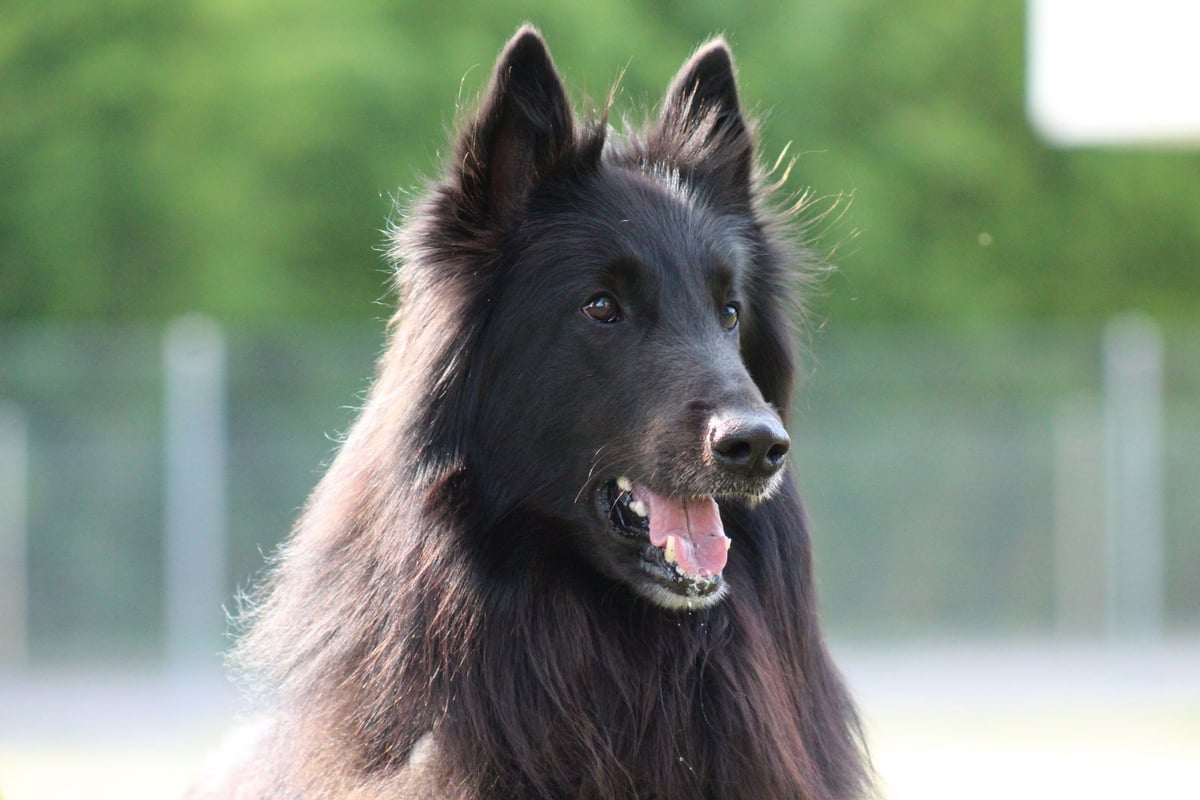
The Belgian Shepherd Dog (Groenendael) is the long-coated black variety of the Belgian Shepherd (FCI 15, variety 1). The FCI recognizes the Belgian Shepherd as a single breed split into four varieties distinguished by coat and color: Groenendael (long black coat), Tervuren (long fawn coat with black overlay), Malinois (short fawn coat) and Laekenois (wire fawn coat). It was developed in the late 19th century by Nicolas Rose at the kennels of Château de Groenendael, in Belgian Flanders, and officially recognized in 1898. Its solid black coat visually sets it apart from the Tervuren's brown-fawn overlay.
Scores given on measured axes, data confidence: high.
Living with a Belgian Shepherd Dog (Groenendael)
A medium-to-large herding dog, standing 56 to 66 cm at the withers and weighing 20 to 30 kg, with a slender, muscular build. The coat is solid black, long and straight, with a full ruff on the adult male and an abundant plume on the tail. Females have a less developed ruff. Alert, expressive eyes, well-set triangular ears, a raised head carriage — everything about the Groenendael's build conveys constant alertness. The dense undercoat provides thermal protection in winter, at the cost of a pronounced seasonal shed.

A dog of extreme liveliness, the Groenendael is vocal and prone to barking: it consistently signals any intrusion onto its territory and can become noisy if under-stimulated. Very bonded to its core family — sometimes to a single dominant handler — it can be wary or even defensive toward strangers, a functional trait inherited from its role as herder and guardian. In a working setting (ring sport, agility, IGP), this alertness converts into intense, precise engagement. Its emotional profile makes it more reactive under stress than the Malinois — two breeds with comparable potential but different psychological management needs.
One of the most trainable dogs in its Group, the Groenendael learns with a speed and precision that makes it a top candidate for dog sports: agility, French ring sport, IPO/IGP, obedience and police/military K9 units. Success in working roles requires intense, varied sessions — several hours of exercise and training a week are needed to channel its energy and avoid destructive behavior. Motivation through play (ball, bite work) is often more effective than food rewards. Training should start at 8 weeks with an experienced handler or under professional guidance.

250 to 380 g of premium medium-to-large-breed kibble a day for a 25 kg adult, in two meals. Large-breed kibble until 18 months to support bone growth. A calorie intake matched to activity level is essential: a Groenendael doing agility or ring sport several times a week eats significantly more than a sedentary companion dog. Glucosamine and chondroitin recommended from age 6 as joint prevention for intensive athletes.
Affiliate links, no extra cost to you. Legal notice

A dog built for movement and open space: a house with an enclosed garden is the minimum, and city apartment living is not recommended for an adult without daily access to large areas to unwind in. Its intense seasonal shed produces significant amounts of hair — regular management is essential indoors. Its dense double coat makes it sensitive to heat: during heatwaves, permanent access to shade and fresh water must be guaranteed, and sport training sessions should be suspended in high temperatures. In temperate to cold climates, it thrives without constraint.

Regular weekly brushing is enough outside of shedding periods. During seasonal shedding (twice a year, spring and fall), daily brushing with a long-hair brush limits the spread of undercoat through the home. The Groenendael does not need regular professional grooming — the long, straight coat does not tangle the way a curly coat does, and clipping is never desirable since it alters the coat's texture. Clean ears and check paw pads after sport training sessions.

Life expectancy is 12 to 14 years. Idiopathic epilepsy is more common in the Belgian Shepherd than in many other breeds — serious breeders exclude breeding stock with a family history. Hip and elbow dysplasia should be monitored: OFA or SCC radiographs of the breeding stock must be provided at purchase. Progressive retinal atrophy (PRA) is detectable via DNA testing before breeding. Gastric torsion is possible at this size — two daily meals and post-meal rest are recommended. Thyroid problems (hypothyroidism) have been documented in some lines.
The Belgian Shepherd is a Belgian national breed, formalized in the late 19th century from native herding dogs of the Flemish countryside. In 1891, veterinarian Adolphe Reul gathered 117 specimens at the Cureghem veterinary school to establish a common standard. The Groenendael variety owes its name and its selection to Nicolas Rose, a hotelier who owned the Château de Groenendael in the Sonian Forest and fixed the solid black coat from the 1890s onward. Official recognition came in 1898. During World War I, Belgian Shepherds were used extensively as liaison dogs, ambulance dogs and light artillery draft dogs — their reputation as versatile working dogs was confirmed in the field. The breed is recognized by the FCI under number 15.
Five essentials to line up before day one.
Affiliate links, no extra cost to you. Legal notice
FCI, Fédération Cynologique Internationale, the world body that has codified breed standards since 1911. FCI number 15 is assigned to the Belgian Shepherd Dog (Groenendael).
Sheepdogs and Cattledogs (except Swiss Cattledogs)
20 to 30 kg

Sheepdogs and Cattledogs (except Swiss Cattledogs)
20 to 30 kg
