


Belgian Shepherd Dog (Malinois)
Sheepdogs and Cattledogs (except Swiss Cattledogs)
20 to 30 kg
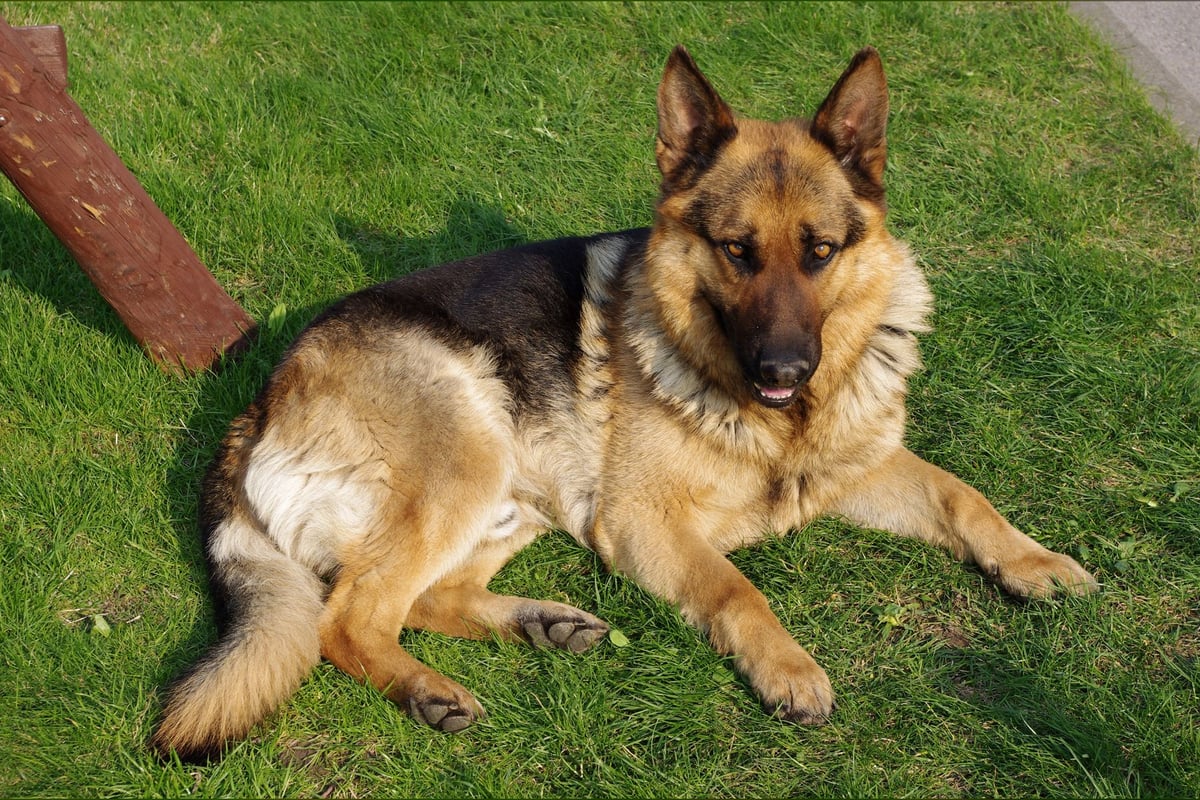
The German Shepherd Dog is a herding breed developed in Germany at the end of the 19th century by Captain Max von Stephanitz. Recognized by the FCI under number 166, it weighs 22 to 40 kg depending on sex and ranks among the world's most widely used working breeds (police, military, search and rescue, assistance, herding).
Scores given on measured axes, data confidence: high.
Living with a German Shepherd Dog
A medium-large breed with an elongated, muscular body. Males stand 60-65 cm and weigh 30-40 kg; females stand 55-60 cm and weigh 22-32 kg. Double coat, either short or long. Coat color is mainly black and tan, but also sable, gray, solid black, and white (not an FCI standard color but recognized by other clubs). Two separate lines exist: working (flat topline, athletic) and show (sloped topline, more static).

Balanced, courageous, self-assured, and deeply attached to its family. Naturally wary of strangers — a trait valued for guarding but one to channel through intensive early socialization (50+ positive encounters before 4 months). A vocal breed that barks to signal any suspicious presence, a behavior to moderate from puppyhood for urban living. Sensitive to loneliness: 4 hours maximum without a human at home.
Trainability is top-tier (top 3 according to Coren), picking up a new command in 5 repetitions. Suited to all intense dog sport disciplines requiring several hours of technical exercise per week: IGP/IPO, ring, mondioring, tracking, utility search work, RCI, agility, mantrailing, herding IGP. Positive reinforcement is preferred, but it can tolerate moderate pressure if well-dosed by an experienced handler.

350 to 500 g of premium kibble a day for a 35 kg adult, split into 2 mandatory meals (never just 1, due to bloat risk). Large-breed kibble until 18 months. An hour of digestive rest before and after exercise is essential (bloat prevention). Glucosamine/chondroitin as a supplement after age 4.
Affiliate links, no extra cost to you. Legal notice

A house with an enclosed garden is the standard. Not suited to a typical apartment; livable only in a large apartment (80 m² or more) with 1.5 to 2 hours of daily activity and regular access to large open spaces. Sensitive to heat: avoid intense exercise above 25 °C, and provide shade and fresh water in summer.

Brush 2 to 3 times a week under normal conditions, daily during the two annual shedding seasons in spring and fall (the undercoat is enormous — equivalent to a garbage bag of hair per shed). Long-coated variants need a weekly detangling comb. No professional grooming required. Bathe at most quarterly.

Short life expectancy (8-11 years, median 10 years) due to the very high prevalence of hip and elbow dysplasia (hypertype show lines = 30%+ of dogs affected according to French veterinary data). Degenerative myelopathy (SOD1 mutation, DNA-testable). Gastric dilatation-volvulus (a veterinary emergency requiring treatment within 2 hours). Chronic skin allergies. Exocrine pancreatic insufficiency is common.
Standardized by Captain Max von Stephanitz in 1899 from Thuringian and Württemberg herding dogs. The first breed club was founded the same year. The breed was quickly adopted by the German police and army (1903), then spread worldwide after World War I thanks to military dogs. It has remained in the top 5 of French LOF registrations for 50 years, with a relative decline over the last 10 years against the Australian Shepherd and Malinois.
Five essentials to line up before day one.
Affiliate links, no extra cost to you. Legal notice
FCI, Fédération Cynologique Internationale, the world body that has codified breed standards since 1911. FCI number 166 is assigned to the German Shepherd Dog.
Sheepdogs and Cattledogs (except Swiss Cattledogs)
20 to 30 kg

Sheepdogs and Cattledogs (except Swiss Cattledogs)
20 to 30 kg
