


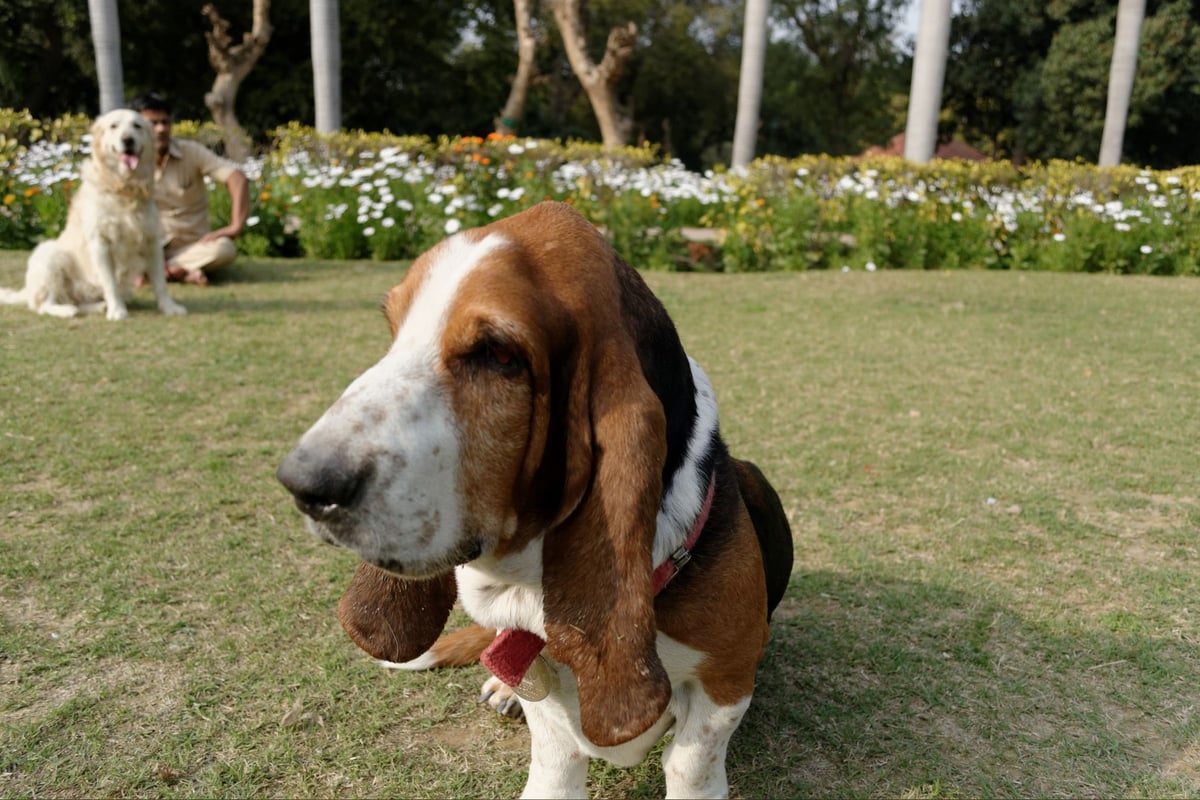
Basset Hound
The Basset Hound is a short-legged, chondrodystrophic scent hound weighing 20 to 29 kg for 33 to 38 cm at the withers. Recognized by the FCI under number 163, it descends from French basset breeds crossed in England in the 19th century by Sir Everett Millais. An excellent pack scent hound, placid and never aggressive — but predisposed to IVDD disc disease (chondrodystrophy) and to chronic ear infections linked to its drop ears.
- Weight
- 20 to 29kg
- Height
- 33 to 38cm
- Life expectancy
- 11years
- Monthly cost
- 70 to 110€
Personality profile
Energy 2/5
Independence 4/5
Trainability 2/5
Good with children 5/5
Barking 4/5
Space needed 2/5
Attachment to home 4/5
Good with strangers 4/5
Good with dogs 4/5
Good with cats 3/5
Coat care 3/5
Exercise needs 3/5
Scores given on measured axes, data confidence: high.
Living with a Basset Hound
Description
A heavy-boned breed on short legs, the heaviest of the basset breeds. 20 to 29 kg for 33 to 38 cm at the withers — a deceptive build, this is not a small dog. Coat short, smooth, and close, tricolor (black/white/tan) or bicolor (lemon/white, red/white). Exceptionally long ears falling below the muzzle, loose facial skin forming folds, diamond-shaped eyes with drooping lids. Massive short legs, heavy bone. A typically chondrodystrophic elongated body.

Temperament
Tenacious, placid, affectionate — never aggressive or fearful according to the FCI standard. Excellent tolerance with children and other dogs. A characteristically vocal breed: it bays and barks to signal a scent trail or express boredom, a potentially noisy trait in an apartment. Very independent when on a scent trail: recall becomes ineffective the moment a smell captures its attention. Does not cope well with prolonged solitude.
Training
Trainability is low — the scent hound's olfactory independence and natural stubbornness outweigh obedience. Positive reinforcement with high-value treats is essential; punishment and mechanical repetition are counterproductive. Recall is unreliable outside an enclosure. Preferred scent-stimulation activities: mantrailing, hidden-object searches, free-sniffing walks. Basic training is possible from puppyhood with patience and consistency.

Feeding
220 to 300 g of premium kibble a day for a 25 kg adult, split into 2 meals. A breed prone to obesity: weigh the ration systematically, no free-feeding, and count treats toward the daily ration. Weight-control kibble from age 3-4. Avoid jumping off tables or sofas before and after meals to limit pressure on the discs.
Affiliate links, no extra cost to you. Legal notice

Living conditions
Adaptable to apartment living (≥ 50 sq m) thanks to its moderate energy, provided it gets at least 45 to 60 minutes of daily walks in a secure area. A fenced garden is appreciated but not essential. Sensitive to both cold and heat because of its short coat and low-slung build: avoid intense outings above 25 °C or below 0 °C, and provide warm indoor bedding. Stairs should be limited to prevent stress on the spine.

Grooming and coat care
Weekly brushing with a rubber curry glove for the short coat. Sheds moderately year-round with two molts in spring and fall. Weekly ear cleaning is mandatory with a veterinary lotion (long ear flap = trapped moisture = breeding ground for yeast and bacteria). Inspect facial folds and eyelids twice a week. Bathe monthly to quarterly, with a mild shampoo. Check nails monthly, since the short legs wear them down less against the ground.

Health
A breed at high orthopedic risk because of chondrodystrophy: the prevalence of IVDD (intervertebral disc disease) is among the highest in the dog world — the explosive Hansen Type I form affects a significant proportion of dogs and can cause partial or total paralysis. Obesity is common (40-50% of adult dogs): it directly worsens IVDD risk. Chronic ear infections linked to the exceptionally long ear flap, which closes off the ear canal (weekly cleaning required). Glaucoma and ectropion (drooping eyelids, corneal irritation). Skin-fold dermatitis. Life expectancy is 10-12 years.
Breed history
Native to France (crosses of old French basset breeds, including the Basset d'Artois and the Basset Normand), imported and refined in England starting in 1874 by Sir Everett Millais. The Marquis de Lafayette had given one to George Washington in the late 18th century. FCI standard number 163, Group 6. Popularized by advertising imagery (Hush Puppies) and American television series.
Getting ready for your Basset Hound
Five essentials to line up before day one.
Affiliate links, no extra cost to you. Legal notice
FAQ: Basset Hound
Sources
- FCI Standard No 163 · FCI breed standard 163, Group 6 Scent Hounds
- AKC Breed Profile · AKC Basset Hound breed profile, Hound Group
FCI, Fédération Cynologique Internationale, the world body that has codified breed standards since 1911. FCI number 163 is assigned to the Basset Hound.
Breeds similar to a Basset Hound

